

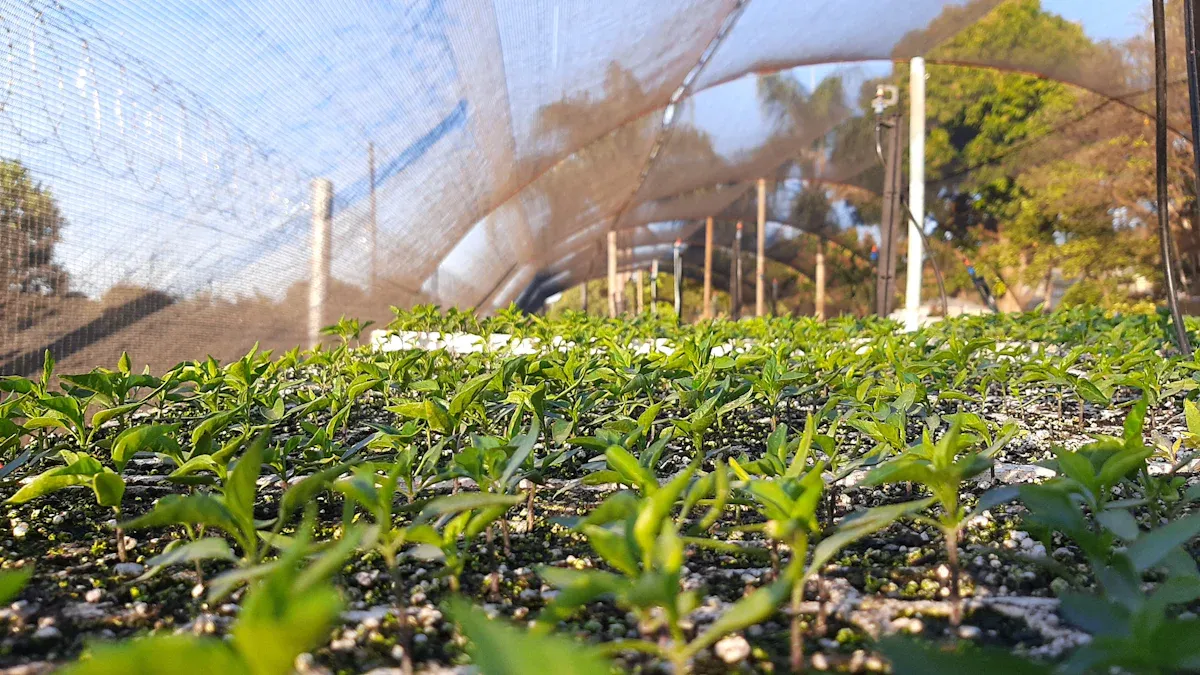
Have you ever walked into a greenhouse in March and felt the cold condensation dripping down your neck and the tender tomato stems hopelessly stretched out, turning into pale threads? Every farmer knows this pain: heating bills are rising, and the seedlings are sitting still or, even worse, dying of blackleg.
Early seedlings are a high stakes game. In this article, we'll break down how to turn your greenhouse into a precision biological reactor using an engineering approach, knowledge of Ukrainian laws and expert advice.
Fundamental to Success: Physics and Environmental Parameters
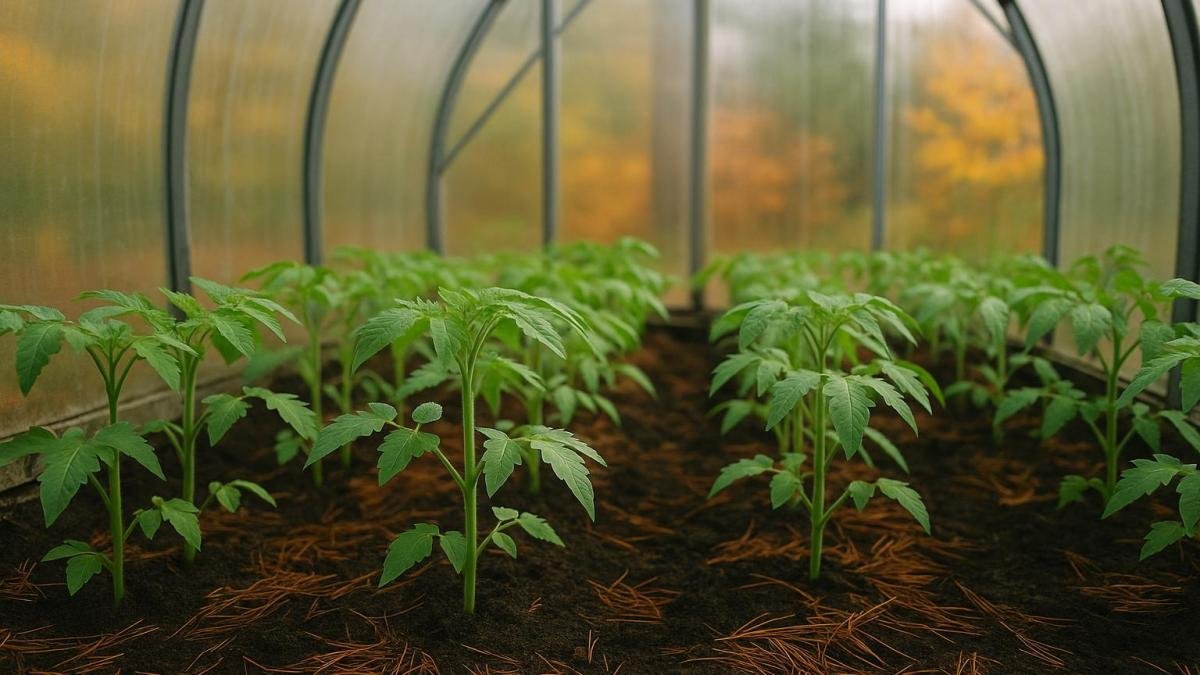
Microclimate is not just «keeping warm». It is a complex balance of four variables: Temperature, Light, Humidity and Gas Composition. Let's break down the key factors in as much detail as possible.
Temperature regime: Biological root priority
It is a beginner's mistake to focus only on the thermometer hanging at eye level. For early seedlings, substrate temperature is more important than air temperature.
- Process Physiology: At soil temperatures below +14°C, the roots block phosphorus uptake. The plant takes on an anthocyanin (purple) color. Even if the air is +25°C, the seedlings will starve.
- The effect of «Physiological Drought»: If the air is too warm and the roots are cold, the leaves evaporate moisture that the cold roots do not have time to pump out. The result is wilting when the soil is moist.
- The concept of DIF (Difference): This is the difference between daytime and nighttime temperatures.
- Positive DIF (Day > Night): Accelerates growth.
- Negative or zero DIF: It helps to restrain seedling stretching (internodes become shorter).
Extended temperature table:
| Culture | Soil (optimum) | Air (day/clear) | Air (day/misty) | Air (night) |
|---|---|---|---|---|
| Tomatoes | +18...+20°C | +22...+25°C | +18...+20°C | +15...+16°C |
| Cucumbers | +22...+24°C | +25...+28°C | +20...+22°C | +18...+20°C |
| Pepper/flax | +20...+22°C | +24...+26°C | +20...+22°C | +17...+19°C |
| Cabbage | +14...+16°C | +15...+18°C | +12...+14°C | +8...+10°C |
Expert Tip: Use needle soil thermometers or non-contact pyrometers. Measure the temperature in the cassettes, not in the depth of the bed - the soil cools down faster in a small volume.
Light mode: From Lux to Micromoles«
Professionals do not measure light in Lux (this is the brightness for the human eye). For plants, PPFD (photosynthetic photon flux density) is important - the number of photons hitting 1 m² per second.
- Norms for seedlings: * Minimum for survival: 150-200 µmol/m².
- Optimum for quality seedlings: 300-400 µmol/m².
- Spectral composition (PAR):
- Blue (440-450 nm): «Growth »brake". Makes the stem thick and the leaf dark green. Necessary in the first stages.
- Red (660 nm): «The Accelerator. Stimulates cell division and mass gain.
- Far red (730 nm): If there is too much of it relative to the red, the plant «thinks» it is in the shade and begins to stretch catastrophically.
Comparison of types of supplemental lighting:
| Lamp type | Efficiency (FAR) | Heat transfer | Service life | Summary |
|---|---|---|---|---|
| DNAT (Philips Son-T) | Tall | Very high | 12-16k hrs. | Ideal for heating the greenhouse in winter, but require a high suspension >1.5 m. |
| LED Full Spectrum | Maximum | Low | 50k hrs. | Saves 40% energy. Can be hung low over seedlings (30-50 cm. |
| Fluorescent | Low | Average | 8 thousand hrs. | Obsolete. Only suitable for microgreens or a very shallow shelf. |
Technical clearance: When using LED panels, be sure to have fans blowing the tops of the plants, as the lack of IR radiation from the lamps can lead to stagnant moisture at the growing point.
Engineering solutions and calculations
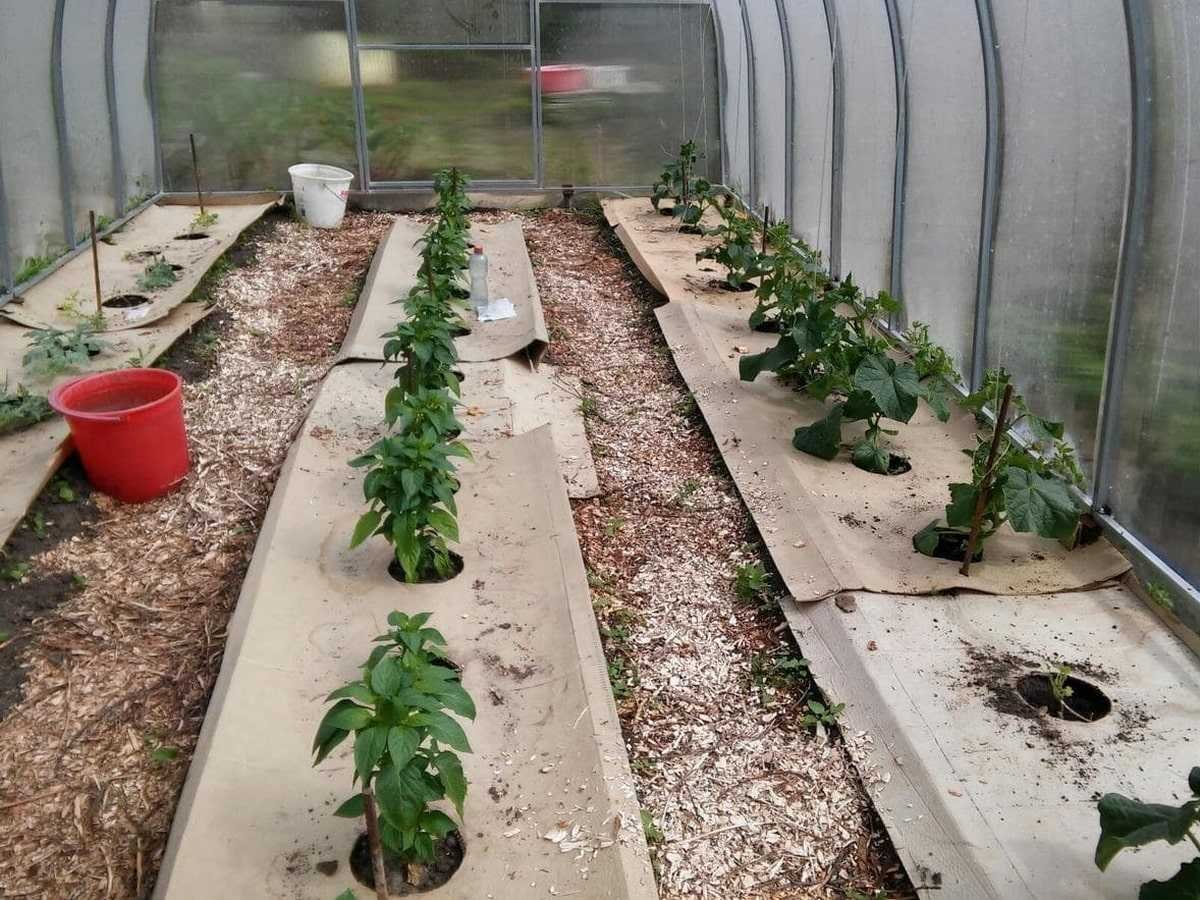
To create a professional system, it is necessary to move away from empirical guesswork to precise figures. The main task is to compensate for the heat losses of the structure and to ensure active circulation of the medium.
In-depth heating calculation (Heat Balance)
The calculation of the heating system capacity (Q) must take into account not only the temperature difference but also the infiltration (blowing) coefficient.
Formula: Q = K * S * dT * Psi
Where:
- Q is the required power.
- S - area of the entire translucent surface (walls + roof).
- dT - temperature difference (T inside - T outside min).
- Psi - infiltration coefficient (for new greenhouses about 1.15, for old ones with gaps about 1.3-1.4).
- K - Heat transfer coefficient of the material:
| Material | K coefficient (W / m2 * °C) | Heat transfer resistance (R) |
|---|---|---|
| Glass (single, 4 mm) | 5.8 | 0.17 |
| Polycarbonate 4 mm (honeycomb) | 3.9 | 0.26 |
| Polycarbonate 10 mm (honeycomb) | 3.0 | 0.33 |
| Double film with a «supercharger» | 2.5 - 3.2 | 0.31 - 0.40 |
Advice: Utilization of cellular polycarbonate in the greenhouse, The thickness of 8-10 mm instead of 4 mm reduces heating costs by 25-30%.
Warm floor system for seedlings (Root heating)
Substrate heating is the most effective way to accelerate vegetation. In Ukraine, the most reliable solution is to use resistive cables (e.g. Nexans TXLP series or Ensto TASSU).
Technical parameters for installation:
- Power density: Optimally 80-100 W/m2. Excessive power may cause drying out of the lower layers of soil.
- Pavement Pie:
- Ground (greenhouse soil).
- A layer of thermal insulation (extruded polystyrene foam 20-30 mm) - mandatory, so as not to heat the bowels of the earth.
- Protective polyethylene film.
- A layer of clean river sand (5 cm).
- Cable laid in a «snake» pattern with a 10-15 cm pitch.
- A layer of sand (5 cm) for even heat distribution.
- Mesh (shovel protection).
- Seedling cassettes or fertile soil.
- Automation: The use of a thermostat with a remote sensor placed in the root zone is mandatory.
Ventilation and Gas Exchange (CO2)
Stagnant air is the main enemy of seedlings. Plants quickly «eat» carbon dioxide around the leaf, stopping photosynthesis.
- Recirculation: Install axial fans at the rate of 1 fan for every 10-15 meters of greenhouse length. They should work 24/7 to equalize the temperature and prevent condensation.
- CO2 feeding: In sunny weather, CO2 levels drop below the critical 300 ppm. Raising levels to 800-1000 ppm (via cylinder systems or purified gas flaring) accelerates growth on 40%.
- Attention: Use of direct fired gas guns without flue (Master type) inside the greenhouse is permissible only with intensive ventilation, as products of incomplete combustion (ethylene, nitrogen oxides) cause curling of leaves and bud drop.
Regulatory framework and standards in Ukraine
Design and operation of greenhouses in Ukraine are regulated by a number of documents:
- DBN V.2.2-2:2005 «Greenhouses i greenhouses» is the basic standard for structures and engineering systems.
- DSTU 4138-2002 «Nasinnya silykogospodarskikh crops» - quality standards of seedling material.
- Law of Ukraine «On Energy Saving» - relevant when choosing heating systems (heat pumps and bioboilers are now subsidized under some agro-programs).
Important: When using gas guns, remember DBN B.2.5-20:2018 (Gas supply). Drainage of the combustion products is mandatory, otherwise excessive CO and ethylene will kill the plants.
Expert Secrets: How to Avoid Blackleg and Stretching
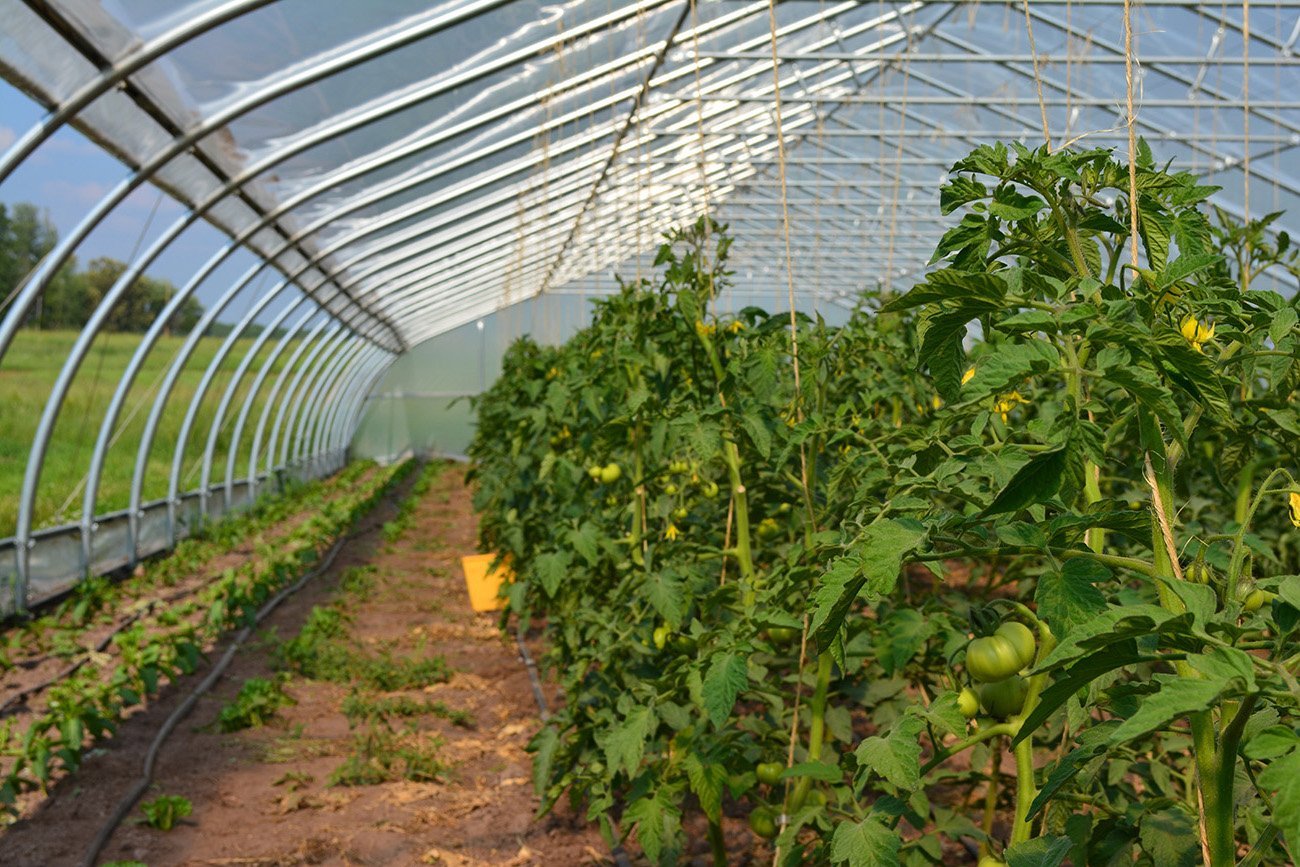
In this section, we will move from general principles to professional techniques used by advanced farms in southern Ukraine (Kherson and Odessa oblasts).
Control of blackleg and root rot diseases
Blackleg (complex of fungi Pythium, Rhizoctonia, Fusarium) affects seedlings with a combination of «cold soil + high humidity».
Technical methods of defense:
- Substrate Sterilization: Use of steaming or spilling with fungicide solution (e.g. Previcur Energy - dosage 3 ml per 2 liters of water). This is the standard in the professional segment of Ukraine.
- Biological Barrier: Infestation of the substrate by Trichoderma fungus (Trichophyte, TrichoSalp preparations). The beneficial fungus eats pathogens before they attack the root.
- Drainage: The cassettes should not stand directly on the film. Use an air gap (pallets with slits) to allow excess water to escape and the roots to breathe.
How to defeat «Pulling» (Etiolation)
A stretched seedling is a weak crop. If there is little light and plenty of heat, the plant invests all its strength in growing upwards.
Control Tools:
- Temperature «setback»: Immediately after the emergence of loops (seedlings), reduce the air temperature for 3-4 days to +12...+15°C for tomatoes. This will redirect energy to root growth.
- Chemical retardants: In extreme cases, professionals use growth regulators (e.g. Chlormequat-chloride or Athleta). They block the synthesis of growth hormone (gibberellin), making the stem thicker. Important: strictly observe the dosage, otherwise you can completely stop the development of the plant.
- Mechanical impact: Gently stroking the tops of the seedlings (simulating wind) releases ethylene, which naturally strengthens the stem.
Automation: Comparison of control systems
You cannot rely on the human factor to adjust the microclimate. Let's categorize automation systems by level of complexity.
| Level | Equipment | Pros | Cons |
|---|---|---|---|
| Basic (DIY) | Sonoff relays, timers, thermostats like STC-1000. | Cheap (up to 2000 UAH), remote control from a smartphone. | Low reliability, requires stable Wi-Fi. |
| Medium (Agro-Pro) | Arduino/ESP32 based controllers with industrial sensors (SHT3x). | Full customization, irrigation, light and ventilation control. | Programming and soldering skills are required. |
| Professional | Danfoss, Priva or Ukrainian Aiterm systems. | Maximum reliability, integration with weather stations, yield guarantee. | High cost (from 20,000 UAH). |
Technical Recommendation: The minimum that every greenhouse should have is an automatic shutter opener (hydraulic, not requiring electricity) and a thermostat relay on the main boiler. This will save seedlings in case of an emergency blackout.
Moisture and dew point control«
Condensation on leaves at 4 am is 100% a guarantee of a peronosporosis or gray rot outbreak.
Solution: Professional humidity sensors should be linked to exhaust fans. If the humidity is above 80%, the fan should turn on automatically, even if the greenhouse is warm. It is more important to expel moisture than to keep a couple of degrees of heat.
Step-by-step algorithm for customization in March
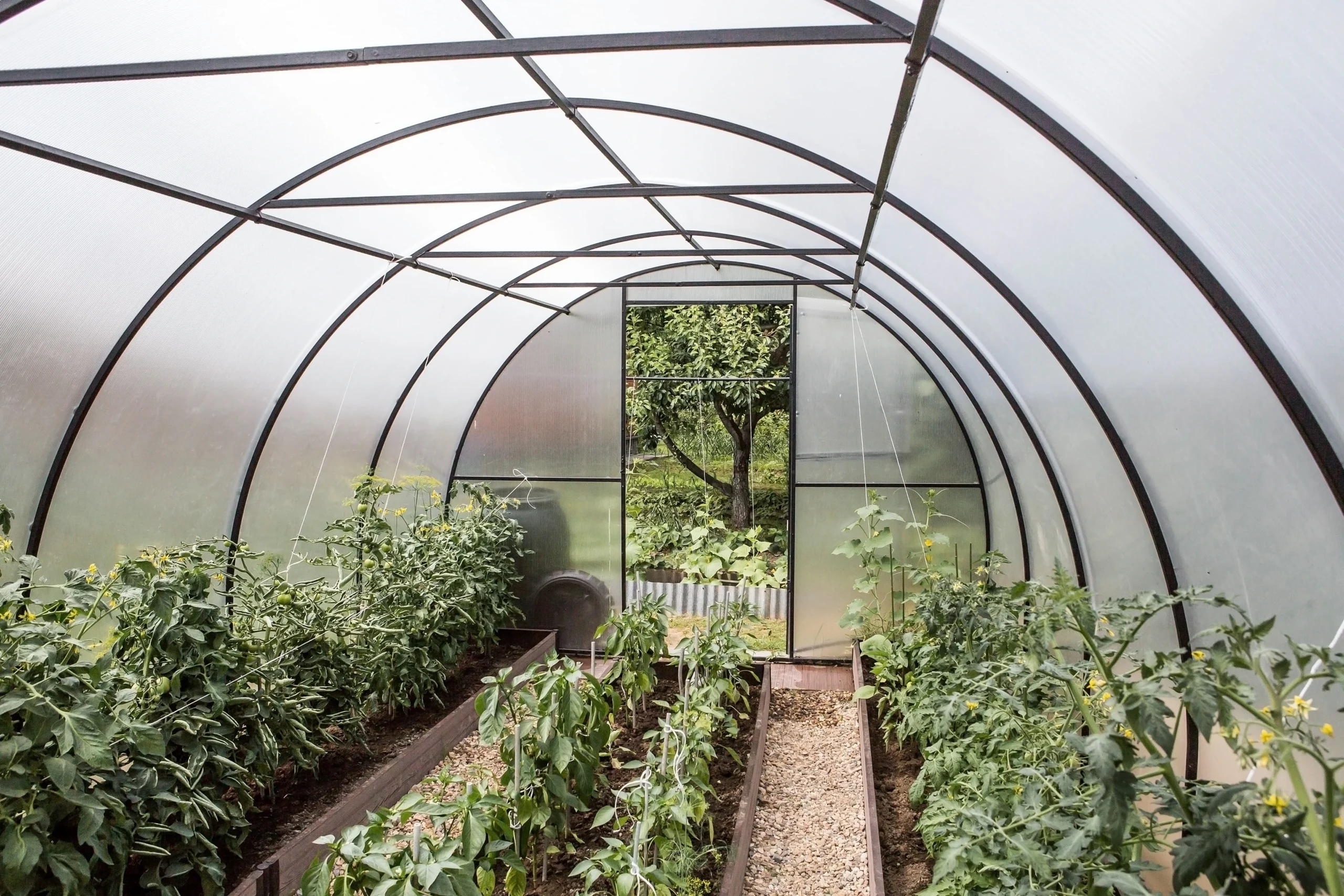
- Sealing: Check the joints of the polycarbonate. Use aluminum tape to protect the honeycomb from moisture (keeps the transparency 25% longer).
- Disinfection: 2 weeks before planting, treat the greenhouse with sulfur dioxide or copper sulfate solution (according to safety regulations).
- Daylight Saving Time: Set timers for a 14-16 hour light day. Doslighting in the morning (from 5:00) and evening (until 21:00) is more effective than just lengthening the evening.
- Hardening: 10 days before planting in the main soil, start reducing the night temperature to +12°C. This «trains» the vascular system of the plant.
Why is it important to adjust the microclimate in the greenhouse for early seedlings?
Setting up a microclimate is not a cost, it is an investment in getting to market early. The price difference between a tomato harvested in late May and mid-July can be 300-400%.
The use of modern control systems, calculation of heat losses according to the DBN and correct selection of the spectrum of lamps allow to pay off the equipment in one full season.
Your next step: Check the current soil temperature at a depth of 10 cm. If it is below +15°C - your seedlings are losing potential right now.






 English
  Русский
  Українська