



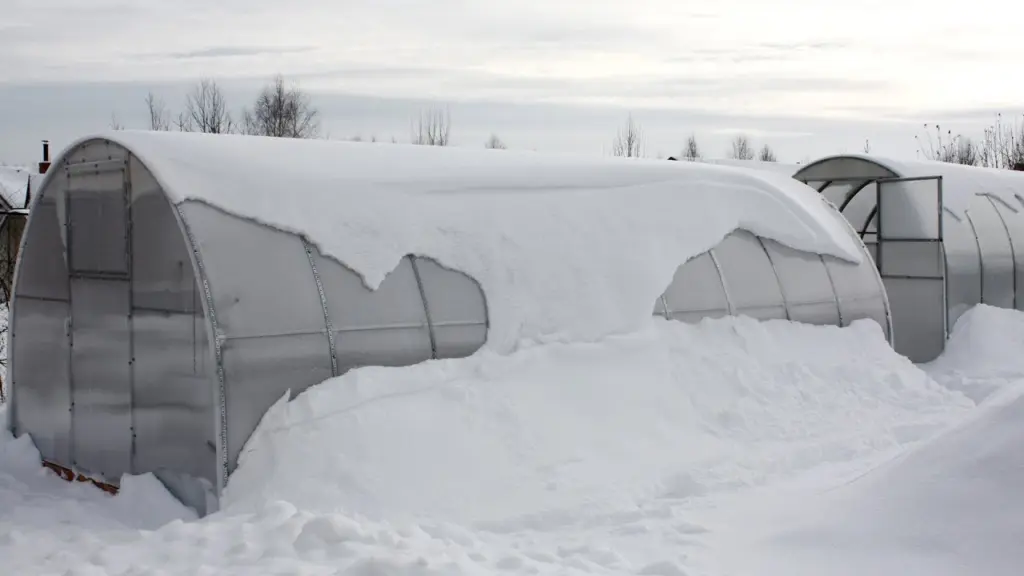
How to properly treat a greenhouse in the off-season: A complete expert guide
Why is simply «washing with water» not enough?
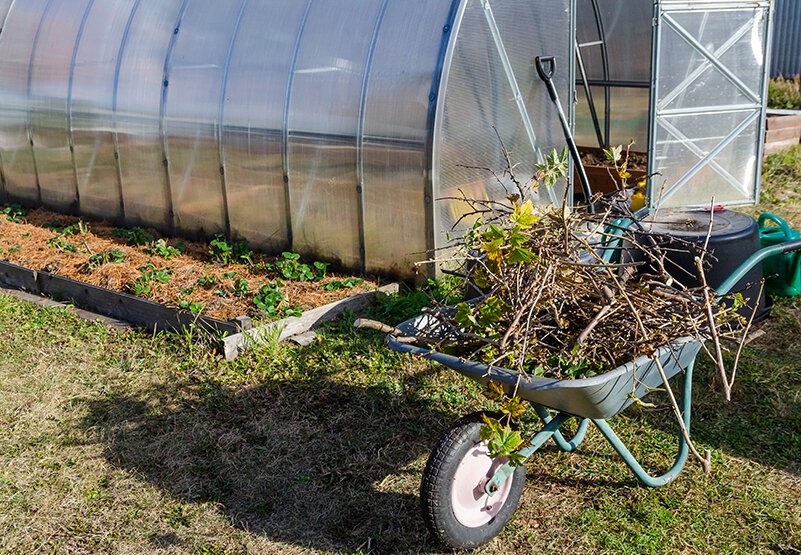
The off-season (October-November or February-March) is a critical period. Pathogenic microorganisms (fungal spores, bacteria) and pest larvae are highly resistant to low temperatures. Without chemical and mechanical disinfection, the infectious background in the closed ground accumulates 5-7 times faster than in open beds.
Step 1: Deep mechanical cleaning and technical audit
Before beginning the disinfection process, you must prepare the «base.» Chemical disinfectants will not work effectively if a layer of dirt or organic matter remains on the surfaces—it will act as a physical barrier to the disinfectant.
1. Complete cleanup of organic debris
- Root removal: Nematodes and fusarium pathogens overwinter in the roots of tomatoes and cucumbers. Pull out the plants completely.
- Twine and Garter Ties: Cloth ropes are the perfect incubator for spores. Dispose of them.
- Compost Verdict: Greenhouse residues are contaminated in 90% cases. Incineration is the best way out.
2. cleaning the coating: fighting for every lux of light
Dirty polycarbonate traps up to 30% of solar energy. Use soft microfiber mops. Do not use metal scrubbers to avoid damaging the UV layer.
3. inspection of the frame and fittings
Check the galvanized profile for «white rust» and touch up any chips on painted frames. Check the seals to ensure that moisture does not get inside the polycarbonate cells.
Step 2: Disinfectant Selection and Application - A Scientific Approach
In Ukraine, the use of agrochemicals is strictly regulated. For closed soil, it is not allowed to use preparations of the first class of hazard. Let us analyze the three most effective strategies, their physics and economics.
1. Copper Sulfate (Copper Sulfate, CuSO4) - Fungicide Armor
Copper is a powerful inhibitor of fungal enzymes. Upon contact with the spore, copper ions penetrate inside and block its respiration, which leads to the death of the pathogen even before its activity begins in spring.
- Who it's suitable for: Universal for polycarbonate, glass and film. Safe for galvanized and painted frames.
- Cooking technology (algorithm for the beginner):
- Use only plastic containers. Copper reacts with iron and the solution loses its properties.
- Dissolve a weight of powder in 1 liter of hot water (about 50 degrees Celsius) until the crystals disappear.
- Top up with cold water to a total volume of 10 liters.
- Strain through gauze before pouring into sprayer to avoid clogging nozzles.
- Dosage and calculation of consumption:
- Prevention: 100 g per 10 liters of water (1% solution). Consumption: 2 liters of ready solution per 10 square meters of surface.
- Eradication treatment: 300 g per 10 liters of water (3% solution). It is used if there was an epidemic of Phytophthora or powdery mildew in summer.
- Fact: Copper does not evaporate, it creates a protective film that works until the first serious washing of the greenhouse.
2. Sulfur Bomb (Sulfur Dioxide, SO2) - Gas Disinfection
When sulfur burns, it releases gas that fills the entire volume of the greenhouse, penetrating into the microcracks of the frame and the topsoil. When combined with moisture (condensate), the gas forms sulfuric acid.
- Critical Framing Warning: It is strictly forbidden to use in greenhouses with a frame made of unpainted black metal or aluminum.
Technical risk: Acid causes instant corrosion, which can destroy a thin-walled profile in 1-2 seasons. - How to secure galvanizing: Lubricate all metal parts (bolts, hinges, handles) with a layer of solidol or lithol. This will create an airtight grease film through which the gas will not pass to the metal.
- Calculating the number of checkers:
- A standard saber (300 g) is rated for 5 cubic meters of volume for insect control and 10 cubic meters for fungus control.
- Example calculation: A 3 by 6 meter greenhouse with a height of 2 meters has a volume of 36 cubic meters. For effective disinfection you will need 4 full a checkers (36 divided by 10 and rounded up).
- Safety Measures: After burning, leave the greenhouse immediately and close the doors tightly. The exposure period is from 24 to 72 hours. After that, mandatory ventilation for 2-3 days until the specific odor disappears completely.
3. peracetic acid (NSAID) - Professional eco-methods
It is a mixture of hydrogen peroxide and acetic acid. The most powerful oxidizing agent that destroys not only fungi, but also bacterial infections and plant viruses (e.g. tobacco mosaic virus).
- Prerequisite: It is a completely biodegradable product. It breaks down into water, oxygen and ordinary table vinegar. It leaves no residue on polycarbonate, on the contrary, it removes lime scale from hard water.
- A recipe for a powerful working solution:
- For 10 liters of water, take 2 liters of 3% pharmacy hydrogen peroxide and 1 cup (200 ml) of 9% table vinegar.
- To enhance the effect, you can add 2 tablespoons of liquid soap as a sticking agent.
- Temperature conditions: NUC is most effective at air temperatures above +15 degrees Celsius. If the greenhouse is colder, the exposure time should be doubled.
Comparative table of disinfection methods
| Criterion | Copper sulfate | Sulfur dart | Peracetic acid |
|---|---|---|---|
| Spectrum of action | Fungi, lichens | Fungi, insects, mites, rodents | Fungus, bacteria, viruses |
| Complexity of work | Medium (spraying) | High (sealing) | Light (wipe/spray) |
| Effect on metal | Neutral | Aggressive (corrosion) | Neutral |
| Environmental friendliness | Accumulates in the soil | Medium (toxic gas) | Maximum |
Step 3: Soil Regeneration — Restoring the «Heart» of the Greenhouse
The soil in a greenhouse is subjected to extreme stress. The lack of natural crop rotation and the constant microclimate lead to two problems: soil «fatigue» and the accumulation of pathogens. While soil in open fields recovers through rainfall and freezing, in a greenhouse, the entire responsibility falls on the gardener.
1. Mechanical renewal: when the soil needs to be «replaced»
Up to 90% of pest larvae (spider mites, whiteflies) and fungal spores are concentrated in the upper 5-10 centimeters of soil. In addition, ballast salts from mineral fertilizers accumulate here, which make the soil toxic for roots.
- The Golden Rule: Replace the top layer (10 cm) every 3 years.
A calculation for a beginner: For a standard 3 by 6 meter greenhouse, the bed area is about 18 square meters. A 10 cm layer is 1.8 cubic meters of soil. On average, this is about 45-50 garden wheelbarrows of fresh soil. - What to replace it with: The ideal greenhouse substrate is a mixture of sod earth, humus (2-year-old) and river sand in a ratio of 2:2:1.
- Important: Never take soil from the beds where related crops grew (potatoes after tomatoes), so as not to transfer diseases.
2. biological disinfection: an army of microscopic defenders
If you don't plan to replace the soil this year, you should «rejuvenate» it using biological products. Unlike harsh chemicals, this biological method does not kill earthworms or beneficial microorganisms.
- Trichoderma (Trichoderma): Predator fungus. It finds spores of pathogens, braids them with its filaments (mycelium) and literally digests them.
Instructions: Apply preparations (Trichophyte, Trichocin) when digging.
Important fact: Trichoderma is active only when soil moisture is above 60% and the air temperature is above +10…+12 degrees. In dry and cold soil, it goes dormant. - Hay bacillus (Bacillus subtilis): A useful bacterium (the basis of Phytosporin-M). It secretes more than 70 types of natural antibiotics that inhibit the development of diseases.
Advice: After watering with biopreparations, mulch the beds with a layer of straw - this creates ideal conditions for bacterial growth.
3. Phytosanitary sowing: Siderates against infections
Siderates are plants that are doctors. Their sowing immediately after treatment of the greenhouse with vitriol or gas allows you to restore the fertility of the land in a matter of weeks.
- White mustard: A leader for greenhouses. Its roots secrete special substances (glucosinolates), which are not tolerated by wireworm larvae and parsch pathogens.
Seeding rate: 400-500 g of seeds per greenhouse 3x6 m. - Phacelia: A versatile choice. It changes the soil acidity (Ph) towards neutral and builds up green mass very quickly.
- Vico-oat mixture: The best option for nitrogen recovery.
Comparison: Incorporation of green mass of oats with vetch in the amount of nitrogen is equivalent to the introduction of 50 kg of manure per 10 m2, but you do not bring in the greenhouse weed seeds and larvae of the May beetle.
4. Watch out for organics!
Many beginners believe that the best way to prepare the soil is to cover it with fresh manure from the fall. This is a dangerous misconception:
- Fresh manure in a closed greenhouse causes a powerful release of ammonia, which can «burn» the polycarbonate and the frame (causing them to darken).
- Manure is the main source of beetle and codling beetle larvae entering the greenhouse.
- An excess of nitrogen in the fall causes plants to «get fat» in the spring (lots of leaves—no fruit).
Technical requirements for polycarbonate: Secrets of durability
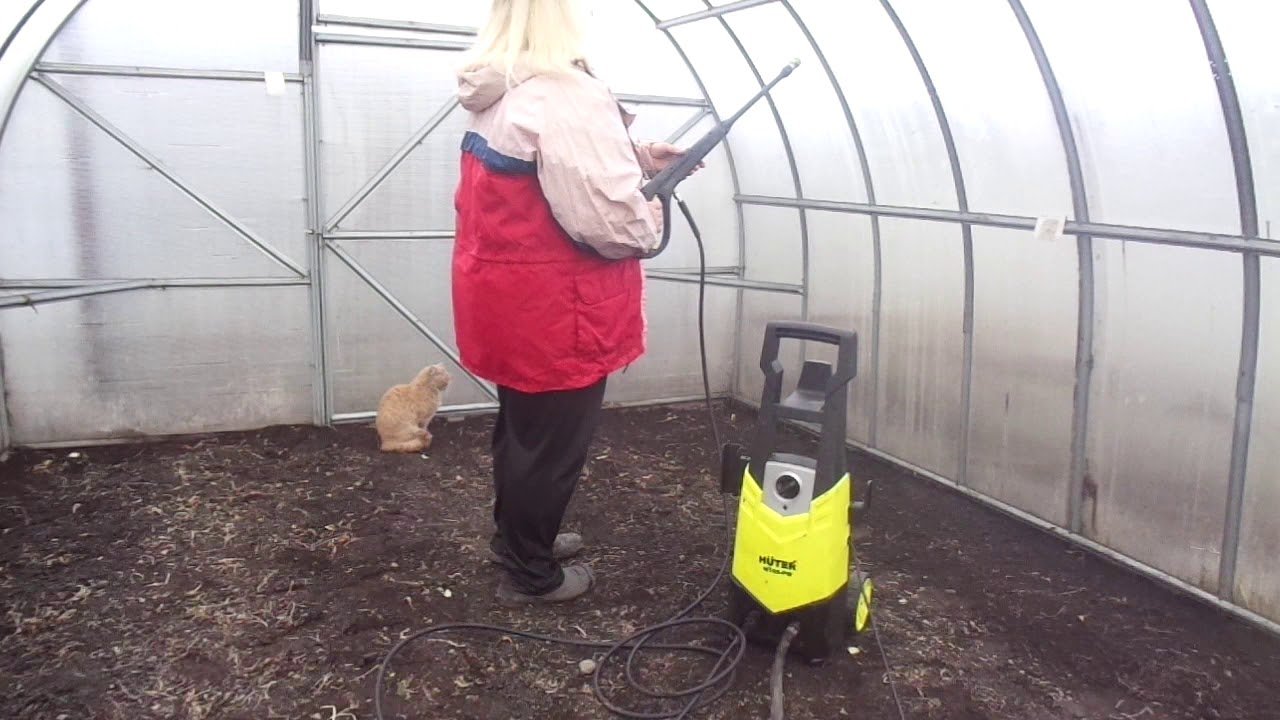
Polycarbonate is a versatile polymer whose quality in Ukraine is regulated by state standards (DSTU). It is important for beginners to understand the difference between «cheap plastic» and a high-quality coating.
- UV protection (Coextrusion): This is a critical parameter. The protective layer must be coextruded (fused into the surface), not sprayed.
Fact: Without UV protection polycarbonate is destroyed under the sun in 2 years: it becomes brittle like glass, and crumbles from light hail. A quality sheet should have a protective layer with a thickness of at least 40-50 microns. - Density and weight: For greenhouses, the optimum thickness is 4 or 6 mm. But not only the thickness is important, but also the specific weight. A quality 4 mm sheet should weigh at least 0.7-0.8 kg per square meter.
Comparison: «Lightweight» polycarbonate weighing 0.5 kg/m² will buckle under the first snowfall. - Chemical Inhibitions: The structure of polycarbonate is sensitive to alkalis.
Rule: Never use ammonia-based window cleaners or aggressive detergents. Only a weak soap solution (pH below 10) is acceptable. - Cell sealing: The ends of the sheets must be sealed with perforated tape and an end profile. If the cells are left open, condensation and algae will form inside, turning the transparent sheet into an opaque «green shield» that blocks up to 50% of light.
Calculating Snow Loads: How to Avoid Finding Your Greenhouse «Collapsed» in the Spring
Ukraine is divided into several snow regions. In the northern and central regions, the load can reach 160 kg per square meter of horizontal surface.
- The physics of the process: The snow on the greenhouse does not always slide off by itself. When temperatures change (thaw during the day, frost at night), an ice crust forms on the surface, to which new layers of snow stick. The weight of wet snow can be 3-4 times the weight of fresh snow.
- Load Math: A 3 by 6 meter greenhouse has a projection area of about 18 square meters. With a norm of 120 kg/m2, the total load on the frame can be more than 2 tons.
- How to strengthen the structure:
- Arc Pitch: The optimal pitch for Ukrainian conditions is 0.65 m. If you have a pitch of 1 m, the risk of deformation increases 2 times.
- Winter Supports: If you don't plan to shovel snow, install inside T-shaped wood or metal stanchions under each ridge (center longitudinal lintel).
Important: Place a wide board under the base of the stanchion to keep it from sinking into the soft greenhouse soil under the weight of snow.
Expert Opinion from «Nova Teplitsa»: Professional Tips
We asked a lead engineer at «Nova Teplitsa» about the most common mistakes and some less-obvious tips for the off-season.
«Many people think that sealing a greenhouse ‘tight’ is a good thing. That's a mistake.»
Why you should open your greenhouse in the winter:
- Thermoregulation: On sunny days in February, the temperature inside the greenhouse can rise to +15 degrees Celsius, while outside it is -10 degrees Celsius. This difference creates enormous stress in the polycarbonate and causes abundant condensation. Micro-ventilation equalizes the temperature.
- Freezing pests out: Many insects (e.g. whitefly larvae) die at temperatures below -15 degrees Celsius. If the greenhouse is closed, the soil may not freeze to the correct depth.
- Snow inside the beds: In January and February, we recommend specifically spreading a 20–30 cm layer of snow over the garden beds inside the greenhouse. In the spring, this will provide «living» meltwater, which perfectly flushes salts from the soil and activates beneficial bacteria.