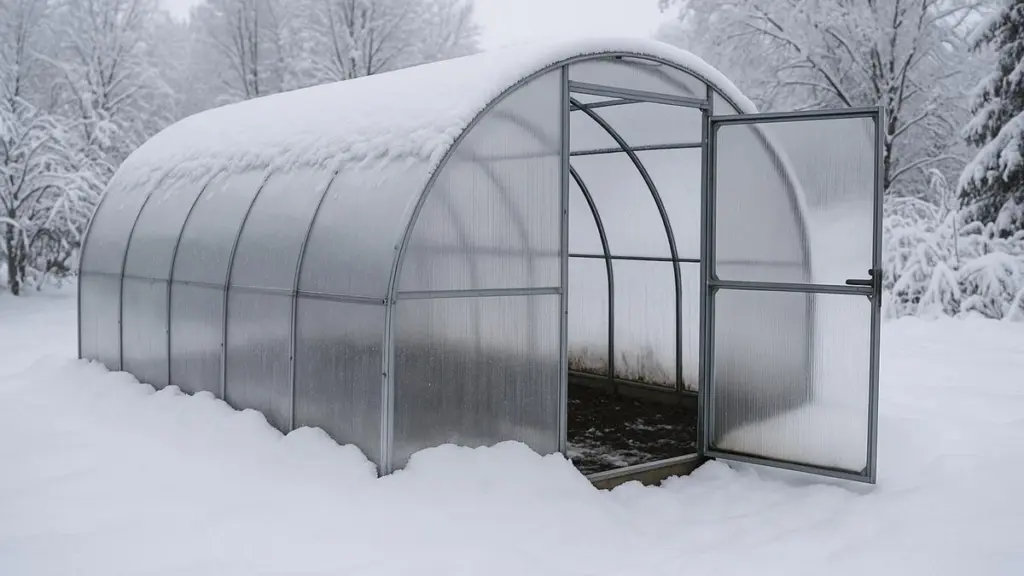



Polycarbonate
See all
Greenhouse 4x6 meters Ideal (polycarbonate)
Original price was: 29 700 ₴.27 500 ₴Current price is: 27 500 ₴.BuyParameters-
Greenhouse 3x8 meters Ideal (polycarbonate)
Original price was: 22 110 ₴.19 140 ₴Current price is: 19 140 ₴.BuyParameters -
Greenhouse 4x4 meters Ideal (polycarbonate)
Original price was: 23 760 ₴.22 550 ₴Current price is: 22 550 ₴.BuyParameters -
Greenhouse 3x10 meters Ideal (polycarbonate)
Original price was: 26 620 ₴.22 880 ₴Current price is: 22 880 ₴.BuyParameters -
Greenhouse 4x8 meters Ideal (polycarbonate)
Original price was: 37 840 ₴.34 650 ₴Current price is: 34 650 ₴.BuyParameters -
Greenhouse 4x10 meters Ideal (polycarbonate)
Original price was: 45 980 ₴.41 800 ₴Current price is: 41 800 ₴.BuyParameters -
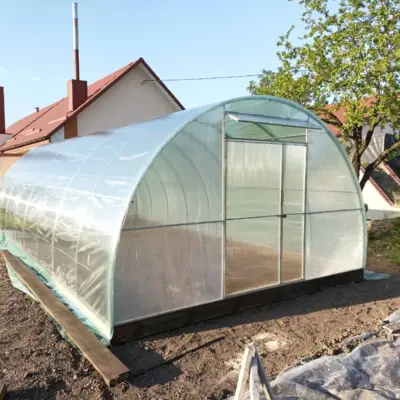
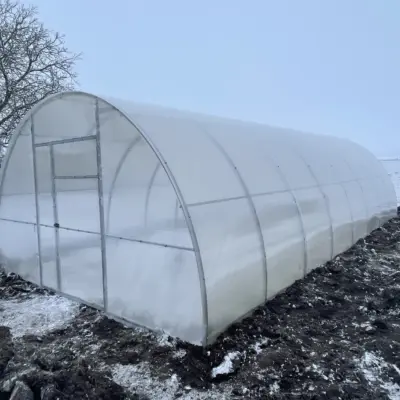
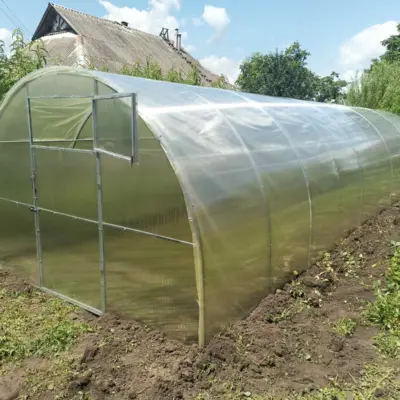
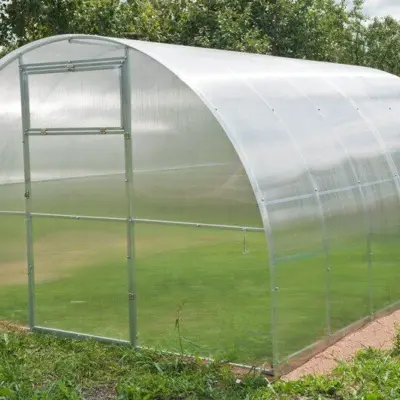
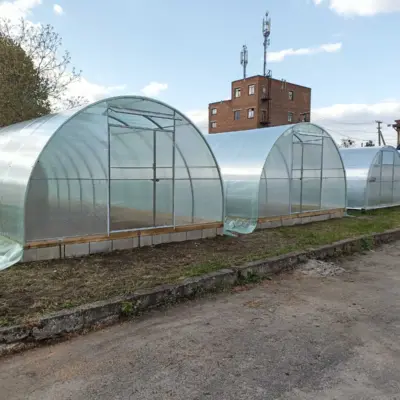
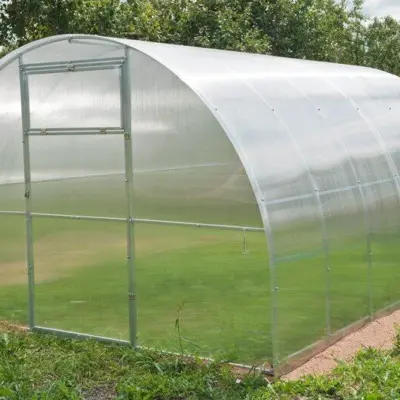
Check out the greenhouses in the video
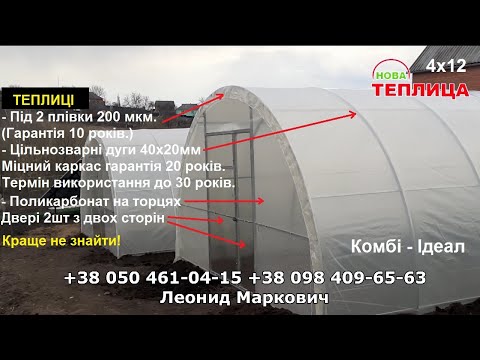
Buy greenhouse Ideal - Kombi with profiled pipe 40x20mm
The strongest frame. Ends assembled 2 doors, Any configuration. Greenhouses from polycarbonate or greenhouse under the film can be combined differently. Stainless ...
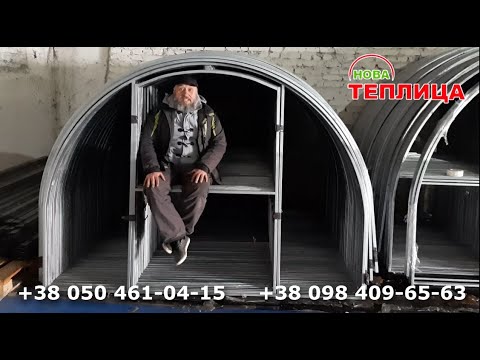
Standard width: 2.4m | 3m | 3.5m | 3.5m 4m etc.
There are ready-made arched greenhouses with standard width: 2,4m | 3m | 3,3m | 3,3m | 3,5m | 4m | etc. and the length to them can be any. Non-standard sizes...
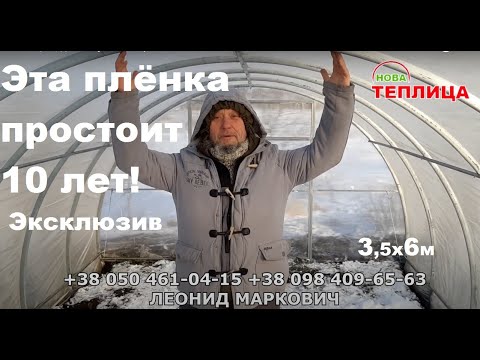
Teplitsa under film 200 micron Kombi 3,5x6
Greenhouse 3,5x6m. Ends of polycarbonate, and the top of the greenhouse under the film 200 microns, which will last more than 10 years. Cool greenhouse combined. All recom...
We use high-quality polycarbonate for greenhouses at a reasonable price in Ukraine. The quality matches the price. We honestly show different configurations due to which the price for one size can be from cheap to expensive. There are about 25 configuration options for one selected size. Therefore, we ask you to be attentive to the details offered by different greenhouse sellers. We are the first manufacturers of summer cottage design greenhouses in Ukraine, which can be assembled even by a schoolchild without special skills. Our greenhouse frames are easy to assemble. How to sheathe the ends with polycarbonate and do it correctly can be done according to the instructions in text or video. Also, we can install a greenhouse by our assembly team in 1-3 hours. The assembly speed depends on the size and type of the greenhouse model. All our customers are satisfied and we post video reviews on our YouTube channel that customers send us. They also write a lot in the comments under the video.
What to look for in competitors' greenhouses
Some of our competitors make a semblance (parody) of our greenhouse models, the photos are similar, but the type and thickness of the profile and polycarbonate do not meet our quality standards. Therefore, their price is similar, and the equipment is the lowest and does not meet the norm at all. Some say one thing, and you receive something completely different than what is in the picture and in the description. Therefore, we ask you to carefully watch the video reviews, where we tell you everything and how to pay attention to what. We also have dealers of our greenhouses, you can also buy from them if they offer you in good faith. But, be careful and compare our prices and theirs. So that you are not sold a low configuration as expensive. So that you understand, there are 25 options for one greenhouse size and their price. From low quality to expensive. Go to one of the products and find out the options for components and price, looking through the list of greenhouse prices.
Why is it safer to buy a greenhouse from us?
We’ve been in business for 30 years and value our reputation. Our price-quality ratio matches your order. (Competitors promise one thing but deliver something different from what you ordered.) We offer a 10-year warranty on polycarbonate and a 20-year warranty on the frame. The expected service life is 25–30 years. You can buy a ready-made greenhouse from us by selecting the model you need and your desired configuration. You can also order any shape or style and customize your greenhouse according to an individual design, confident that you’ll receive exactly what you ordered. Our prices include free shipping, which affects the cost of the greenhouses. If a competitor’s price is lower, it means they’ll charge you separately for shipping—1,500 or more—and, as a result, your greenhouse will end up costing more than it would with us. Please clarify which greenhouses include delivery and which do not. We also offer our customers 2–3 free gifts, which, as you understand, are included in our price. If you decline the gifts, we can lower the price even further. The conclusion is simple! For those who want to buy a greenhouse at a lower price, Leonid Markovich will suggest choosing the appropriate configuration; for those who want a more robust configuration, it will be more expensive, but everything will correspond to the selected option. In any case, don’t hesitate to call Leonid Markovich at (050) 461-04-15 or (098) 409-65-63—he’s also on Viber—and rest assured that you’ll get exactly what you need. And if you want to buy a pig in a poke, then go ahead and buy from our competitors.
Experts' Opinion on Polycarbonate
Polycarbonate sheets are increasingly used in gardens and homesteads. Currently, the construction of greenhouses from polycarbonate is very popular. Modern design and durability are only the beginning of the advantages of using this material. However, is a polycarbonate greenhouse really worth your attention? Below we will dispel all doubts.
Polycarbonate greenhouses
These are lightweight, high-quality structures,
Which work well in the garden. Polycarbonate greenhouses work well.
Greenhouse in the garden as small garden architecture
Summer cottage greenhouses appear in both modern and traditional designs. As garden architecture, they fit perfectly into ecological trends, and at the same time help to grow delicious vegetables and fruits. In the past, greenhouses were associated with heavy glass structures that could not be moved. Nowadays, we already have many more options. Not only garden greenhouses are very popular, but also portable hotbeds. Sometimes mobility and an attractive price speak in favor of such a solution. Unfortunately, hotbeds are short-lived. Another disadvantage is the low level of aesthetics.
Modern greenhouses made of polycarbonate
A much more durable and elegant solution.
This is certainly one of the proposals that deserves more detailed consideration.
Polycarbonate Greenhouse – What is Polycarbonate?
Polycarbonate sheets are used in places exposed to mechanical damage. The material demonstrates high resistance and light transmission. Such a garden greenhouse made of cellular polycarbonate can be characterized by different degrees of UV transmission. It all depends on whether we choose colorless cellular polycarbonate or smoky cellular polycarbonate. What is the difference between these plastics?
Cellular polycarbonate
It is resistant to temperature changes and additionally holds back UV rays. The offers for sale include many types of polycarbonate. The most popular is multi-chamber polycarbonate. Its biggest advantage is very good thermal insulation. Cellular polycarbonate sheets retain more heat inside the greenhouse than double-glazed windows. Thanks to this, we can speed up the vegetation of heat-loving plants in the garden. It is also worth adding that cellular polycarbonate comes in various formats. We can easily match it to the design requirements of each greenhouse.
Monolithic polycarbonate
Offers for sale also include monolithic polycarbonate. Unfortunately, it is not as resistant to mechanical damage. Moreover, it turns out to be a poor heat insulator. Solid polycarbonate has small dimensions, so it will be difficult to cover large greenhouses. Due to small dimensions, high price and poor strength indicators, it is not recommended for building a home greenhouse. Polycarbonate is a popular building material, the prices for which you will find here. Polycarbonate greenhouse - an overview of the main advantages As we have already mentioned, polycarbonate sheets are resistant to mechanical damage, adverse weather conditions and high humidity. As a result, a polycarbonate greenhouse has a much longer service life than a polycarbonate tunnel of similar dimensions.
Durable and lightweight polycarbonate greenhouse
In the sales offers we can easily find ready-made greenhouses that will fit perfectly into the garden. A small greenhouse made of polycarbonate with a galvanized profile will not cause any difficulties during assembly and will not excessively limit the free usable space. We can do the assembly ourselves. The installation of a small greenhouse should take from 3 to 4 hours. After this time, the greenhouse is ready for use. It is worth emphasizing here that lightweight polycarbonate greenhouses can be moved from place to place every year. The so-called rotation is especially important for growing peppers and tomatoes. It is recommended to grow them in a different place each time. Thanks to this, we minimize the risk of pest attacks. We would not be able to make changes to heavy glass greenhouses.
Durable and lightweight polycarbonate greenhouse
In the sales offers we can easily find ready-made greenhouses that will fit perfectly into the garden. A small greenhouse made of polycarbonate with a galvanized profile will not cause any difficulties during assembly and will not excessively limit the free usable space. We can do the assembly ourselves. The installation of a small greenhouse should take from 3 to 4 hours. After this time, the greenhouse is ready for use. It is worth emphasizing here that lightweight polycarbonate greenhouses can be moved from place to place every year. The so-called rotation is especially important for growing peppers and tomatoes. It is recommended to grow them in a different place each time. Thanks to this, we minimize the risk of pest attacks. We would not be able to make changes to heavy glass greenhouses.
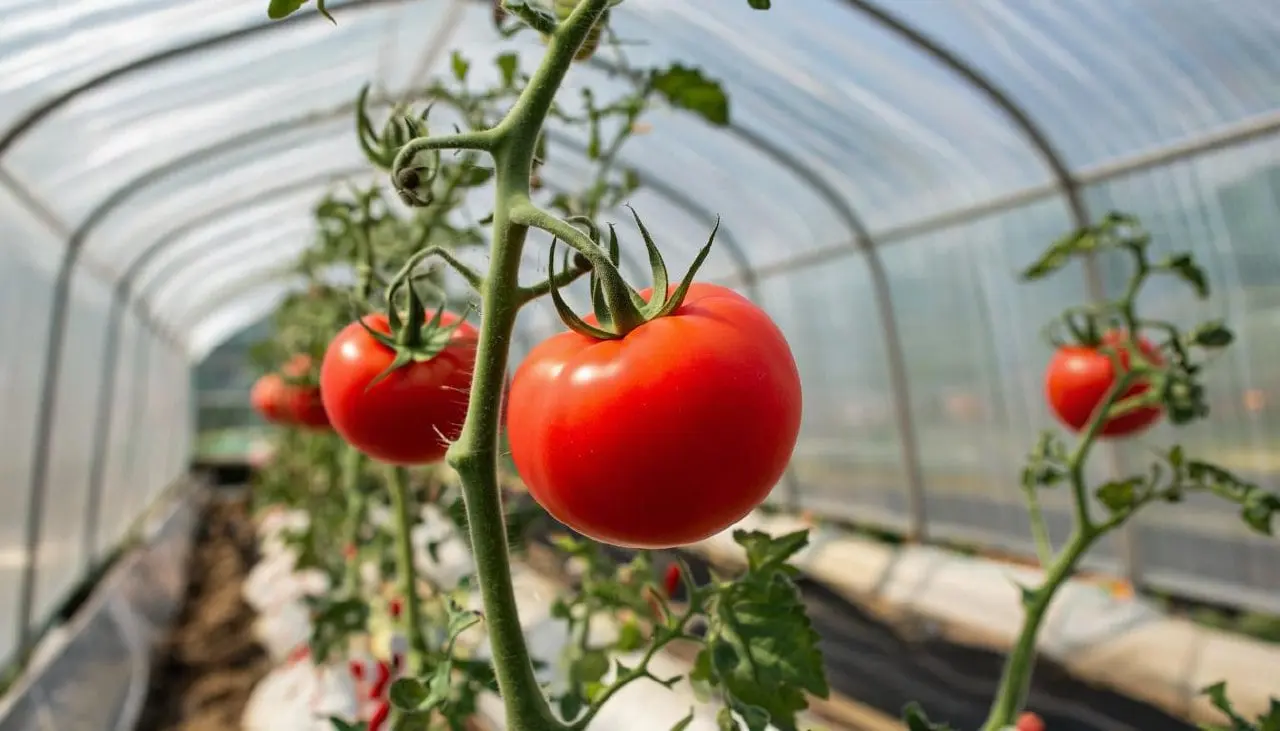
Greenhouses in Ukraine
Choose your dream—buy or order a polycarbonate greenhouse today!
📞 Call (050) 461-04-15 and receive free gifts when you purchase a greenhouse with polycarbonate walls. This is your chance to create the perfect conditions for growing plants all year round!
We guarantee the high quality of our polycarbonate greenhouses at the lowest price. Choose the model and material, and we’ll provide a warranty valid for 10 to 20 years. Delivery throughout Ukraine is absolutely free!
Don't miss this unique opportunity to purchase a reliable polycarbonate greenhouse at a discount. Our greenhouse structures will provide you with harvests for many years to come. We've lowered the prices on the best greenhouses in Ukraine, so the promotions are already available!
Choose your dream greenhouse—buy or order a polycarbonate greenhouse today! Order your greenhouse now and see for yourself the quality and reliability of our products.
ONLY WITH US
Super strength of construction
High-quality polycarbonate and frame can withstand large accumulations of snow.
Warranty for Polycarbonate and Film
Warranty on film and polycarbonate from 10 years
Service life 25-30 years
Ideal greenhouses
Frame made of galvanized profile and seamless welded arches
Strong frames
All-welded arcs with additional rolling, you won't find better
Any configuration is possible
models for any budget economy, standard and premium
Can be installed on any platform
On ground anchors into the ground, on a wooden beam or concrete foundation.
+ 3 gifts
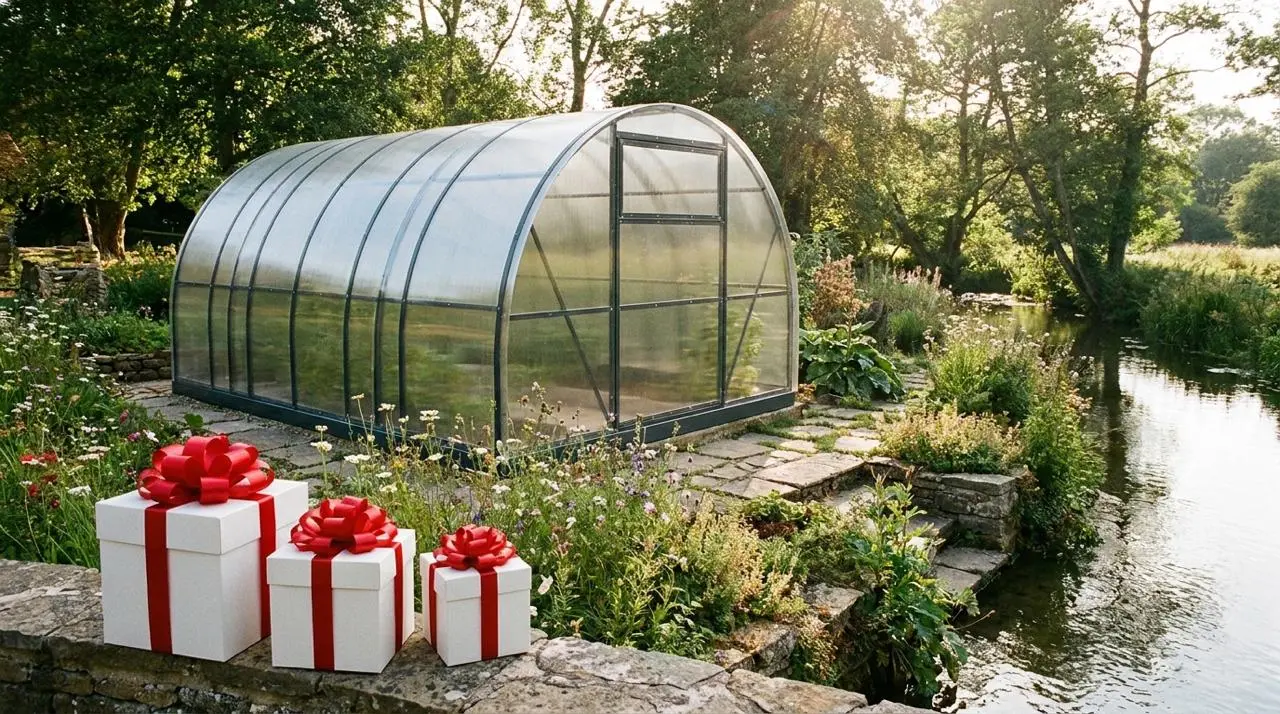
Knowledge and Support Center
Discover the precision of our designs. From simple ordering to professional assembly, we support you every step of the way.
Work process
Easy ordering
Select the base model and customize the exact specifications.
Consultation with an expert
Discuss design reliability and climate control needs with a professional.
Design and production
Precision fabrication of steel and aluminum frames and polycarbonate panels.
Delivery and assembly
Turnkey installation for perfect reliability and tightness.
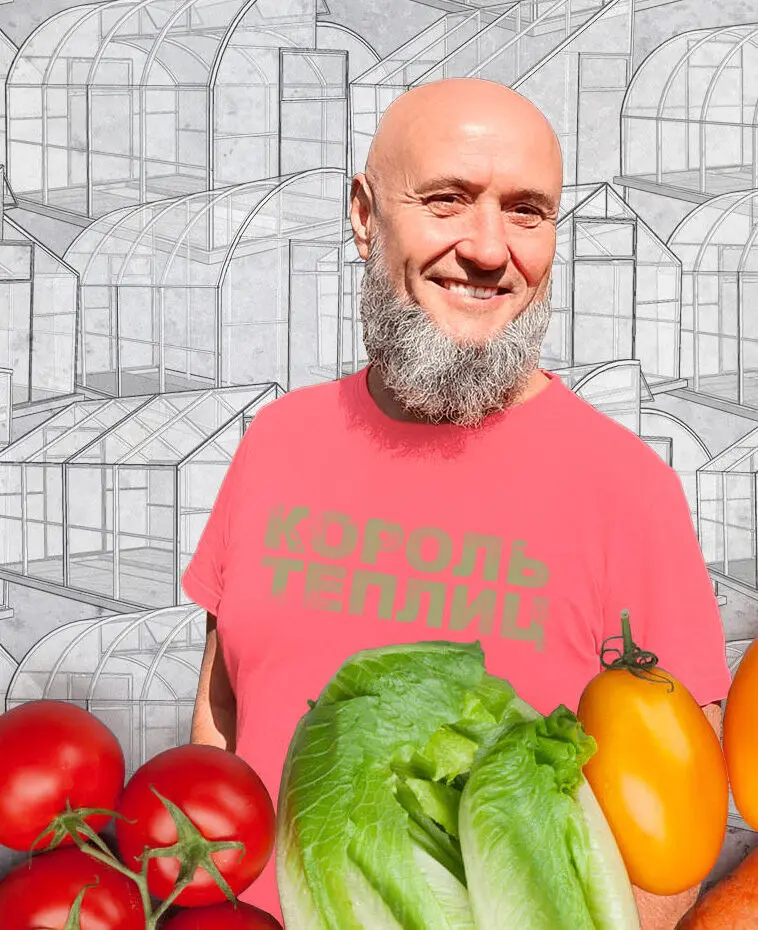
Expert assistance
We can help you choose the perfect greenhouse for your budget and specific climate requirements.
Frequently asked questions
Easy ordering
It’s very easy to buy a ready-made or custom-made polycarbonate greenhouse from us. Choose a greenhouse from our catalog and click the "Buy" button. Send us your question or request. We’ll receive your request and call you back to confirm your order and finalize the details. We’ll get back to you via email, cell phone, or Viber. Or you can call Leonid Markovich right away at (050) 461-04-15 or (098) 409-65-63—he’s also on Viber. He will immediately take all your preferences into account and explain everything clearly and honestly. He will help you choose the ideal greenhouse design and place your order right away.
Determine the dimensions of the plot where you’ll be installing the structure. We offer ready-made polycarbonate greenhouses in standard sizes, and we can also custom-build non-standard ones to order. Decide what you want to grow and when. For example, a greenhouse for vegetables, for palm trees, or for a chicken coop. If you can’t find the right size or shape for your greenhouse, we’ll custom-build it for you—whether it’s a winter garden, a conservatory, or something else. Need help figuring out the details or getting some advice? Just write to us or call us right now via our website, email, Viber, or by phone at any time of day!
Get our consultation
We have many years of experience working with summer residents and farmers who have different goals, budgets, and circumstances, and we'll help you choose the best polycarbonate greenhouse option for your needs.
We design and manufacture
Based on your preferences and goals, we will build the best polycarbonate greenhouse structure, custom-designed specifically for you, within the agreed-upon timeframe.
We deliver and install
We will deliver the order to your location free of charge, and—if you prefer—you can install it yourself using our instructions and advice from professionals, or our team will install your greenhouse on a “turnkey” basis with a 20-year warranty.
How to Choose a Polycarbonate Greenhouse?
Choosing a polycarbonate greenhouse is an important step toward successful gardening and vegetable growing. Here are a few key points to consider when selecting a greenhouse:
— Size: Determine how many plants or what types of crops you plan to grow. The size of the greenhouse you choose will depend on your needs. A small greenhouse is suitable for a small family garden, while a large one is needed for commercial use.
Size: Determine how many plants or what crops you plan to grow. The size of the greenhouse structure you choose depends on your needs. A small greenhouse is suitable for a small family garden, while a larger one is needed for commercial use.
— Polycarbonate Type: Polycarbonate is available in single-layer and double-layer varieties. Double-layer polycarbonate provides better insulation and retains heat more effectively during the colder months, making it the preferred choice for regions with cold winters.
Polycarbonate Type: Polycarbonate is available in single-layer and double-layer varieties. Double-layer polycarbonate provides better insulation and retains heat more effectively in cold weather, making it the preferred choice for regions with cold winters.
— Frame: Carefully examine the frame's material and construction. The frame can be made of metal or wood. A metal frame is more durable but requires additional insulation to prevent condensation.
Frame: Carefully examine the material and construction of the frame. The frame can be made of metal or wood. A metal frame is more durable, but requires additional insulation to prevent condensation.
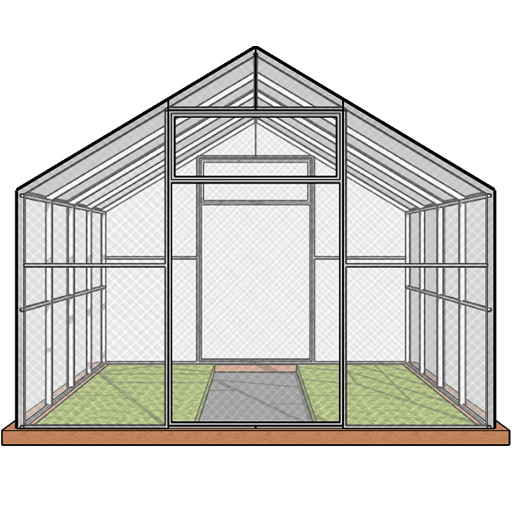
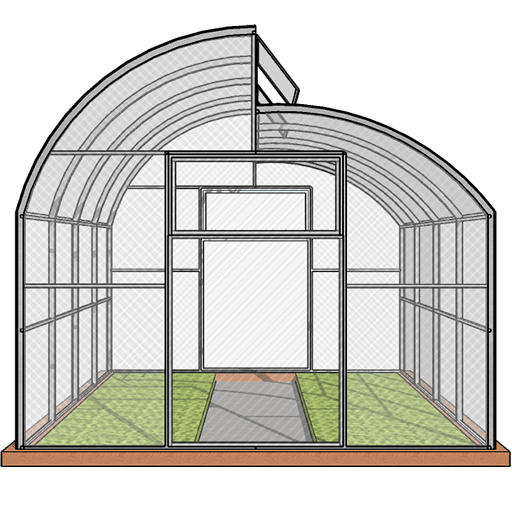
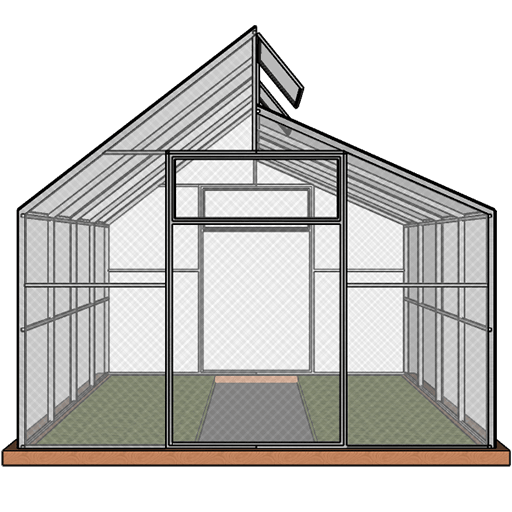
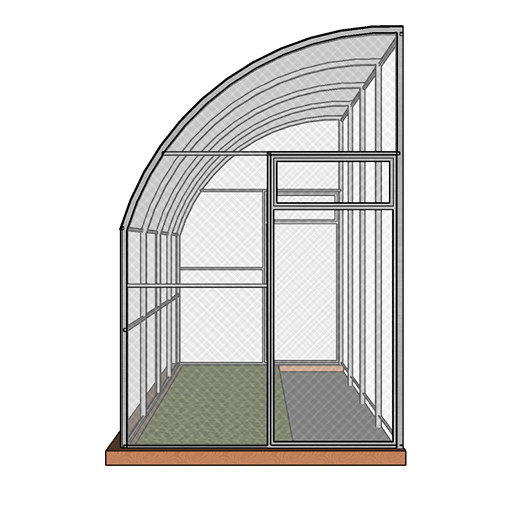
— Shape: Choose a shape that suits your plot. Greenhouses come in the following shapes: arched, gable-roofed, Mitlaider, Mitlaider gable-roofed, single-sloped, and wall-mounted half-arch. Each has its own advantages and disadvantages.
Shape: Choose the shape that best suits your site. Greenhouses can be arched, gable-roofed, mitlider, mitlider gable, single-slope, or wall-mounted semi-arched. Each type has its own advantages and disadvantages.
— Ventilation: Ensure good ventilation to prevent overheating during hot weather and reduce the risk of plant diseases.
Ventilation: Ensure good ventilation to prevent overheating during hot weather and reduce the risk of plant diseases.
— Budget: Consider your financial situation. Investing in a high-quality polycarbonate greenhouse is a long-term solution that will last for several years.
Budget: Consider your financial situation. Investing in a high-quality polycarbonate greenhouse is a long-term solution that will last for several years.
— Location: Think about where to place it on your property. It should get plenty of sunlight, but also be sheltered from strong winds and unwanted neighbors.
Location: Consider the location on the property. It should get enough sunlight, but also be sheltered from strong winds and unwanted neighbors.
By following these guidelines, you will be able to choose the right polycarbonate greenhouse to meet your needs and help you successfully grow plants on your property.
How to Install a Polycarbonate Greenhouse?
Installing a polycarbonate greenhouse may seem like a daunting task, but with the right approach and instructions, you can do it yourself. Here is a step-by-step guide on how to install a polycarbonate greenhouse:
— Prepare the site: Start by selecting and preparing a location for the greenhouse structure. Keep in mind that the site should get plenty of sunlight and be level. Clear the area of vegetation and rocks.
Prepare the site: Start by selecting and preparing the location for the greenhouse structure. Keep in mind that the site should get plenty of sunlight and be level. Clear the area of vegetation and rocks.
— Frame Assembly: Assemble the frame according to the manufacturer's instructions. This usually involves joining metal or wooden parts to create the main structure.
Assembling the Frame: Assemble the frame according to the manufacturer's instructions. This usually involves joining metal or wooden parts to create the main structure.
— Securing the Frame: Place the frame on the prepared area. Make sure it is stable and level. If necessary, use fasteners to secure the frame to the ground.
Securing the Frame: Place the frame on the prepared area. Make sure it is stable and level. If necessary, use fasteners to secure the frame to the ground.
— Installing a Foundation: Some greenhouse structures require the installation of a foundation or a perimeter frame. This can help keep rodents out and improve drainage.
Installing a Foundation: Some greenhouse structures require the installation of a foundation or a perimeter frame. This can help keep rodents out and improve drainage.
— Installing polycarbonate: Install the polycarbonate panels onto the frame. They are typically secured with self-tapping screws or clips. Make sure the panels fit snugly together to prevent drafts and heat loss.
Installing Polycarbonate: Install the polycarbonate panels onto the frame. They are typically secured with self-tapping screws or clips. Make sure the panels fit tightly together to prevent drafts and heat loss.
— Ventilation: Install ventilation windows or vents at the top of the greenhouse. They will help regulate the temperature and humidity inside.
Ventilation: Install ventilation windows or vents at the top of the greenhouse. They will help regulate the temperature and humidity inside.
— Doors and Entrances: Install a door or an entrance flap. This will make it easy to enter and exit, and will also provide additional ventilation.
Doors and Entrance: Install a door or an entrance flap. This will make it easy to enter and exit, and will also provide additional ventilation.
— Final Assembly: Check all fasteners and components of the greenhouse structure to ensure they are secure and safe. Make sure the greenhouse can withstand wind and other weather conditions.
Final Assembly: Check all fasteners and components of the greenhouse structure to ensure they are secure and safe. Make sure the greenhouse is stable and can withstand wind and other weather conditions.
— Care: After installation, be sure to provide regular care, including watering, ventilation, and cleaning.
Care: After installation, be sure to provide regular care, including watering, ventilation, and cleaning.
By following these instructions, you’ll be able to set up a polycarbonate greenhouse and start growing plants successfully. If you encounter any difficulties, you can always contact professionals or the company “TeplitsaNova” for advice and assistance with the installation.
How is a polycarbonate greenhouse built?
A polycarbonate greenhouse is a modern and efficient structure that extends the growing season and provides optimal conditions for plant growth. Let’s take a closer look at how this type of greenhouse is built:
— Frame: The frame forms the foundation of the greenhouse and can be made of metal or wood. The frame supports the entire structure and ensures its stability.
— Polycarbonate panels: The walls and roof of the greenhouse structure are covered with polycarbonate panels. Polycarbonate is a lightweight and durable material that provides good thermal insulation and allows light to pass through. Polycarbonate protects plants from harmful environmental factors such as cold, wind, heavy precipitation, and ultraviolet radiation.
— Ventilation: The upper part of a greenhouse structure is often equipped with ventilation windows that can be opened and closed. This allows for the regulation of temperature and humidity inside the greenhouse. Ventilation also promotes air circulation, which is important for plant health.
— Door: A greenhouse has a door or entrance that makes it easy to get in and out. This allows the gardener to tend to the plants, clean the greenhouse, and harvest the crops.
— Foundation: Some greenhouse models require the installation of a foundation or a perimeter frame to reinforce the structure and ensure stability. A foundation can also serve as a barrier against pests.
— Care and Maintenance: Regular care is necessary to keep the greenhouse in good condition. This includes watering, cleaning, replacing polycarbonate panels as needed, and maintaining the ventilation systems.
A polycarbonate greenhouse creates optimal conditions for growing plants, protecting them from adverse environmental factors. It also extends the growing season and allows you to grow plants regardless of the time of year.
Which greenhouse is better: glass or polycarbonate?
The choice between a glass or polycarbonate greenhouse depends on your specific needs and the conditions in which you plan to grow plants. Both materials have their advantages and disadvantages.
Glass greenhouse:
Advantages:
— Transparency: Glass allows plenty of light to enter the structure, which promotes healthy plant growth and development.
Transparency: Glass allows light to penetrate the structure very well, which promotes healthy plant growth and development.
— Durability: Glass is a durable material and can last for decades with proper care.
Durability: Glass is a durable material and can last for decades with proper care.
— Aesthetics: Glass greenhouse structures can give your property an elegant and attractive look.
Aesthetics: Glass greenhouse structures can give your property an elegant and attractive look.
Flaws:
— Weight: Glass is heavy and may require a sturdier and more expensive frame.
Weight: Glass is heavy and may require a sturdier and more expensive frame.
— Heating costs: Glass does not provide good thermal insulation, so it may require more energy to maintain an optimal temperature inside the greenhouse, especially during the colder months.
Heating costs: Glass does not provide good thermal insulation, so it may require more energy to maintain an optimal temperature inside the greenhouse, especially during the colder months.
Polycarbonate greenhouse:
— Thermal Insulation: Polycarbonate provides excellent thermal insulation, which helps retain heat inside the greenhouse and ensures more stable growing conditions for plants.
Thermal Insulation: Polycarbonate provides excellent thermal insulation, which helps retain heat inside the greenhouse and ensures more stable growing conditions for plants.
— Lightweight: Polycarbonate greenhouses are lighter than glass ones, which makes them easier to install and requires less sturdy frames.
Lightweight: Polycarbonate greenhouses are lighter than glass ones, making them easier to install and requiring less sturdy frames.
— Durability: Polycarbonate is impact-resistant, which reduces the risk of damage from strong winds or falling objects.
Durability: Polycarbonate is impact-resistant, which reduces the risk of damage from strong winds or falling objects.
— Transparency: Compared to glass, polycarbonate may slightly reduce light intensity, which may require additional lighting in some cases.
Transparency: Compared to glass, polycarbonate may slightly reduce light intensity, which may require additional lighting in some cases.
— Service life: Polycarbonate may have a shorter service life than glass, although it is still a durable material.
Service life: Polycarbonate may have a shorter service life than glass, although it is still a durable material.
The choice between glass and polycarbonate depends on your priorities, budget, and the climate conditions in your region. Polycarbonate greenhouses are generally more practical and meet the needs of most summer residents, farmers, and gardeners, especially in regions with a variable climate. TeplitsaNova offers a variety of polycarbonate greenhouse models, and our specialists are ready to help you choose the best option to suit your needs.
Which greenhouse is better: plastic film or polycarbonate?
The choice between a plastic film greenhouse and a polycarbonate greenhouse depends on your needs, budget, and the conditions in which you plan to grow your plants. “TeplitsaNova” offers both of these options, and we’d like to share some factors to consider to help you make your decision:
Greenhouse made of plastic sheeting:
Advantages:
— Low cost: Greenhouses covered with plastic sheeting are generally more affordable, making them appealing to beginner gardeners and those looking to save money.
Low cost: Greenhouses covered with plastic sheeting are generally more affordable, making them an attractive option for beginner gardeners and those looking to save money.
— Easy to install: They are easier and faster to install, which can be helpful if you need to get started with gardening quickly.
Easy to install: They are easier and faster to install, which can be helpful if you need to get started with gardening quickly.
Flaws:
— Seasonality: They are generally less durable and not suitable for year-round use.
Seasonality: They are generally less durable and not suitable for year-round use.
— Thermal insulation: They provide less thermal insulation than polycarbonate, which may require additional effort and expense to keep the interior warm.
Thermal insulation: They provide less thermal insulation than polycarbonate, which may require additional effort and expense to maintain the temperature inside.
— Vulnerability: The film may be exposed to wind, ultraviolet radiation, and physical damage, which requires more frequent replacement.
Vulnerability: The film may be exposed to wind, ultraviolet radiation, and physical damage, which requires more frequent replacement.
Polycarbonate greenhouse:
— Durability: Polycarbonate greenhouses are generally more durable and can be used for many seasons.
Durability: Polycarbonate greenhouses are generally more durable and can be used for many seasons.
— Thermal Insulation: Polycarbonate provides excellent thermal insulation, which ensures stable growing conditions for plants and allows them to be grown year-round.
Thermal Insulation: Polycarbonate provides excellent thermal insulation, which ensures stable growing conditions for plants and allows them to be grown year-round.
— Durability: Polycarbonate is resistant to weathering and mechanical damage, ensuring reliable protection for plants.
Durability: Polycarbonate is resistant to weathering and mechanical damage, ensuring reliable protection for plants.
— High cost: Polycarbonate greenhouses can be more expensive than plastic-film greenhouses.
High costs: Polycarbonate greenhouses can be more expensive than plastic-film greenhouses.
— Installation: They may require a more complex installation and a sturdy frame.
Installation: They may require a more complex installation and a sturdy frame.
The choice between plastic sheeting and a polycarbonate greenhouse depends on your goals, budget, and climate conditions. If you’re looking for a long-term, sustainable solution for growing plants, a polycarbonate greenhouse from “TeplitsaNova” may be the best option. Our experts are ready to help you choose the best option to meet your needs.
What temperatures can a polycarbonate greenhouse withstand?
The polycarbonate greenhouses provided by “TeplitsaNova” are highly frost-resistant and ensure optimal conditions for plants even during cold spells. The ability of polycarbonate greenhouse structures to withstand low temperatures depends on several factors:
— Polycarbonate thickness: The thickness of polycarbonate panels affects thermal insulation. The thicker the polycarbonate, the better it retains heat and protects plants from frost. TeplitsaNova offers various models with different polycarbonate thicknesses.
Polycarbonate Thickness: The thickness of polycarbonate panels affects thermal insulation. The thicker the polycarbonate, the better it retains heat and protects plants from frost. TeplitsaNova offers various models with different polycarbonate thicknesses.
— Ventilation: Good ventilation in a polycarbonate greenhouse can help prevent drafts and minimize the risk of frost. Ventilation windows and temperature control systems can be installed to maintain optimal conditions for the plants.
Ventilation: Good ventilation in a polycarbonate greenhouse can help prevent drafts and minimize the risk of frost. Ventilation windows and temperature control systems can be installed to maintain optimal conditions for the plants.
— Insulation and heating: In some cases, especially in regions with cold winters, additional insulation and heating may be needed to ensure reliable protection against freezing. This may include the use of air curtains, heaters, or other methods of maintaining temperature.
Insulation and Heating: In some cases, particularly in regions with cold winters, additional insulation and heating may be necessary to ensure reliable protection against freezing. This may include the use of air curtains, heaters, or other methods of maintaining temperature.
The polycarbonate greenhouses offered by “TeplitsaNova” are designed for temperate and cold climates and can withstand frosts within the range typical for many plants. However, under critical conditions or during extreme temperatures, additional measures—such as insulation and heat retention—may be necessary. In any case, it is important to consult with specialists and monitor weather conditions to ensure the best possible care for your plants in the greenhouse throughout the year.
What kind of polycarbonate should I use to cover my greenhouse?
When choosing polycarbonate for your greenhouse structure, it’s important to consider a number of factors, such as climate conditions, plant needs, and your preferences. “TeplitsaNova” offers various types of polycarbonate, and here are a few main types to consider:
— Single-wall polycarbonate: This type of polycarbonate is suitable for temperate climates. It provides good light transmission, which promotes healthy plant growth. However, its thermal insulation properties may be lower than those of double-wall polycarbonate. The Black Sea region, including the Odesa, Mykolaiv, and Kherson regions. The climate here is Mediterranean, with mild winters and warm summers. The southern Dnipro region, including the Dnipropetrovsk, Zaporizhzhia, and Kirovohrad regions. Winters here are usually much milder than in the northern regions, and the climate is Mediterranean. The central part of Ukraine, including the Kyiv, Cherkasy, and Vinnytsia regions. Winters here are moderate, with relatively mild temperatures. Polissya, which encompasses the Volyn, Rivne, and Zhytomyr regions. The climate here is generally temperate, with mild winters and cool summers. The Crimean Peninsula. Crimea has a Mediterranean climate with mild winters and warm summers.
Single-wall polycarbonate: This type of polycarbonate is suitable for moderate climates. It provides good light transmission, which promotes healthy plant growth. However, its thermal insulation properties may be lower than those of double-wall polycarbonate.
— The Black Sea region, including the Odesa, Mykolaiv, and Kherson Oblasts. The climate here is Mediterranean, with mild winters and warm summers.
The Black Sea region, including the Odessa, Mykolaiv, and Kherson regions. The climate here is Mediterranean, with mild winters and warm summers.
— The Southern Dnipro Region, which includes the Dnipropetrovsk, Zaporizhzhia, and Kirovohrad regions. Winters here are usually much milder than in the northern regions, and the climate is Mediterranean.
The southern Dnipro region, including the Dnipropetrovsk, Zaporizhia, and Kirovograd regions. Winters here are usually much milder than in the northern regions, and the climate is Mediterranean.
— Central Ukraine, including the Kyiv, Cherkasy, and Vinnytsia regions. Winters here are moderate, with relatively mild temperatures.
The central part of Ukraine, including the Kyiv, Cherkasy, and Vinnytsia regions. Winters here are moderate, with relatively mild temperatures.
— Polesie, which includes the Volyn, Rivne, and Zhytomyr regions. The climate here is generally temperate, with mild winters and cool summers.
Polesia, which includes the Volyn, Rivne, and Zhytomyr regions. The climate here is generally moderate, with mild winters and cool summers.
— The Crimean Peninsula. Crimea has a Mediterranean climate with mild winters and warm summers.
Crimean Peninsula. Crimea has a Mediterranean climate with mild winters and warm summers.
— Double-wall polycarbonate: Double-wall polycarbonate offers better thermal insulation, making it an excellent choice for regions with cold winters. It helps retain heat, which is especially important during cold spells. The Carpathian Mountains, which span several regions, including Zakarpattia and Lviv. Winters here can be snowy and cold. Western regions, including Lviv, Ivano-Frankivsk, and Chernivtsi. Winters are particularly harsh in mountainous areas. The central regions, including the Kyiv and Zhytomyr regions. Winters here can also be cold, although temperatures are usually not as low as in the northern regions. The northern regions of Ukraine, such as the Chernihiv, Sumy, and Poltava regions. Winters here are often characterized by low temperatures and heavy snowfall. The eastern regions, including the Kharkiv and Donetsk regions. Winters here are cold, but they may be less snowy than in the western regions.
Double-wall polycarbonate: Double-wall polycarbonate provides superior thermal insulation, making it an excellent choice for regions with cold winters. It helps retain heat, which is especially important during cold spells.
— The Carpathians, which span several regions, including Zakarpattia and Lviv. Winters here can be snowy and cold.
— The western regions, including the Lviv, Ivano-Frankivsk, and Chernivtsi regions. Winters are particularly harsh in the mountainous areas.
— The central regions, including the Kyiv and Zhytomyr regions. Winters here can also be cold, although temperatures are usually not as low as in the northern regions.
— The northern regions of Ukraine, such as the Chernihiv, Sumy, and Poltava regions. Winters there are often marked by low temperatures and heavy snowfall.
— The eastern regions, including the Kharkiv and Donetsk regions. Winters here are cold, but they may be less snowy than in the western regions.
— Impact-resistant polycarbonate: If you expect stronger winds or are concerned about mechanical damage, impact-resistant polycarbonate may be a good choice. It is highly durable and impact-resistant. Black Sea Region: Near the Black Sea coast, regions such as Odesa and Mykolaiv may periodically experience strong winds, especially in the winter and spring. Western Regions: Western regions of Ukraine, such as the Lviv, Ivano-Frankivsk, and Zakarpattia regions, may be subject to strong winds, especially in mountainous areas. Crimean Peninsula: Crimea can experience strong winds, particularly during the “Nora” wind season. Polissya: Regions in Polissya, such as the Volyn and Rivne regions, are sometimes subject to strong winds, especially in winter and spring. Southern Regions: Some southern regions, including the Zaporizhzhia and Kherson regions, may experience winds from the Azov and Black Seas.
Impact-resistant polycarbonate: If you expect stronger winds or are concerned about mechanical damage, impact-resistant polycarbonate may be a good choice. It is highly durable and impact-resistant.
— The Black Sea region: Areas near the Black Sea coast, such as Odesa and Mykolaiv, may periodically experience strong winds, especially in the winter and spring.
Black Sea Region: Near the Black Sea coast, areas such as Odessa and Mykolaiv may experience occasional strong winds, especially in winter and spring.
— Western regions: The western regions of Ukraine, such as the Lviv, Ivano-Frankivsk, and Zakarpattia regions, may experience strong winds, especially in mountainous areas.
Western regions: Western regions of Ukraine, such as the Lviv, Ivano-Frankivsk, and Zakarpattia regions, may experience strong winds, especially in mountainous areas.
— Crimean Peninsula: Crimea may experience strong winds, especially during the “Nora” wind season.
Crimean Peninsula: Crimea may experience strong winds, especially during the “Nora” wind season.
— Polesie: Regions of Polesie, such as the Volyn and Rivne Oblasts, are sometimes subject to strong winds, especially in the winter and spring.
Polesie: Regions in Polesie, such as the Volyn and Rivne regions, are sometimes subject to strong winds, especially in the winter and spring.
— Southern regions: Some southern regions, including the Zaporizhzhia and Kherson regions, may experience winds from the Azov and Black Seas.
Southern regions: Some southern regions, including the Zaporizhzhia and Kherson regions, may experience winds from the Azov and Black Seas.
— Cellular polycarbonate: Polycarbonate with a cellular structure has air pockets between the layers of material. This provides additional insulation and better heat retention.
Cellular polycarbonate: Polycarbonate with a cellular structure has air pockets between the layers of material. This provides additional insulation and better heat retention.
When choosing polycarbonate, it is also recommended to consider local climate conditions, the seasonal nature of the crops you are growing, and your budget. “Teplitsa Nova” offers advice and assistance in selecting the best polycarbonate option for your greenhouse structure, taking your needs and preferences into account.
Why does a polycarbonate greenhouse turn green?
Several factors influence the greening of a polycarbonate greenhouse, and it is important to understand how they are interconnected:
— Algae and moss growth: Polycarbonate roofing creates ideal conditions for the growth of algae and moss. These organisms can proliferate on the surface of polycarbonate, especially in high-humidity conditions and when ventilation is insufficient.
Algae and Moss Growth: Polycarbonate roofing creates ideal conditions for the growth of algae and moss. These organisms can proliferate on the surface of polycarbonate, especially in high-humidity conditions and when ventilation is insufficient.
— Humidity: High humidity inside a greenhouse can promote the growth of algae and moss. This can be caused by watering the plants, a lack of proper ventilation, or the moisture level in the soil.
Humidity: High humidity inside a greenhouse can promote the growth of algae and moss. This can be caused by watering the plants, a lack of proper ventilation, or high soil moisture levels.
— Lack of sunlight: If there isn’t enough sunlight inside due to insufficient lighting or shading from polycarbonate, this can also contribute to the growth of vegetation. Algae and moss can use the available light to grow.
Lack of sunlight: If there isn’t enough sunlight inside due to insufficient lighting or the polycarbonate blocking it, this can also contribute to the growth of vegetation. Algae and moss can use the available light to grow.
To prevent or eliminate greening in a polycarbonate greenhouse, it is recommended to take the following measures:
— Increase ventilation: Ensure good air circulation to reduce humidity inside the greenhouse.
Increase ventilation: Ensure good air circulation to reduce humidity inside the greenhouse.
— Follow the watering guidelines: Watering your plants in moderation can help regulate the humidity inside the greenhouse.
Follow these watering guidelines: Watering your plants moderately can help regulate the humidity inside the greenhouse.
— Provide adequate lighting: Make sure the plants get enough sunlight. If necessary, you can use additional artificial lighting.
Provide adequate lighting: Make sure the plants get enough sunlight. If necessary, you can use additional artificial lighting.
— Regular cleaning: Clean the polycarbonate regularly to remove algae and moss. This will help maintain the surface's transparency and improve light transmission.
Regular Cleaning: Clean the polycarbonate regularly to remove algae and moss. This will help maintain the surface's transparency and improve light transmission.
TeplitsaNova also offers recommendations for maintaining a polycarbonate greenhouse and can help you choose the right materials and solutions to reduce the risk of mold growth and ensure optimal conditions for your plants.
How long does a polycarbonate greenhouse last?
The service life of a polycarbonate greenhouse depends on several factors, including the quality of the materials, operating conditions, and maintenance. However, on average, polycarbonate greenhouse structures can last between 10 and 25 years, and even longer with proper maintenance.
Important factors that affect the durability of a polycarbonate greenhouse include:
— Polycarbonate quality: The use of high-quality polycarbonate panels with good resistance to ultraviolet radiation and weathering helps ensure a longer service life.
Polycarbonate Quality: The use of high-quality polycarbonate panels with good resistance to UV radiation and weathering helps extend their service life.
— Care and Maintenance: Regularly cleaning the polycarbonate to remove dust, dirt, and algae helps maintain its clarity and durability. It is also important to monitor the condition of the frame and make repairs promptly as needed.
Care and Maintenance: Regularly cleaning the polycarbonate to remove dust, dirt, and algae helps maintain its clarity and durability. It is also important to monitor the condition of the frame and make repairs promptly as needed.
— Ventilation Level: Good ventilation and humidity control help prevent condensation and reduce the effects of moisture on polycarbonate.
Ventilation Level: Good ventilation and humidity control help prevent condensation and reduce the effects of moisture on polycarbonate.
— Winter Conditions: In regions with cold winters, additional insulation and heating may be required to protect the greenhouse from severe frosts. Western regions, including the Lviv, Ivano-Frankivsk, and Chernivtsi regions. Winters are particularly harsh in mountainous areas. The Carpathian Mountains span several regions, including Zakarpattia and Lviv. Winters here can be snowy and cold. The northern regions of Ukraine, such as the Chernihiv, Sumy, and Poltava regions. Winters here are often characterized by low temperatures and heavy snowfall. The central regions, including the Kyiv and Zhytomyr regions. Winters here can also be cold, although temperatures are usually not as low as in the northern regions. The eastern regions, including the Kharkiv and Donetsk regions. Winters here are cold, but they may be less snowy than in the western regions.
Winter Conditions: In regions with cold winters, additional insulation and heating may be needed to protect the greenhouse from severe frosts.
— The western regions, including the Lviv, Ivano-Frankivsk, and Chernivtsi regions. Winters are particularly harsh in the mountainous areas.
Western regions, including the Lviv, Ivano-Frankivsk, and Chernivtsi regions. Winters are particularly harsh in mountainous areas.
— The Carpathians, which span several regions, including Zakarpattia and Lviv. Winters here can be snowy and cold.
The Carpathians, which span several regions, including Zakarpattia and Lviv. Winters here can be snowy and cold.
— The northern regions of Ukraine, such as the Chernihiv, Sumy, and Poltava regions. Winters there are often marked by low temperatures and heavy snowfall.
The northern regions of Ukraine, such as the Chernihiv, Sumy, and Poltava regions. Winters there are often marked by low temperatures and heavy snowfall.
— The central regions, including the Kyiv and Zhytomyr regions. Winters here can also be cold, although temperatures are usually not as low as in the northern regions.
Central regions, including the Kyiv and Zhytomyr regions. Winters here can also be cold, although temperatures are usually not as low as in the northern regions.
— The eastern regions, including the Kharkiv and Donetsk regions. Winters here are cold, but they may be less snowy than in the western regions.
Eastern regions, including the Kharkiv and Donetsk regions. Winters are cold here, but they can be less snowy than in the western regions.
— Climate conditions: The climate in your region also affects the greenhouse's lifespan. In milder climates, greenhouses can last longer.
Climate Conditions: The climate in your region also affects the greenhouse's lifespan. In milder climates, greenhouses can last longer.
TeplitsaNova offers high-quality polycarbonate greenhouses designed for durability and to provide reliable protection for your plants. By following the care and maintenance recommendations and taking local climate conditions into account, you can expect your greenhouse to have a long service life.
CAN ORDER
Any type of greenhouses
At our greenhouse factory, we manufacture any type of frame—standard or custom—tailored to your specifications. In our online greenhouse store, we offer ready-made polycarbonate greenhouses at affordable prices, including combination greenhouses designed for plastic film and other options and configurations. You can choose a greenhouse from our catalog.
from the available shapes and models. Buy a greenhouse in Kyiv and have it delivered anywhere in Ukraine—to any city or village. Order a prefabricated “Thermos” greenhouse or have one custom-built entirely to your specifications, with turnkey delivery and installation. It’s easy to calculate an approximate or exact cost for a greenhouse online or by phone. If you need advice on choosing the right type of greenhouse, you can get it directly from Leonid Markovich at (050) 461-04-15, (098) 409-65-63—he’s also on Viber. If you have any questions, give us a call!
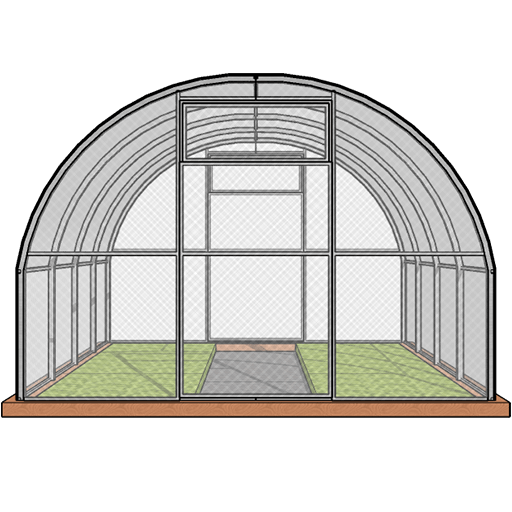
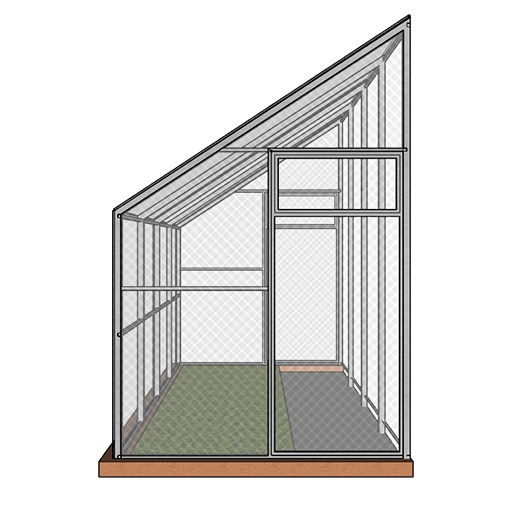
UNTIL NOVEMBER 1 + 2–3 FREE GIFTS
Everyone who buys a greenhouse under polycarbonate receives a gift technology «Greenhouse-Thermos» with materials, drip irrigation, shading net - (if available) and much more (specify individually when placing an order).
Technology
"Greenhouse-thermos"
Technology
"Drip irrigation."
Shading mesh
for the entire structure
And other exclusives
gifts

Отзывы клиентов
Реальные отзывы покупателей теплиц







Блог
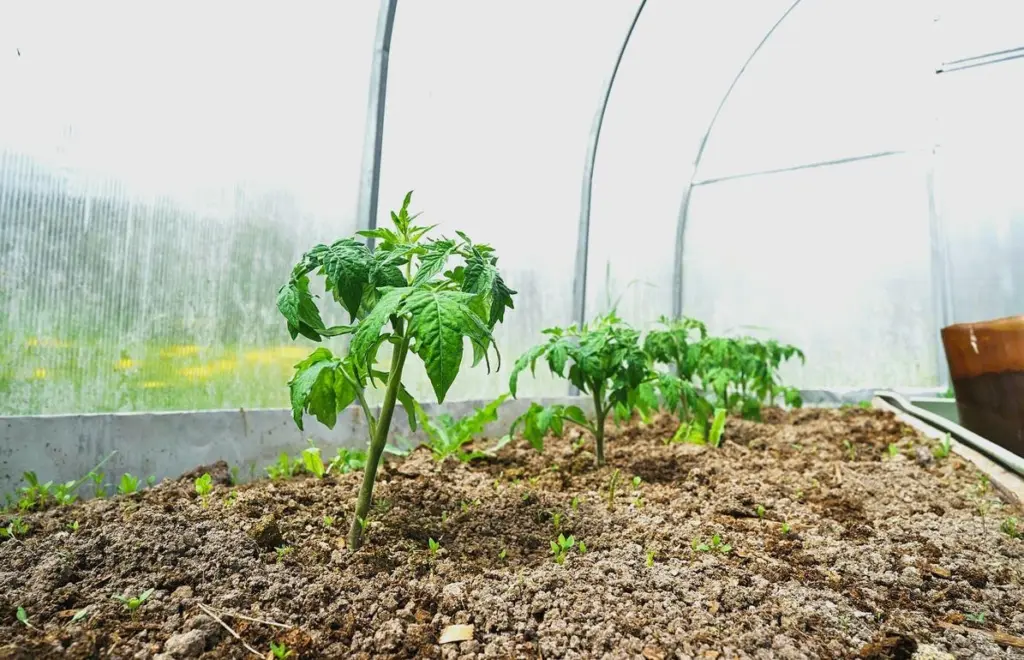
How to Protect Plants in a Greenhouse from Sudden Temperature Fluctuations: An Engineering and Agronomic Approach
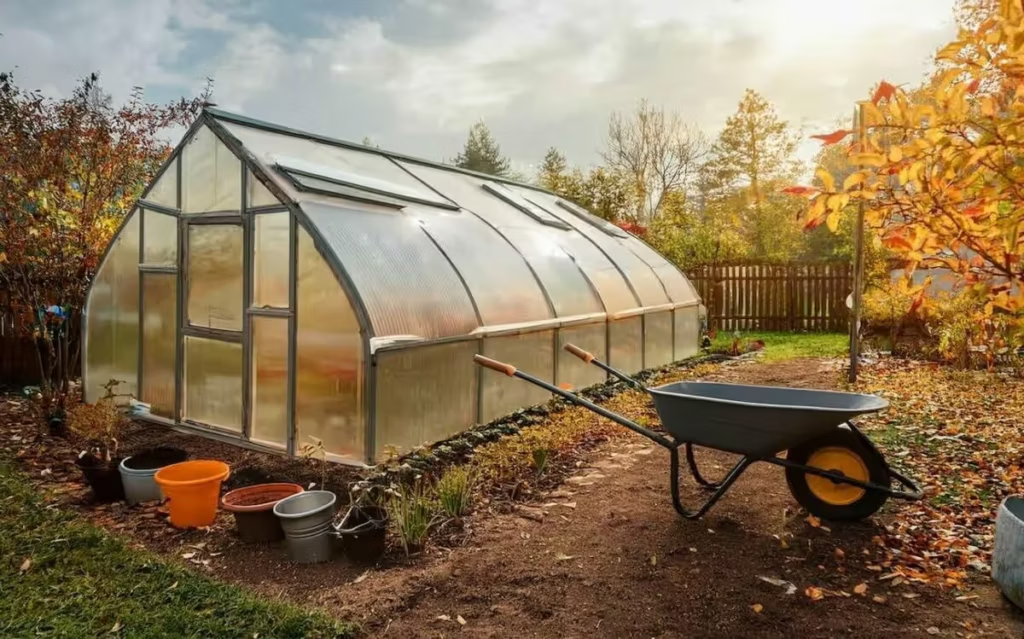
How to Prepare a Greenhouse for a Power Outage: A Comprehensive Guide from Engineers and Agronomists
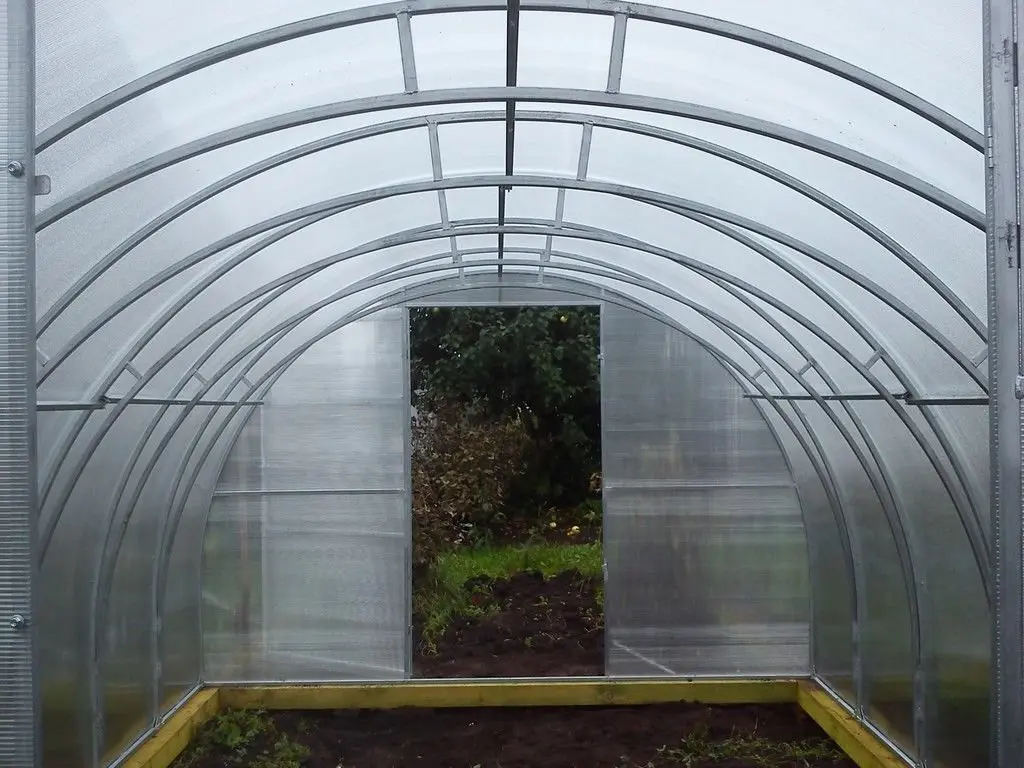
Which greenhouse is better—galvanized or painted?
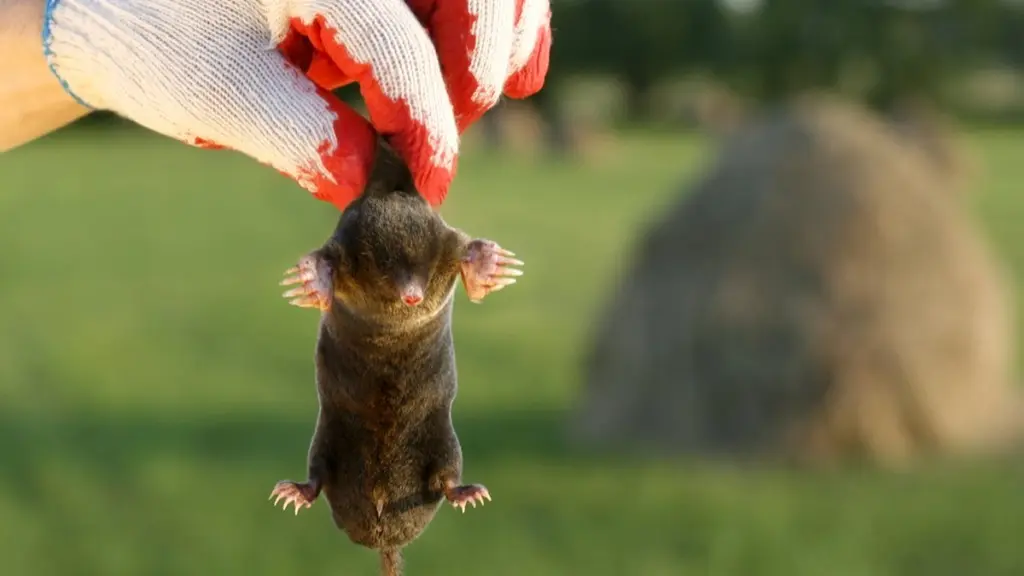
How can you prevent moles and rodents from burrowing under your greenhouse?
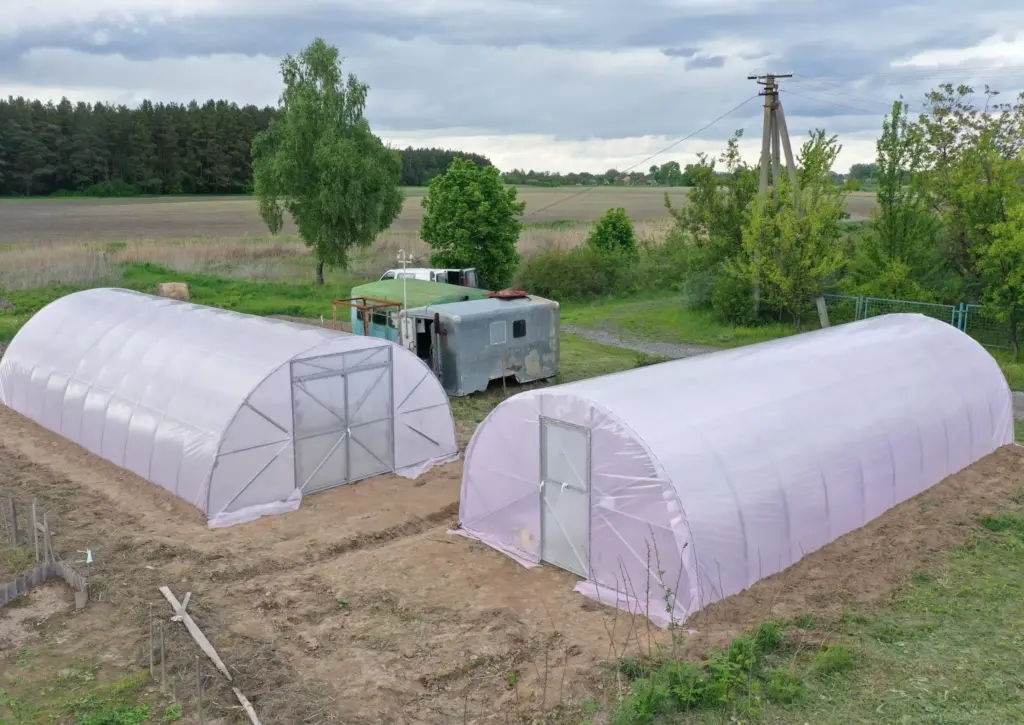
How to avoid waterlogging in the corners of the greenhouse?
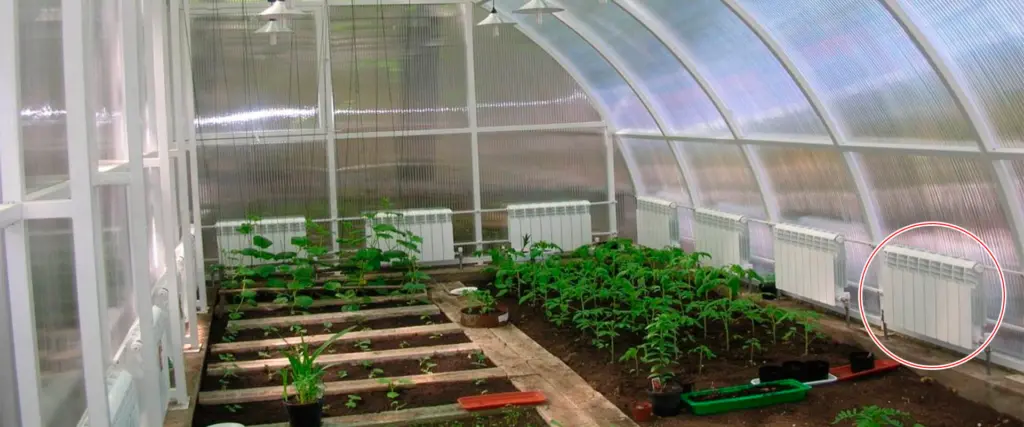
How to organize heat dissipation in the greenhouse in summer?
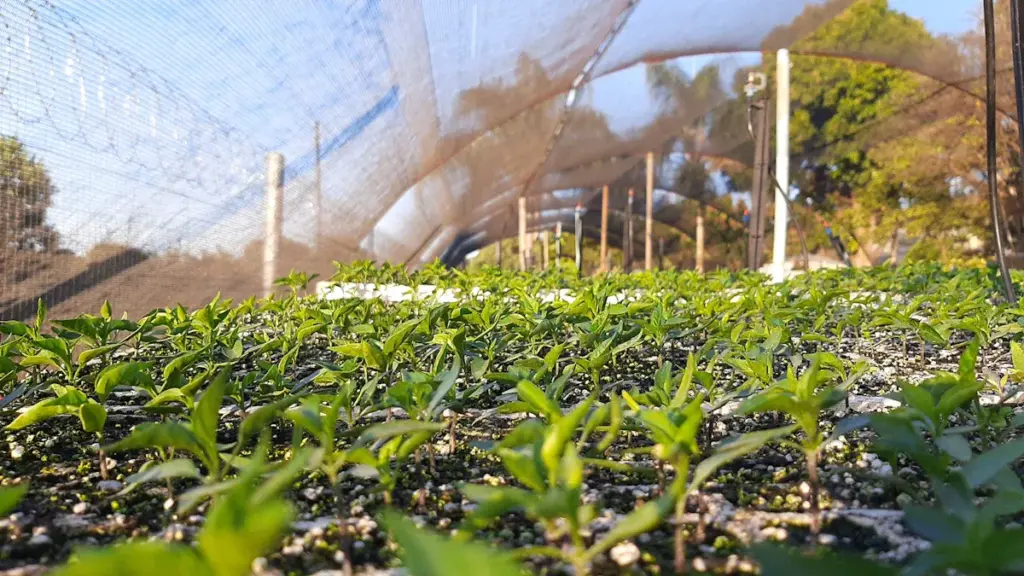
How to adjust the microclimate in the greenhouse for early seedlings?
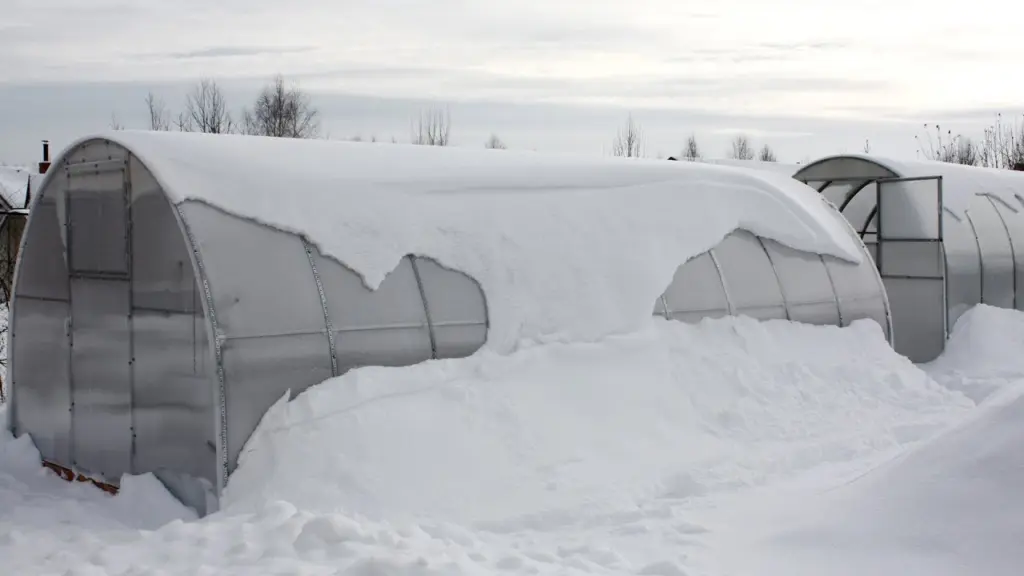
How to properly treat a greenhouse in the off-season: A complete expert guide
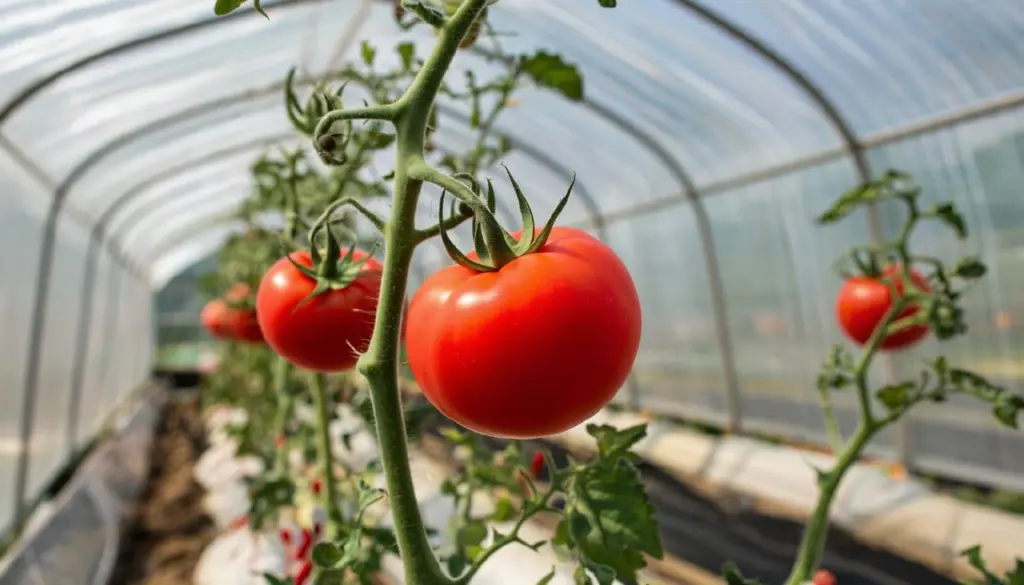
How to control the dew point in a greenhouse?
How to properly prepare the greenhouse for the spring start?
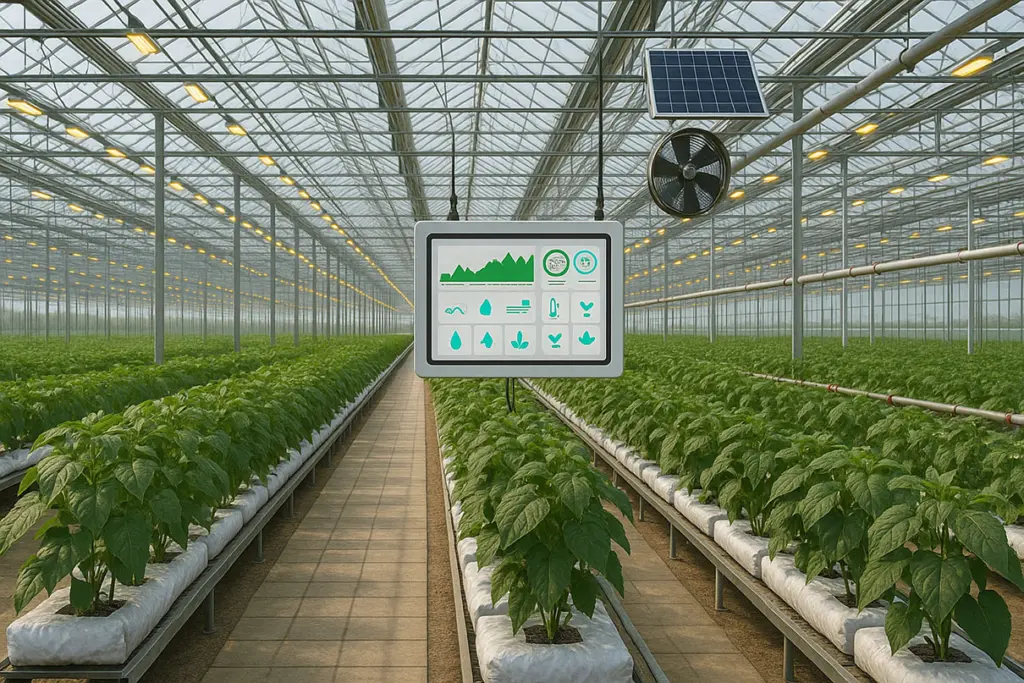
How to minimize heat loss in a greenhouse in winter? Energy efficient greenhouse