


Knowledge and Support Center
Discover the precision of our designs. From simple ordering to professional assembly, we support you every step of the way.
Work process
Easy ordering
Select the base model and customize the exact specifications.
Consultation with an expert
Discuss design reliability and climate control needs with a professional.
Design and production
Precision fabrication of steel and aluminum frames and polycarbonate panels.
Delivery and assembly
Turnkey installation for perfect reliability and tightness.
Expert assistance
We can help you choose the perfect greenhouse for your budget and specific climate requirements.
Frequently asked questions
Where should I put a greenhouse?
The placement of the greenhouse should be based on several important factors. First of all, choose a location with good sun exposure, preferably on the south or southeast side of your property. This will provide the maximum amount of sunlight for the plants.
Also keep in mind that the greenhouse should be protected from strong winds. Ideally, choose a location with natural protection, such as trees or fences. This will help prevent damage to the greenhouse and improve the microclimate inside.
Ideally, place the greenhouse near a water source to make it easier to water the plants and keep them hydrated. Consider placing the greenhouse on a slight slope to ensure good drainage.
Finally, consider the accessibility and ease of access to the greenhouse for plant care and harvesting.
Overall, choosing the right location for a greenhouse involves striking a balance between sunlight, protection from the wind, access to water, and ease of maintenance.
Why do you need a greenhouse?
A greenhouse is a specially designed structure intended for growing plants under controlled conditions. It plays an important role in agriculture and horticulture for the following reasons:
— Extended growing season: A greenhouse allows you to start growing earlier in the spring and continue later into the fall, creating optimal conditions for plant growth regardless of the weather. This enables earlier and later harvests, increasing your earning potential.
— Protection from adverse weather conditions: A greenhouse protects plants from extreme temperatures, strong winds, hail, and other weather-related hazards. This reduces the risk of crop damage or loss, ensuring stability throughout the growing process.
— Microclimate control: In a greenhouse, it is possible to create and maintain optimal conditions for plant growth. By regulating temperature, humidity, lighting, and ventilation, you can ensure optimal conditions for each plant species. This improves the quality and quantity of the harvest, accelerates growth, and enhances the flavor of fruits and vegetables.
— Protection against pests and diseases: A greenhouse helps prevent harmful insects and diseases from reaching the plants by acting as a physical barrier. This reduces the use of pesticides and chemicals, which has a positive impact on the environmental sustainability of the produce.
— Increased Yield: Thanks to optimal conditions in the greenhouse, plants receive sufficient light, heat, and nutrients, which promotes their active growth and development. This results in higher yields compared to open-field cultivation.
Our expert explained why a greenhouse is needed. .
Why do they burn sawdust in greenhouses?
Sawdust burning is used to raise the temperature and maintain an optimal microclimate. Sawdust is a natural material with high thermal insulation properties that burns slowly and for a long time.
Burning sawdust releases heat, which helps maintain an optimal temperature inside the greenhouse, especially during the colder months. This extends the growing season by providing plants with the heat they need to grow and develop. In addition, burning sawdust also helps control pests and diseases, as the smoke produced during combustion acts as a deterrent to harmful organisms.
However, it is important to take environmental factors into account and comply with relevant rules and regulations to minimize negative impacts on the environment.
Why do they put dry ice in greenhouses?
Dry ice is used in greenhouses for several purposes.
— First, dry ice helps regulate and lower the temperature inside the greenhouse. Thanks to its cooling properties, dry ice can be used to create an optimal microclimate, especially during hot weather or under conditions of high heat stress. It helps lower the temperature inside, preventing overheating and damage to plants.
— Second, distributing dry ice in a greenhouse helps humidify the air. When it comes into contact with warm air, dry ice turns into carbon dioxide, which creates high humidity around it. This is especially useful when a specific humidity level needs to be maintained for the growth of certain plant species.
Why do you need a greenhouse at your dacha?
A greenhouse at a summer cottage plays an important role for the following reasons:
— Extending the growing season: A greenhouse allows you to start growing earlier in the spring and continue longer into the fall. This creates the conditions for growing earlier and later varieties of vegetables, flowers, and other plants, and also allows you to harvest crops regardless of weather conditions.
— Protection from Adverse Weather Conditions: A greenhouse protects plants from cold, wind, hail, and other weather conditions. This helps prevent damage to and the death of plants, ensuring their safety and the preservation of the crop.
— Microclimate control: In a greenhouse, it is possible to create and maintain optimal conditions for plant growth. By regulating temperature, humidity, lighting, and ventilation, you can ensure optimal conditions for each plant species. This promotes healthy growth and development and increases crop yields.
— Product quality and environmental sustainability: Growing vegetables, fruits, and flowers in a greenhouse enables the production of high-quality produce. The controlled environment and the absence of pests and diseases have a positive effect on plant health and crop quality. Growing your own fruits and vegetables in a greenhouse also promotes environmental sustainability and self-sufficiency.
— Developing gardening skills and pursuing a hobby: A greenhouse at your summer cottage gives you the opportunity to garden, develop your plant-growing skills, and enjoy the process of caring for plants. It can be a pleasant and engaging hobby that brings joy and satisfaction.
Why do you need a greenhouse in the winter?
The greenhouse plays an important role in winter for the following reasons:
— Protecting Plants from the Cold: In winter, a greenhouse provides shelter for plants, protecting them from low temperatures and frost. This allows you to continue growing plants even during the cold months, preventing them from being damaged or dying.
— Maintaining an optimal microclimate: A greenhouse allows you to control the temperature, humidity, lighting, and ventilation inside the structure. This helps maintain optimal conditions for plant growth and development even during the winter, creating a comfortable environment for them.
— Growing Winter Crops: A greenhouse in winter allows you to grow special cold-hardy crops, such as winter vegetables, herbs, flowers, and ornamental plants. This expands the variety of crops, allowing you to enjoy fresh produce and decorative plants all year round.
— Saving money on groceries: Growing your own vegetables and herbs in a greenhouse during the winter helps you save money on groceries. In addition, fresh, natural produce that you’ve grown yourself contributes to a healthy lifestyle and good nutrition.
— Humidity control and protection against temperature fluctuations: In winter, a greenhouse helps maintain a certain level of humidity inside, which is especially important given the dry winter air. It also prevents sudden temperature fluctuations, protecting plants from premature aging and damage.
How is the greenhouse secured to the ground?
The greenhouse is secured to the ground in several ways:
— Foundation: One of the most common ways to secure a greenhouse is to install a foundation. This can be a concrete slab, a post-and-beam foundation, or other types of foundations that provide a secure and stable base for the greenhouse.
— Securing to the ground: The greenhouse can be secured to the ground using ground anchors or anchor bolts. These components firmly secure the greenhouse, preventing it from shifting or swaying excessively due to wind or other adverse conditions.
— Anchors or stakes: Another way to secure a greenhouse is to use anchors or stakes, which are driven into the ground to anchor the structure. Anchors can be made of metal or other durable materials and provide additional stability and reliability for the greenhouse.
— Suspended systems: In some cases, greenhouses can be suspended from a frame or support structures. This is particularly relevant for greenhouses installed at heights or in situations where the ground cannot be used for anchoring.
When choosing a method for securing the greenhouse to the ground, it is recommended that you contact the greenhouse manufacturer or follow the installation instructions and guidelines. This will ensure that the greenhouse is properly and securely fastened, guaranteeing its stability and safety.
How do you make raised beds in a greenhouse?
To create garden beds in a greenhouse, follow these recommendations:
— Soil Preparation: Remove old plants and weeds from the greenhouse. Then loosen the soil and break up large clumps. Add compost or humus to improve soil fertility and provide the necessary nutrients for the plants.
— Marking the Beds: Determine the size and layout of the beds in the greenhouse. Beds are usually rectangular, with aisles between them to allow for easy access and plant care. The distance between the beds should be sufficient to allow for easy passage and maintenance.
— Install edging: Place edging around the perimeter of the garden beds to prevent the soil from shifting and to keep them in shape. Edging can be made of wood, metal, or plastic.
— Sowing or Planting: Sow the seeds or plant the seedlings according to the recommended spacing between plants. Take into account each plant species’ needs for moisture, light, and temperature.
— Watering and Care: Water your garden beds regularly, following the moisture requirements for each type of plant. Remove weeds and fertilize the plants as needed to maintain their health and growth.
— Pest control: Take measures to control pests, such as using netting or plastic sheeting, to prevent insects or rodents from entering the greenhouse.
Creating raised beds in a greenhouse allows for efficient use of space, makes it easier to care for plants, and helps ensure a good harvest.
How to Choose a Greenhouse?
When choosing a greenhouse, it is recommended to consider the following factors:
— Greenhouse Size and Type: Determine the size and type of greenhouse you need based on your needs and the space you have available. Different greenhouse models are suitable for different purposes, whether you’re growing vegetables, flowers, or seedlings.
— Materials and Quality: Examine the materials used in the greenhouse’s construction and their quality. Greenhouses can be made of aluminum, steel, wood, or polycarbonate. Pay attention to the strength, corrosion resistance, and durability of the materials.
— Climate Conditions: Consider the climate conditions in your region. If you live in a cold climate with strong winds and heavy snowfall, choose a greenhouse with a reinforced structure and good thermal insulation. For hot climates, a greenhouse with good ventilation and temperature control capabilities is suitable.
— Control Features: Explore the features and control options available in your chosen greenhouse. Adjustable vents, automatic irrigation systems, and temperature control systems can make plant care much easier.
— Budget: Determine your budget and choose a greenhouse that fits within your financial means. Keep in mind that investing in a high-quality greenhouse can pay for itself in the long run by increasing crop yields and extending the growing season.
How does a greenhouse work?
A greenhouse works by creating a favorable microclimate for plants, which allows them to grow and develop regardless of external weather conditions. The main principles of greenhouse operation include:
— Protection from the elements: A greenhouse protects plants from adverse weather conditions, such as cold, wind, rain, hail, or intense sunlight.
— Protection from extreme temperatures: The greenhouse provides insulation and retains heat inside, helping to maintain a stable temperature necessary for optimal plant growth.
— Adjustable ventilation: Greenhouses are typically equipped with vents or systems that allow you to control air circulation and humidity levels inside the greenhouse. This helps prevent overheating or excessive moisture, which can have a negative impact on the plants.
— Enhanced lighting: During the winter or when there is insufficient natural light, greenhouses can be equipped with additional artificial light sources, such as grow lights or LED fixtures, to ensure adequate lighting for plant growth.
— Watering and Fertilization: Greenhouses allow you to control watering and fertilization, ensuring an optimal supply of water and nutrients to the plants.
As a result of these measures, the greenhouse provides stable and favorable conditions for plant growth and development, enabling an earlier harvest, improving crop quality, and extending the growing season.
Which greenhouse is better?
The question of which greenhouse is best depends on your specific needs and conditions. However, when choosing a greenhouse, it is recommended that you consider the following factors:
— Material quality: Examine the materials used in the greenhouse’s construction. It should be made of durable, corrosion-resistant material, such as aluminum or galvanized steel. The greenhouse roof can be made of polycarbonate, which provides good light transmission and protection from UV rays.
— Reinforced structure: Pay attention to the greenhouse’s ability to withstand wind, snow, and other adverse weather conditions. A greenhouse with a reinforced structure and good thermal insulation will be more durable and better able to provide stable growing conditions for plants.
— Size and Features: Determine the size of the greenhouse you need based on your requirements. Different greenhouse models offer various features, such as adjustable ventilation, automatic irrigation systems, the ability to install raised beds, and other options. Choose the greenhouse that best meets your requirements and preferences.
Overall, the best greenhouse is the one that best meets your needs and offers high-quality construction and functionality.
Which greenhouse is better—glass or polycarbonate?
The decision between glass and polycarbonate for a greenhouse depends on your needs and preferences. Here are some factors that can help you make a decision:
— Transparency and Light Transmission: Glass is highly transparent, allowing maximum sunlight to pass through. However, polycarbonate also offers good light transmission and can provide a more even distribution of light.
— Durability and Safety: Glass is more durable and resistant to scratches and UV rays. However, it can be more brittle and prone to damage from strong impacts or falls. Polycarbonate is more flexible and durable, making it less likely to break.
— Insulation properties: Polycarbonate provides superior thermal insulation, which helps retain heat inside the greenhouse and prevent it from escaping. Glass may require additional measures to ensure adequate thermal insulation.
— Convenience and ease of installation: Polycarbonate panels are generally lighter and easier to install, which can speed up the greenhouse installation process. Glass requires more careful installation and can be heavier to handle.
So, the answer to the question of which greenhouse is better—glass or polycarbonate—depends on your specific needs. If maximum transparency and high strength are important to you, glass may be the better choice. If, on the other hand, you’re looking for good thermal insulation, durability, and ease of installation, polycarbonate may be the better choice.
Which greenhouse is better—an arched one or a straight-walled one?
The decision between an arched and a straight-walled greenhouse depends on your preferences and the characteristics of the crops you’re growing. Here are some factors to help you make your choice:
— Ease of assembly and cost: Arched greenhouses are generally easier to assemble and more affordable. Straight-walled greenhouses may require more complex assembly and be more expensive.
— Space and Height: Arched greenhouses have a curved shape that provides ample interior space and allows for more efficient use of the area. Straight-walled greenhouses have straight walls, which can be beneficial for certain types of cultivation and for installing shelving systems.
— Strength and Stability: Straight-walled greenhouses are generally stronger and more resistant to wind and snow. Arched greenhouses may be less resistant to adverse weather conditions, especially when they are large.
— Light Distribution: Arched greenhouses provide better light distribution inside, which helps ensure even lighting for the plants. Greenhouses with straight walls may have more limited light distribution due to their straight walls.
So, the answer to the question of which greenhouse is better—an arched one or a straight-walled one—depends on your needs and preferences. Arched greenhouses are often chosen for their ease of assembly and affordability, as well as their ability to provide good light distribution. Straight-walled greenhouses offer advantages in terms of durability and resistance to adverse weather conditions, as well as the ability to optimize space utilization.
Which greenhouse is the best?
There is no single answer to the question of which greenhouse is the best, as the choice of greenhouse depends on your specific needs, budget, and growing conditions. It is important to consider the following factors:
— Size and Area: The greenhouse you choose should be suitable for the amount of space needed to grow your plants. Determine the space required to achieve your goals.
— Materials: Different materials, such as glass, polycarbonate, or film, each have their own advantages and disadvantages. Choose a material based on its light transmission, thermal insulation, and durability.
— Design: Different types of greenhouses—such as arched, straight-walled, or gable-roofed—each have their own characteristics. Consider space requirements, weather resistance, and ease of use.
— Additional Options: Consider additional options such as irrigation, heating, ventilation, and automation systems, which can improve the greenhouse’s efficiency and ease of use.
Ultimately, the best greenhouse will depend on your specific needs. It is recommended that you consult with professionals, review the features of different greenhouse models, and choose the one that best fits your needs and budget.
Which greenhouse is better—galvanized or painted?
The decision between a galvanized and a painted greenhouse depends on your preferences and operating conditions. Here are some factors to consider when making your decision:
— Corrosion protection: Galvanized greenhouses have a zinc coating that protects against corrosion. Painted greenhouses may have a protective coating, but it may be less effective and require regular maintenance.
— Appearance: Painted greenhouses offer a wider range of color options, which can be customized to suit your taste and the design of your yard. Galvanized greenhouses usually have a silvery metallic sheen.
— Cost and Durability: Galvanized greenhouses are often more durable and may be more resistant to environmental factors. Painted greenhouses may be more affordable, but they require more careful maintenance of the coating and may need to be repainted in the future.
— Light Transmission: Both types of greenhouses provide good light transmission, but it’s worth noting that painted coatings may slightly reduce light transmission compared to galvanized ones.
Ultimately, the answer to the question of which greenhouse is better—galvanized or painted—depends on your preferences regarding durability, appearance, and budget. Galvanized greenhouses generally offer better protection against corrosion and a longer service life, while painted greenhouses may be more aesthetically pleasing and affordable.
Which polycarbonate greenhouse is better?
When considering a polycarbonate greenhouse, it is important to take several factors into account. Experts generally recommend paying attention to the following aspects:
— Polycarbonate thickness: The best polycarbonate greenhouses typically use thicker material (for example, 6 mm or 8 mm), which ensures greater strength and durability of the structure.
— UV Resistance: An ideal greenhouse should have a special coating that protects the polycarbonate from the harmful effects of ultraviolet rays. This helps prevent premature aging and degradation of the material.
— Insulation: A high-quality greenhouse has good thermal insulation, which helps maintain stable conditions inside for the plants. This is important for their health and growth.
— Profile and Construction: An optimal greenhouse features a sturdy and stable aluminum profile that ensures a reliable structure and resistance to wind loads and other external factors.
Based on these factors, the best polycarbonate greenhouse will feature thick polycarbonate with a durable coating, good thermal insulation, a sturdy structure, and support from a reputable manufacturer.
Which greenhouse is the most durable?
As a professional, I recommend choosing a double-wall polycarbonate greenhouse because it offers excellent durability. This material is highly resistant to weather conditions such as wind, hail, snow, and sunlight. In addition, the double-wall design provides extra insulation, which helps retain heat inside the greenhouse. This makes this type of greenhouse reliable and durable, suitable for a variety of climates.
Which greenhouse is better—a drop-style one or an arched one?
Both types of greenhouses—drip and arch-shaped—have their own advantages and are suitable for different purposes. A drip greenhouse provides a more even distribution of moisture and allows you to control the water supply. It is suitable for growing plants that require more precise watering.
An arched greenhouse, on the other hand, provides better ventilation and more space for plants. It is ideal for growing large and tall crops.
Ultimately, the choice between a drip greenhouse and an arched greenhouse depends on your specific needs and preferences.
What temperatures can a polycarbonate greenhouse withstand?
A polycarbonate greenhouse can withstand freezing temperatures down to a certain point. Typically, such greenhouses can withstand temperatures as low as -40°C and below.
However, the exact specifications depend on the specific greenhouse model, its quality, and how it is installed. We recommend that you contact the manufacturer or a consultant to obtain more precise information about a specific greenhouse model and its ability to withstand freezing temperatures.
What kind of lamps are used in greenhouses?
“Nova Teplitsa” greenhouses use various types of lamps depending on the lighting objectives. Typically, grow lights (special lamps for plants) are used in greenhouses, as they provide the optimal light spectrum for photosynthesis and plant growth. LED lamps may also be used, as they are energy-efficient and have a long service life. However, the specific types of lamps may vary depending on the greenhouse model and its features.
We recommend contacting the manufacturer or a consultant for more specific information about the lamps used in a particular “Nova Teplitsa” greenhouse model.
What flowers are grown in greenhouses?
A wide variety of flowers can be grown in the “Nova Teplitsa” greenhouses. These include, but are not limited to, roses, tulips, orchids, carnations, lilies, gerberas, astroemeria, and other popular flower varieties.
Greenhouses provide optimal conditions for plant growth and development, offering protection from adverse weather conditions, a controlled climate, and protection from pests. The specific choice of flowers depends on the preferences and goals of each gardener or flower-growing business.
What crops are grown in greenhouses?
A wide variety of crops can be grown in greenhouses, including vegetables, flowers, herbs, and even some fruit plants. Some popular crops to grow in greenhouses include tomatoes, cucumbers, peppers, eggplants, herbs, lettuces, cabbage, flowers such as roses and gerberas, and berry bushes such as strawberries and raspberries.
Greenhouses provide better growing conditions and protection from adverse weather, which makes it easier to successfully grow a variety of crops at any time of year. However, the specific choice of crops depends on the climate, care requirements, and preferences of each gardener.
What kinds of mushrooms are grown in greenhouses?
Greenhouses can be used to successfully grow various types of mushrooms, including button mushrooms, oyster mushrooms, island mushrooms, chanterelles, and others. Growing mushrooms in a greenhouse requires certain conditions, such as the right temperature, humidity, and lighting. It is important to create optimal conditions for mycelium growth by providing the right lighting, suitable temperature and humidity, and using special substrates or mycelium for planting.
Growing mushrooms in a greenhouse can be a successful and efficient way to produce fresh, high-quality mushrooms year-round. However, to achieve optimal results, it is recommended to consult with experts and learn about the specific requirements and recommendations for each type of mushroom.
What varieties of cucumbers should be planted in greenhouses?
In greenhouses, it is recommended to plant various cucumber varieties that are well-suited to indoor growing conditions. Some popular cucumber varieties for greenhouse cultivation include “Grisha,” “Balcony Wonder,” “Cornichon,” “Zozulin,” “Liana,” and “Phoenix.”.
These varieties are compact, highly productive, have good disease resistance, and produce high-quality, tasty cucumbers. When selecting cucumber varieties for greenhouse cultivation, it is important to consider the preferences and needs of each gardener, as well as climatic conditions and the duration of the growing season.
What is the ideal height for a greenhouse?
There are several factors to consider when choosing the height. The optimal height of a greenhouse depends on the types of crops grown, their height, and their lighting requirements. In general, it is recommended to choose a greenhouse that is tall enough to provide ample space for the growth and development of plants, as well as to facilitate maintenance.
The height of the greenhouse should allow for easy watering, tending, and harvesting. It is also important to consider the climate conditions and snow load in your area. The specific height of the greenhouse may vary depending on your needs and preferences, so it is recommended that you consult with professionals to determine the optimal height for your growing needs.
What kind of greenhouse should tomatoes be grown in?
To successfully grow tomatoes, it is recommended to choose a variety with certain characteristics. A greenhouse for tomatoes should have enough space for the plants to grow and develop, as well as provide optimal conditions for their cultivation. It is important that it has good ventilation to maintain optimal temperature and humidity, and also provides sufficient light for the plants' photosynthesis.
It is recommended to choose a greenhouse with a sturdy structure that can withstand snow loads and wind conditions. It is also important to consider the size so that it can accommodate the required number of tomato plants. Specific characteristics and parameters for tomatoes may vary depending on regional conditions and the gardener’s preferences. It is recommended to consult with professionals to select the most suitable greenhouse for growing tomatoes.
What is the best shape for a greenhouse?
When choosing a shape, it is important to consider several factors. The optimal shape of the greenhouse depends on your needs, the characteristics of the site, and growing conditions. Different shapes—such as arched, large-scale, Gothic, and others—each have their own advantages and characteristics. Arched greenhouses offer good stability and allow for efficient use of space; large-scale greenhouses have a large interior volume and are suitable for growing tall plants; and Gothic greenhouses are aesthetically pleasing and offer better resistance to snow loads.
The choice of shape may also depend on your preferences and the site's design. It is recommended that you consult with professionals to help you choose the most suitable greenhouse shape based on your goals and growing conditions.
What should a polycarbonate greenhouse be like?
A polycarbonate greenhouse must have several important characteristics.
First, the polycarbonate material must be of high quality and have good transparency to allow sufficient sunlight to pass through. It is also important that the polycarbonate be UV-resistant and offer protection against harmful environmental factors.
The polycarbonate structure must be sturdy enough to withstand snow loads and wind conditions. In addition, good ventilation and the ability to regulate the internal temperature are also important factors. It is recommended to choose a polycarbonate greenhouse that meets quality standards and has the necessary characteristics for effective plant cultivation.
How much income does a greenhouse generate?
The income generated by a greenhouse depends on several factors. It can vary depending on the crops chosen, the volume of production, market demand, and management efficiency. It allows for increased crop productivity and an extended growing season, which can boost income.
However, to achieve profitability, it is necessary to take into account the costs of construction and equipment, the purchase of seeds or seedlings, fertilizers, labor, energy costs, and other expenses. The profitability of a greenhouse may also depend on the ability to manage production, plan production, and market and sell products. It is recommended to conduct a market analysis and develop a business plan to estimate the potential income from greenhouse farming.
How tall should a greenhouse be?
The height depends on a number of factors, including the types of crops you plan to grow, as well as your needs and preferences. The generally accepted height ranges from 2 to 4 meters. Tall greenhouses allow you to grow tall crops and provide more headroom for working.
However, lower greenhouses may be easier to build and maintain. When choosing the optimal height, it is recommended to consider plant height, ventilation needs, and the ability to move comfortably inside. It is also important to comply with regulatory requirements and safety standards when determining the height of the greenhouse.
What kind of soil is in the greenhouse?
It is recommended to use high-quality and fertile soil, which will provide good conditions for the growth and development of plants. Good soil should be loose, well-drained and have sufficient nutrients. A mixture of garden soil, humus, peat and sand is usually used.
It is also important to consider the needs of the specific crops that will be grown inside and select soil that meets their requirements. Regular fertilization and feeding may also be necessary to maintain soil fertility throughout the growing season.
At what distance should a greenhouse be placed?
The spacing depends on a number of factors including accessibility for maintenance, ventilation, lighting and mechanization. Generally, it is recommended to leave a distance of 2 to 4 meters between greenhouses. This allows for adequate space for working and moving between greenhouses, and improves access to sunlight and air.
However, when choosing a specific distance, you need to consider the specific conditions of your site, the size of the structure, the type of planting and your individual needs. It is also recommended to follow the requirements and recommendations of local building codes.
When to open a greenhouse?
Opening depends on the climate conditions and the specific needs of the plants. Generally, you can open in the spring, when frosts have passed and night temperatures have stabilized at a fairly high level. This usually happens in April or May. However, each region and the specific crop may have its own optimal time to open the greenhouse.
It is recommended to monitor weather forecasts and take into account the recommendations of sowing calendars for specific crops. It is also important to be able to control and maintain optimal temperature conditions inside when opening to prevent possible damage to plants from night frosts or sudden changes in temperature.
When to plant in a greenhouse?
The time for planting depends on specific crops and local climate conditions. In general, it is recommended to plant in the spring, when frosts have passed and the soil has warmed up. This usually happens in April or May. However, each crop has its own optimal conditions for planting. It is recommended to follow sowing calendars and recommendations for specific crops, which indicate the optimal time for planting. In addition, it is important to take into account weather conditions and maintain optimal temperatures and humidity inside, for successful adaptation and growth of plants.
When to plant cucumbers in greenhouses?
It is recommended to plant cucumbers after the end of frosts and when the soil warms up to a temperature of about 15-18 degrees Celsius. This usually occurs at the end of spring or the beginning of summer, around May.
It is also important to take into account local climatic conditions and recommendations from sowing calendars for the optimal time to plant cucumbers in a particular region.
When to plant tomatoes in greenhouses?
It is recommended to plant tomatoes when frosts have passed and the soil has warmed up to 10-12 degrees Celsius. This usually occurs at the end of spring or the beginning of summer, around May-June.
It is also important to take into account local climatic conditions and recommendations from sowing calendars for the optimal time to plant tomatoes in a particular region.
Why does the greenhouse sweat?
Может потеть из-за разности температур внутри и снаружи, а также из-за высокой влажности внутри. Когда теплая воздушная масса встречается с холодными стенами теплицы, происходит конденсация, и это приводит к образованию конденсата или “ пота “. Для уменьшения потения рекомендуется обеспечить хорошую вентиляцию, использовать утеплители с хорошей паропроницаемостью и контролировать уровень влажности внутри.
Why does a polycarbonate greenhouse turn green?
Greening of a polycarbonate greenhouse can be caused by moisture accumulation and growth of algae or moss on the surface of the material. This usually occurs due to insufficient ventilation and high humidity inside. To prevent greening, it is recommended to ensure good air circulation, regularly clean the polycarbonate surface from excess moisture, and use special means to prevent growth of algae and moss.
Why does the greenhouse break?
Breakage can occur for various reasons. Poor quality materials, improper operation, adverse weather conditions or improper installation can cause damage to the structure. To prevent breakage, it is important to choose quality materials, follow assembly and maintenance instructions, conduct regular inspections and preventive maintenance, and take into account the climatic conditions of the region when choosing a model.
Why does the greenhouse heat up?
The greenhouse heats up due to the greenhouse effect. Solar radiation passes through transparent walls, heating the air and surfaces inside. The greenhouse also retains heat due to limited air circulation and the insulating properties of the materials. This creates favorable conditions for plant growth and maintains a warm microclimate inside.
How much does a greenhouse cost?
Стоимость теплицы зависит от ее размера, конструкции, материалов и дополнительных опций. Для получения точной информации о цене теплицы “ Нова Теплица ” рекомендуется обратиться непосредственно к нам. Менеджеры смогут предоставить актуальную информацию о стоимости и доступные варианты для удовлетворения ваших потребностей.
How much does a 3 x 6 meter greenhouse cost?
Стоимость теплицы размером 3 на 6 метров может варьироваться в зависимости от выбранной модели, материала и дополнительных опций. Самая низкая цена на сегодня – 19 000 гривен. Рекомендуется обратиться к менеджеру “ Нова Теплица ” для получения точной информации о стоимости данной конкретной модели. Он сможет предоставить вам актуальную цену и подробности о доступных вариантах для удовлетворения ваших требований.
How much does a 3 by 4 meter greenhouse cost?
Стоимость т еплицы размером 3 на 4 метра может варьироваться в зависимости от различных факторов, таких как выбранный тип и модель теплицы, материалы, комплектация и дополнительные опции. Самая низкая цена актуальная на 2023 год – 12 000 гривен. Рекомендуется обратиться к менеджеру “ Нова Теплица ” напрямую для получения точной информации о цене на теплицу данного размера. Специалист сможет предоставить вам актуальные данные и помочь с выбором наилучшей опции для ваших потребностей.
How much does a polycarbonate greenhouse cost?
Стоимость теплицы из поликарбоната может значительно варьироваться в зависимости от различных факторов, таких как размер, модель, конструкция и комплектация теплицы – самая низкая цена 12 600 гривен . Обратитесь к нашим менеджерам и получите точную информацию о цене на теплицы из поликарбоната. Они смогут предоставить вам актуальные данные и помочь с выбором наилучшей опции в соответствии с вашим бюджетом и потребностями.
How many degrees can a polycarbonate greenhouse withstand?
Теплица из поликарбоната, производимая компанией “ Нова Теплица “, способна выдерживать температуры в широком диапазоне. Поликарбонат, используемый в конструкции обладает высокой термостабильностью и устойчив к экстремальным погодным условиям.
Thus, it can withstand both low temperatures in winter and high temperatures in hot summer. However, the exact figure in degrees may vary depending on the specific model of the greenhouse and its design features. It is recommended to contact the manufacturer for more accurate information regarding a specific polycarbonate model.
How much does a 3 by 6 meter greenhouse weigh?
Теплица размером 3 на 6 метров, производимая компанией “ Нова Теплица “, имеет вес, который зависит от выбранной модели и конструкции теплицы. Обычно теплицы данного размера изготавливаются из легких и прочных материалов, таких как алюминий или сталь.
However, the exact weight may vary depending on the specific parts and components installed in the greenhouse, such as polycarbonate panels, mounting system and additional accessories. It is recommended to contact the manufacturer for more accurate information regarding a specific 3 by 6 meter model.
How much does a 2 x 4 meter greenhouse cost?
Цена размером 2 на 4 метра, зависит от нескольких факторов, включая выбранную модель, материалы, комплектацию и дополнительные опции. Цены могут различаться в зависимости от индивидуальных требований заказчика и региональных особенностей. Рекомендуется обратиться к менеджерам или их официальным представителям для получения более точной информации относительно стоимости конструкции размером 2 на 4 метра , а также для уточнения доступных вариантов и условий приобретения.
What does a greenhouse consist of?
Теплица, производимая компанией “ Нова Теплица “, состоит из нескольких основных компонентов. Обычно она включает в себя прочную металлическую или алюминиевую раму, которая обеспечивает жесткость и стабильность конструкции. В качестве обшивки используется поликарбонат, который обладает высокой прозрачностью, прочностью и термоизоляционными свойствами. Дополнительные элементы могут включать системы вентиляции, двери, окна, полки и системы орошения.
Specific components and their configuration may vary depending on the selected model and the individual needs of the customer. It is recommended to contact the manufacturer for more detailed information regarding the composition and available options.
What is the difference between a greenhouse and a hothouse?
Теплица и парник являются двумя разными типами структур для выращивания растений. Основное отличие между ними заключается в материалах и конструкции. Теплица, производимая компанией “ Нова Теплица “, обычно имеет прочную металлическую или алюминиевую раму с поликарбонатной обшивкой, которая обеспечивает хорошую термоизоляцию и защиту от неблагоприятных погодных условий. Теплицы обычно имеют более крупные размеры и предназначены для коммерческого использования или выращивания растений в больших объемах.
On the other hand, a greenhouse is usually smaller and can be made of simpler materials such as polyethylene film, glass or even plastic panels. Greenhouses are often used for home or small-scale gardening. They provide improved conditions for plants such as protection from cold, wind and insects, but can be less durable and less effective at regulating temperature and humidity.
Both types of structures have their advantages and are suitable for different needs and budgets. It is recommended to choose the type that best suits your growing purposes and operating conditions.
What is the difference between a greenhouse and a booth?
A greenhouse and a shed are two different types of structures for growing plants. The main difference between them is quality and reliability.
Конструкция, производимая компанией “ Нова Теплица “, представляет собой профессиональную структуру, созданную с использованием прочных материалов и современных технологий. Она обладает прочной металлической или алюминиевой рамой, качественной обшивкой (например, поликарбонатом) и дополнительными опциями, такими как системы вентиляции и орошения. Теплицы обеспечивают надежную защиту растений от неблагоприятных погодных условий, создают оптимальные условия для их роста и имеют долговечность.
On the other hand, a shed is a simpler, less expensive structure, often made of wood, plastic, or polyethylene film. Sheds may have less sturdy frames and do not have the advanced features of a greenhouse. They can be used for small-scale home gardening or temporary shelter for plants, but may be less efficient and less durable.
Рекомендуется выбирать теплицу, предлагаемую компанией “ Нова Теплица “, если вы ищете надежную и качественную структуру для профессионального или масштабного садоводства.
What is the difference between a greenhouse and a conservatory?
A greenhouse and a conservatory are two different types of structures for growing plants. The main difference between them is their functionality and use.
Теплица, производимая компанией “ Нова Теплица “, представляет собой специализированную конструкцию, предназначенную для профессионального или коммерческого садоводства. Она обычно имеет прочную раму из металла или алюминия, качественную обшивку (например, поликарбонат или стекло) и может быть оснащена дополнительными системами вентиляции, орошения и контроля климата, обеспечивают растениям оптимальные условия для роста и защищают их от неблагоприятных погодных условий.
A greenhouse, on the other hand, is a more intimate and decorative structure. It usually has glass walls and a roof, creating a transparent space for growing plants. Often used in home gardening or landscaping, greenhouses are designed to protect plants from cold, wind, and other adverse effects, as well as to create a favorable microclimatic environment for flowers and exotic plants.
Ultimately, greenhouses are more functional and designed for mass plant growing, while conservatories are more often used for decorative purposes and to create aesthetically pleasing areas for plants.
What is the difference between a reinforced greenhouse and a simple one?
A reinforced greenhouse differs from a simple one in that it has a stronger and more rigid structure designed for increased loads and durability. In a reinforced greenhouse, thicker and more durable materials are used, such as reinforced metal profiles or thick-walled polycarbonate panels. In addition, a reinforced greenhouse may have additional reinforcement elements, such as additional posts, diagonal beams or reinforced connections, to ensure the stability and reliability of the structure.
Simple, on the other hand, usually has a lighter construction and uses standard materials that provide basic plant protection. Simple greenhouses are often designed for small home or hobby gardening.
The choice between a heavy-duty and a simple greenhouse depends on the user’s needs and expectations. A heavy-duty greenhouse is suitable for more intensive commercial use, as well as for regions with harsh climate conditions or increased loads (such as snowfall). A simple greenhouse can be more affordable and is suitable for small home or family gardens.
What is good about a greenhouse?
Конструкция, представленная компанией “Нова Теплица”, обладает рядом преимуществ, которые делают ее идеальным выбором для выращивания растений:
— Создание оптимальной микроклиматической среды : Обеспечивают защиту от неблагоприятных погодных условий, таких как холод, ветер, сильные осадки и насекомые. Они создают стабильные условия температуры, влажности и освещения, что способствует более здоровому и продуктивному росту растений.
— Увеличение сезона выращивания : Позволяют начать выращивание раньше весной и продлить его до поздней осени или даже зимы. Это расширяет возможности для выращивания различных культур и повышает урожайность.
— Защита от вредителей и болезней : Закрытая структура предотвращает проникновение вредителей и защищает растения от болезней, что снижает необходимость в применении химических пестицидов и обеспечивает более экологически чистое выращивание.
— Регулирование условий роста : Позволяют контролировать факторы, влияющие на рост растений, включая температуру, влажность, освещение и проветривание. Это позволяет оптимизировать условия для конкретных культур и обеспечить их успешное развитие.
— Увеличение урожайности и качества : Благодаря улучшенным условиям роста, способствуют повышению урожайности и качества продукции. Растения получают достаточно света, питательных веществ и воды, что способствует их здоровому развитию и формированию крупных и вкусных плодов.
Выбор теплицы от “ Нова Теплица ” гарантирует получение всех этих преимуществ и обеспечивает успешное и продуктивное выращивание растений.
What is the danger of a polycarbonate greenhouse?
There are some potential hazards to be aware of when building a polycarbonate greenhouse. Here are some of the main issues that can be problematic:
— Воспламенение : Поликарбонат может гореть и поддерживать горение. При пожаре, из поликарбоната выделяются токсичные газы, которые могут быть опасными для здоровья людей и животных. Поэтому необходимо соблюдать все предписания по пожарной безопасности при использовании таких конструкций.
— Ультрафиолетовое излучение : Поликарбонат может быть подвержен воздействию ультрафиолетовых лучей, которые проникают сквозь материал и могут нанести вред растениям, особенно если не использованы специальные защитные покрытия или установлены фильтры.
— Перегрев : В теплице из поликарбоната может накапливаться тепло, особенно в жаркую погоду. Это может привести к перегреву растений и повреждению урожая. Поэтому необходимо обеспечить правильную вентиляцию и регулировку температуры внутри.
— Ударопрочность : Поликарбонат может быть менее устойчивым к ударам и повреждениям по сравнению с другими материалами. Сильные удары или падение крупных предметов могут привести к разрушению поликарбонатных стен и крыши.
In general, polycarbonate greenhouses are safe to use, but all installation, operating and safety instructions must be followed to avoid potential problems.
What do you need to know about greenhouses?
Greenhouses are an important tool for gardeners and farmers, and here are some key aspects to know about them:
— Материалы : Могут быть изготовлены из различных материалов, включая стекло, поликарбонат и пленку. Каждый материал имеет свои преимущества и недостатки, такие как прочность, теплоизоляция и стоимость. Важно выбрать материал, который наилучшим образом соответствует вашим потребностям.
— Конструкция : Эффективная конструкция включает в себя правильное размещение фундамента, рамы, крыши, стен и вентиляционных отверстий. Она должна обеспечивать оптимальное освещение, вентиляцию и защиту растений от неблагоприятных погодных условий.
— Контроль климата : Позволяют контролировать климатические условия внутри, что особенно важно для выращивания растений в неблагоприятных условиях или вне сезона. Регулировка температуры, влажности и освещения может способствовать оптимальному росту и урожаю.
— Уход за растениями : Создают благоприятную среду для растений, но требуют постоянного ухода. Необходимо следить за поливом, удобрением, обрезкой и борьбой с вредителями и болезнями. Регулярный уход поможет поддерживать здоровье растений и достигать хороших результатов.
— Правовые нормы : При установке важно соблюдать местные правовые нормы и требования, такие как разрешения на строительство и соблюдение санитарных и охранно-экологических норм. Это поможет избежать возможных проблем и конфликтов.
Greenhouses provide unique opportunities for successful plant cultivation. With the above aspects in mind and the requirements met, they can be a reliable tool for achieving your gardening and farming goals.
What is the greenhouse installed on?
The greenhouse can be installed on various surfaces depending on preferences and conditions. Here are some options:
— Земля : Часто устанавливаются непосредственно на землю. При этом важно выбрать ровное и устойчивое место, удаленное от деревьев и других объектов, которые могут создавать тень или препятствовать доступу солнечного света.
— Бетонный фундамент : Для более надежной и долговечной установки, можно использовать бетонный фундамент. Фундамент обеспечит стабильность и защиту от влияния грунтовых вод.
— Деревянный каркас : Если конструкция имеет деревянный каркас, то ее можно установить на специально подготовленные деревянные опоры или плиты. Важно, чтобы опоры были достаточно прочными и устойчивыми.
— Каменные или кирпичные стенды : Другой вариант – установка на каменные или кирпичные стенды. Это обеспечит дополнительную высоту и защиту от постоянного контакта с землей.
— На существующую конструкцию : Иногда устанавливаются на уже имеющиеся конструкции, такие как навесы, террасы или старые здания. Это позволяет использовать имеющееся пространство более эффективно.
When choosing a location for installation, it is necessary to take into account the terrain, access to water and electricity, and also consider the possibility of creating convenient access for maintenance and movement inside the greenhouse.
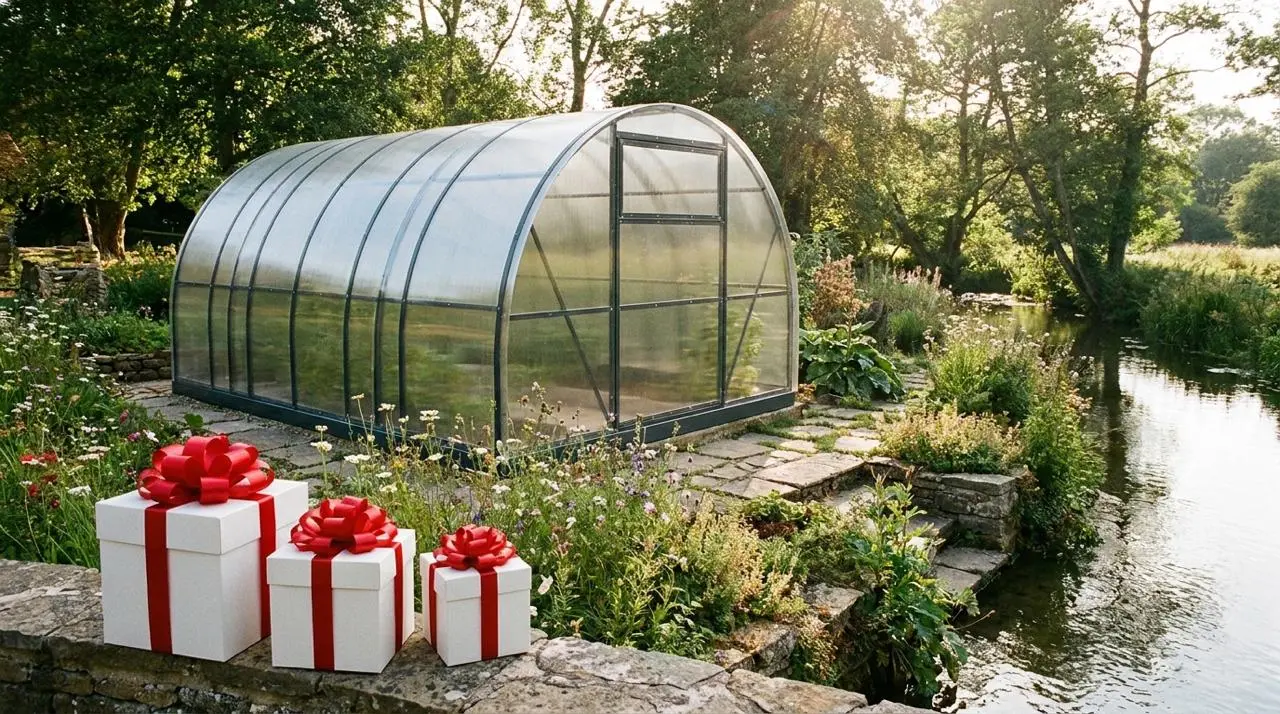
+ 3 gifts