

What kind of greenhouse should a tomato grow in and how to choose one?
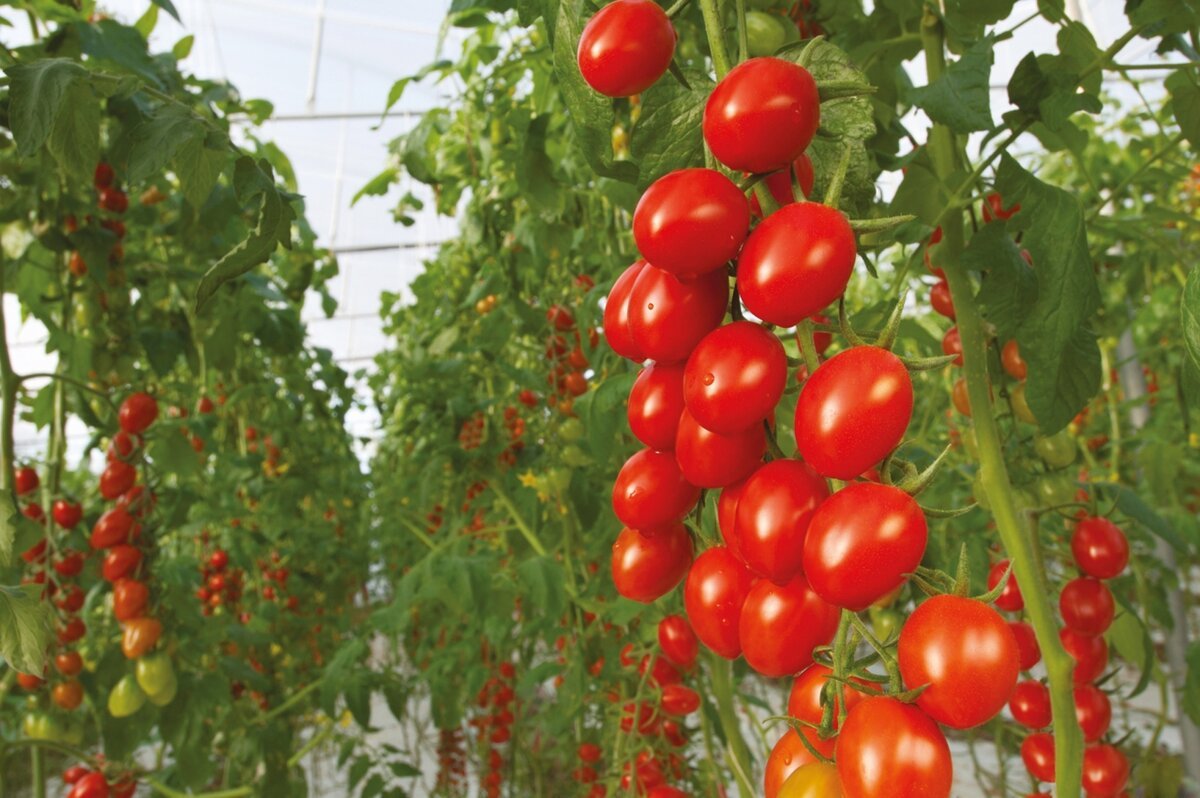
Every day, we don't just build greenhouses—we help hundreds of Ukrainian families realize their dream of their own bountiful and delicious harvest. We know what a joy it is to pick a juicy, sun-drenched tomato from the bush, grown with your own hands.
And we know for sure that this pleasure is based not only on hard work but also on precise engineering calculations. Choosing a greenhouse isn't like buying a "plant house." It's about creating a closed agricultural environment where every element—from the grade of steel used in the frame to the thickness of the UV layer on the polycarbonate—works toward one goal: maximum yield and the health of your plants.
In this article, we, as manufacturers with many years of experience, will share key knowledge and show you how to choose a greenhouse from an engineer's perspective, not just a gardener's. And if you want to know more ToHow to grow tomatoes in a greenhouse, when to plant them, and how to care for them, read this article.
Designing a Climate. Technical Specifications from a Tomato
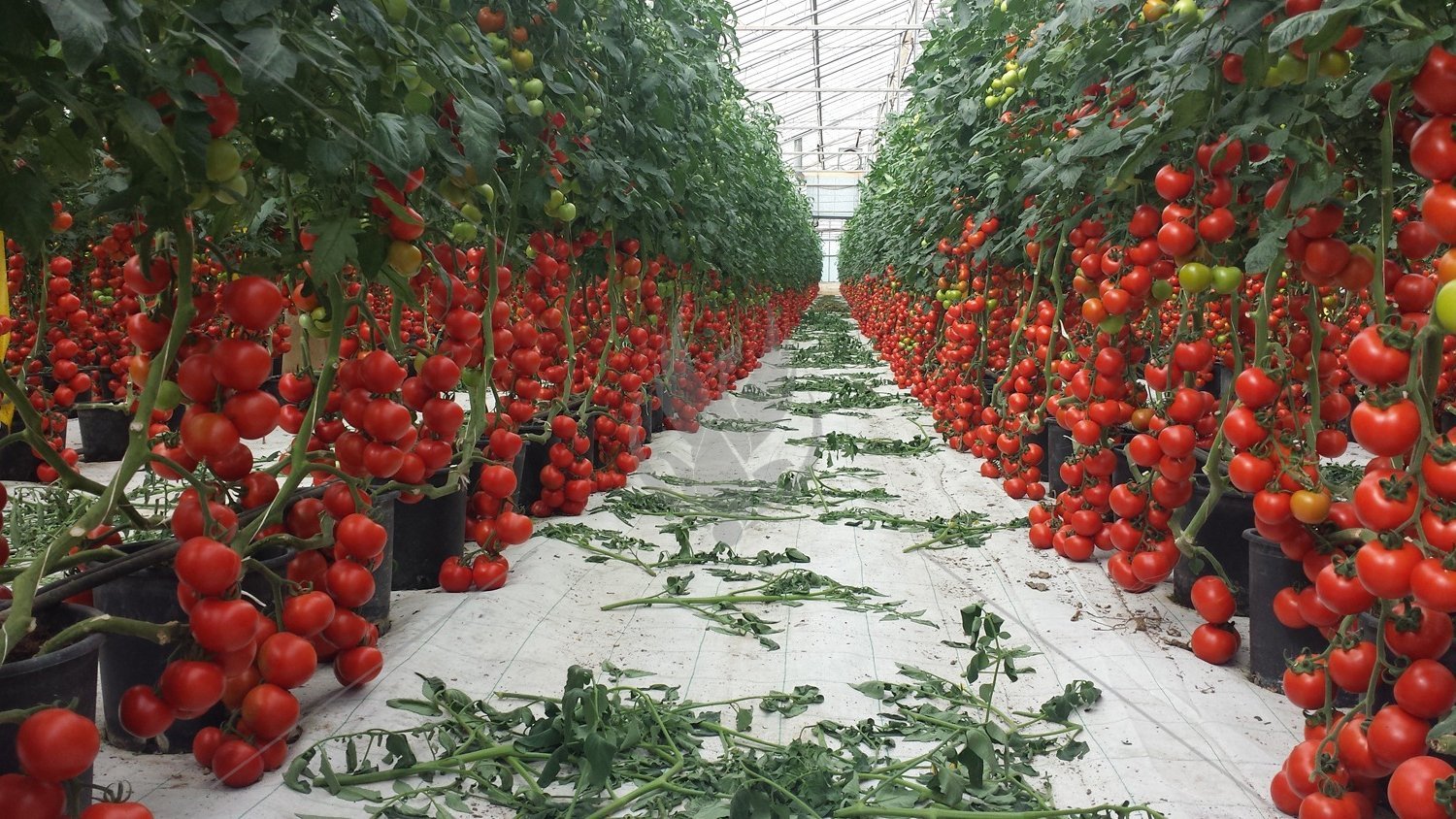
Before we discuss the designs, let's understand who we're creating them for. A tomato isn't just a plant, but a complex biological organism whose yield is directly dependent on dozens of environmental parameters. Any deviation results in stress, yield loss, and reduced fruit quality.
Nova Teplitsa engineers are designing industrial greenhouses like high-precision climate control systems. Our goal is to give you complete control over the environment, mitigating the vagaries of weather. Here are the detailed tomato requirements that form the basis of our projects.
1. Temperature regime: Balance for growth and fruiting
Temperature is the main regulator of all biochemical processes in a plant. It's important to monitor not only the air temperature but also the substrate temperature.
- Air Temperature (Day/Night):
- Seedlings and vegetative growth: +22…+24°C (day), +17…+18°C (night). Nighttime temperatures are important for rest and transport of sugars accumulated during the day.
- Flowering and fertilization: +24…+26°C. This is the most critical period.
- Critically low temperature: Below +15°C, pollen does not mature, which leads to the absence of ovaries.
- Critically high temperature: Above 32°C, pollen becomes sterile. Flowers fall off, and there will be no harvest.
- Fruit growth and ripening: +26…+28°C (day), +18…+20°C (night). Higher daytime temperatures accelerate fruit filling and ripening.
- Root zone (substrate) temperature:
- Optimum: +18…+20°C. Cold substrate (<16°C) dramatically reduces the roots' ability to absorb water and nutrients, especially phosphorus. This leads to stunted growth and a purple tint to the leaves.
Engineering conclusion: The greenhouse must be equipped with heating and ventilation systems capable of maintaining the set temperature with an accuracy of 1-2°C and avoiding sudden changes that cause stress and cracking of the fruit.
2. Air Humidity: The Fine Line Between Health and Disease
Humidity affects transpiration (evaporation of water from leaves), pollination and disease development.
- Optimal range: 60-70%.
- High humidity (>80%):
- Diseases: Creates ideal conditions for outbreaks of late blight, cladosporiosis, gray mold and powdery mildew.
- Poor pollination: The pollen becomes sticky and does not fall out of the anthers.
- Eating disorders: Transpiration slows down, which impairs the transport of calcium to the fruit and causes blossom-end rot.
- Low humidity (<50%):
- Stress: The plant actively evaporates water, which can lead to wilting if not watered enough.
- Poor pollination: The stigma dries out and the pollen cannot germinate.
- High humidity (>80%):
The ventilation system (vents, exhaust fans) and circulation fans must ensure effective removal of excess moisture and prevent the formation of stagnant zones.
3. Lighting: Energy for growth and quality
Light is the energy source for photosynthesis. Its intensity, duration, and quality are important.
- Duration: 12-16 hours a day.
- Intensity: Tomatoes require high levels of light. In professional agronomy, this is measured as the Daily Light Integral (DLI)—the total amount of light received over a 24-hour period.
- Light quality:
- Spectrum: The plant requires light in the photosynthetically active range (PAR), primarily in the blue and red parts of the spectrum.
- Diffused light: Direct sunlight can burn leaves and fruits (especially if they are covered with condensation, which acts as a lens). Modern greenhouse coverings (such as diffuse films) diffuse the light, ensuring uniform illumination of the entire plant, including the lower layers of leaves.
The greenhouse design and covering material should ensure maximum light transmission and create a light diffusion effect. In regions with short daylight hours, a supplementary lighting system (phytolamps) is necessary.
4. CO₂ Concentration: “Fuel” for Photosynthesis
Carbon dioxide is the main building material for plants, along with light and water.
- Atmospheric level: ~400 ppm (parts per million).
- Optimal level for tomato photosynthesis: 700-900 ppm.
- Problem with closed greenhouse: On a sunny day in a sealed greenhouse, plants quickly "eat" CO₂, and its level can drop to 200-300 ppm. At this point, photosynthesis virtually stops, and growth ceases.
Engineering conclusion: To achieve high yields, a CO₂ supply system (from cylinders or CO₂ generators) or controlled ventilation for fresh air is necessary. CO₂ supply is only effective with adequate lighting.
5. Air movement: Healthy microclimate
Air circulation within a greenhouse is often underestimated, but it is critically important.
- Functions:
- Temperature and humidity equalization: Eliminates “hot” and “cold” zones, prevents condensation.
- Timely renewal of air near the leaves: Provides a constant supply of CO₂ to the leaf surface.
- Disease prevention: Dries the surface of the leaves, preventing the germination of fungal spores.
Engineering conclusion: In addition to the main ventilation, the greenhouse should be equipped with a system of horizontal (recirculation) fans to create constant and uniform air movement.
A proper greenhouse is more than just a frame, covered with filmThis is a complex climate control system that allows agronomists to manage all of these parameters holistically. Changing one factor (for example, opening a window to lower the temperature) immediately impacts others (humidity and CO₂ levels).
We create these kinds of intelligent systems at Nova Teplitsa so you can “design” the weather for your plants and achieve consistently high yields, regardless of what's happening outside the greenhouse.
The Anatomy of the Nova Teplitsa Greenhouse: A Detailed Analysis
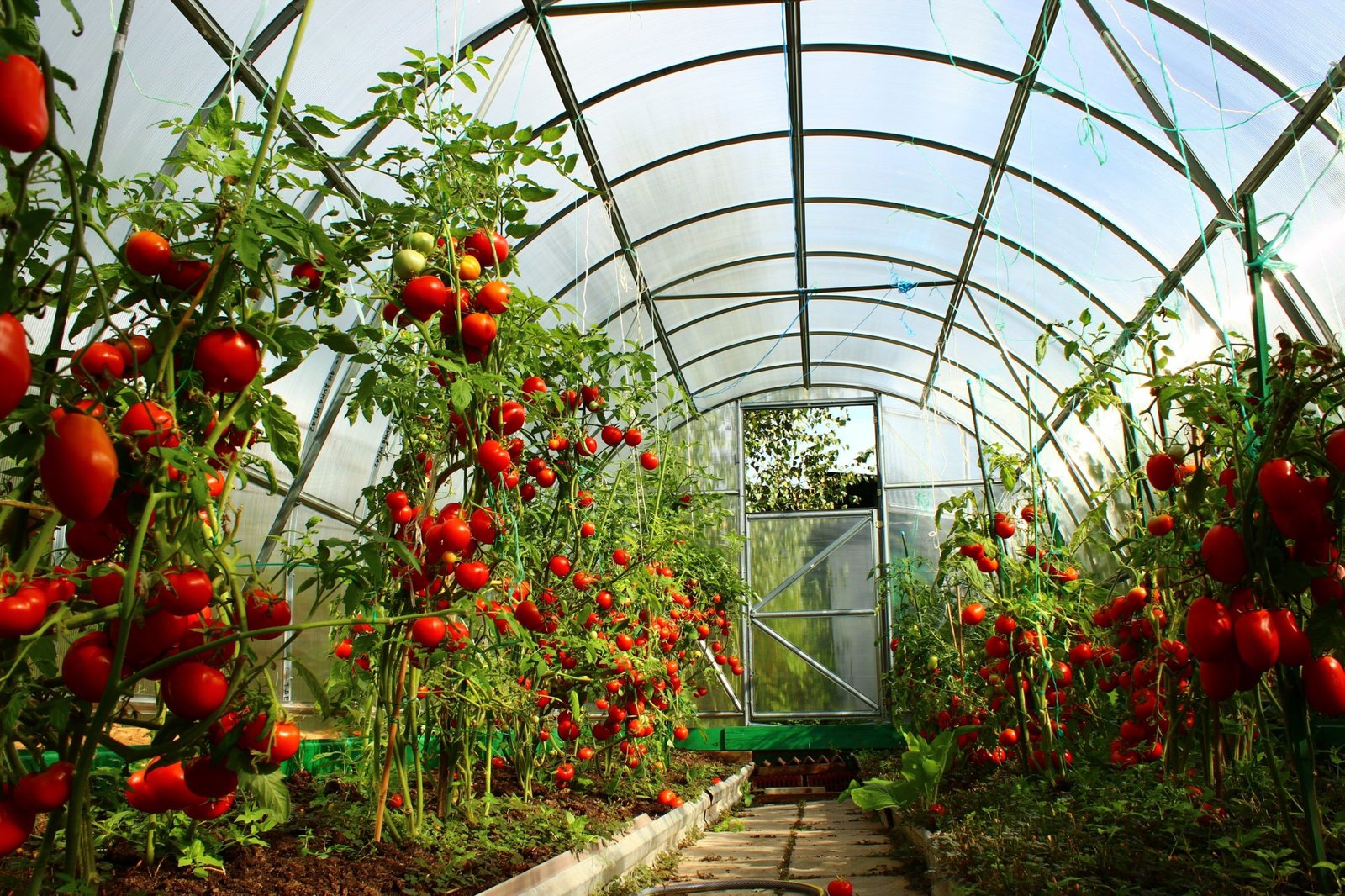
Now, knowing What you need to create, we will tell you, from what We do this by paying attention to numbers, markings and standards, which we strictly follow.
1. Greenhouse skeleton: Frame
The foundation of durability and your safety. It must withstand the snow and wind loads specific to your region. At Nova Teplitsa, we don't compromise on durability.
Our material standard:
| Parameter | Galvanized profile pipe (Our choice) | Galvanized V-profile | Aluminum profile |
|---|---|---|---|
| Section (mm) | 40x20 or 25x25This is our standard for most models. | We do not use this profile due to its low load-bearing capacity. | Used in premium models. |
| Wall thickness | 1.2 – 1.5 mm. For regions with high snow pressure, we offer reinforced frames up to 2.0 mm. | 0.8 – 1.0 mm. | 1.2 – 2.0 mm. |
| Corrosion protection | Hot-dip galvanizing (275 g/m²) According to GOST 9.307-89. We guarantee protection against through-corrosion for 15-25 years. | Typically a less durable coating. | Anodizing or powder coating. |
| Bearing capacity | Very high, designed for Ukrainian winters. | Low. Risk of "folding" under wet snow. | High with less weight. |
Key parameter: Loads according to DBN B.1.2-2:2006
We design our greenhouses taking into account the official load map of Ukraine:
- Kyiv, center (IV-V district): Estimated load ~130-160 kg/m².
- Lviv, Carpathians (VI-VII district): up to 200 kg/m² and higher.
- Odessa, South (II-III district): Increased wind load.
How do we solve this? For a load of 160 kg/m², our standard is a pipe frame 40x20x1.5 mm with arc pitch 67 cmThis is an engineering-based minimum that we consider essential for safety and durability.
2. Covering: Cellular polycarbonate
We work only with trusted polycarbonate manufacturers who provide certificates and guarantee the stated characteristics.
Our recommendations for choosing polycarbonate:
| Thickness, mm | Specific gravity, kg/m² (key indicator!) | Thermal resistance coefficient (R), m² °C/W | Recommendations from Nova Teplitsa |
|---|---|---|---|
| 4 | 0.5 - 0.7 | ~0.26 | A good choice for seasonal greenhouses (spring-fall). |
| 6 | 0.7 - 0.9 | ~0.35 | Our universal standard. Optimal for year-round cultivation with minimal heating. |
| 8 | 0.9 - 1.1 | ~0.42 | "Thermos Greenhouse." Recommended for northern regions and for those looking to maximize heating savings. |
| 10 | 1.1 - 1.3 | ~0.49 | Professional greenhouses, winter gardens. |
Our main principle: Only with UV protection!
We will never offer you polycarbonate without coextruded UV-stabilizing layer thickness 30-50 micronsThis is our guarantee that the coating will last you 10-15 years without yellowing or becoming brittle.
3. Shape and size: Aerodynamics and volume
In the Nova Teplitsa model range you will find various shapes, each of which solves its own problem: Arched, Straight-walledBut there are general principles that we adhere to:
- Optimal width: For 2 beds we we recommend the width 3 meters.
- Sufficient height: Our greenhouses have height at the ridge not less than 2.3 mto provide the necessary air volume and space for tall tomatoes to grow.
4. Life support systems
We equip our greenhouses with everything necessary for efficient operation:
- Ventilation: Each of our greenhouses has doors at both ends and vents. For longer models, we always recommend additional roof vents.
- Watering: We will help you select and equip your greenhouse with a system drip irrigation — the only correct solution for tomatoes.
Greenhouse Upgrades: How We Can Improve It
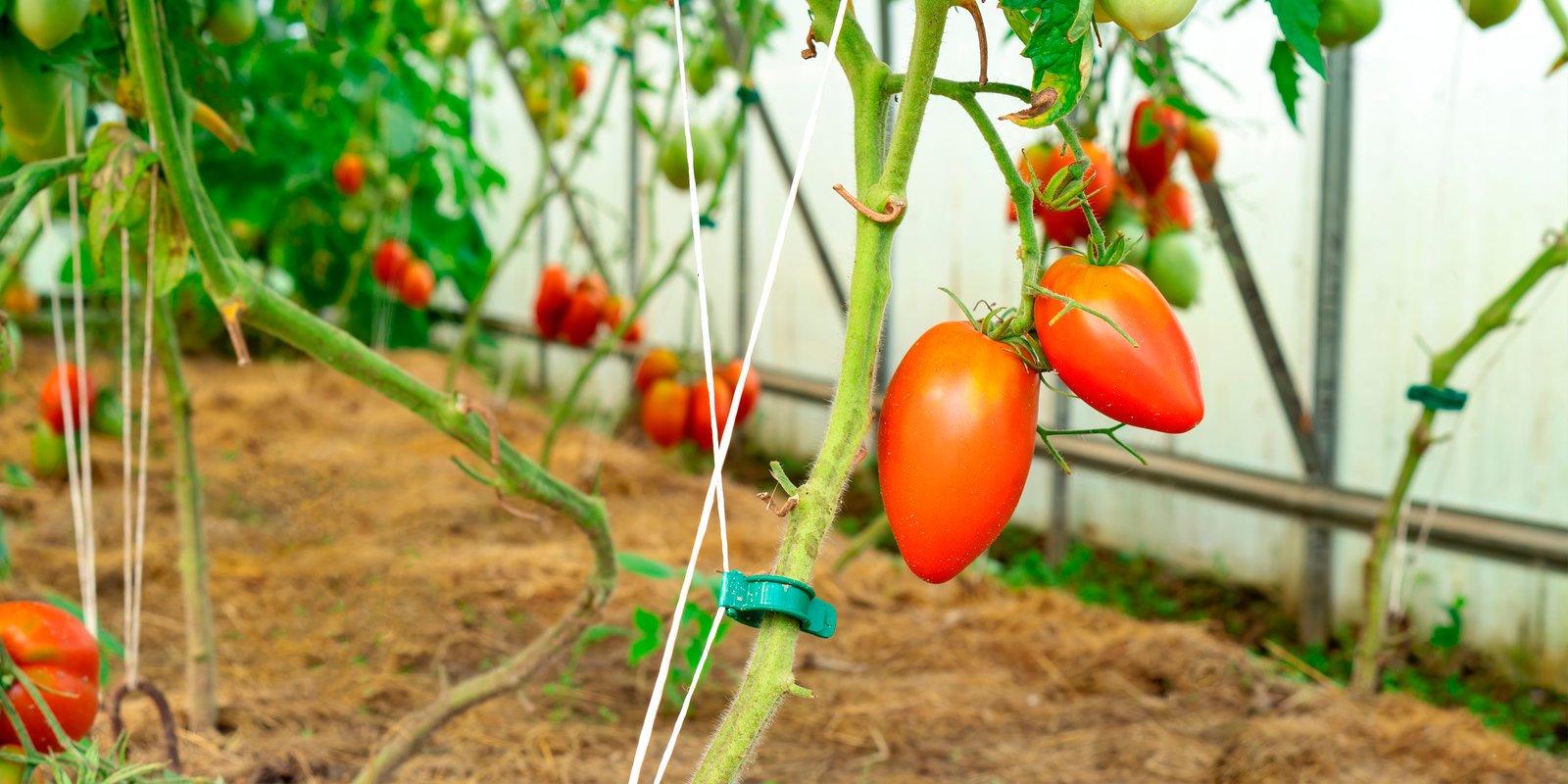
We can transform your greenhouse into a true year-round harvest factory by equipping it with:
- Heating systems: From simple electric convectors to full-fledged hydronic systems.
- Supplementary lighting systems: Modern and energy-efficient full-spectrum LED phytolamps.
- Shading systems: Special nets that will protect your plants from the scorching southern sun.
Mistakes we help our clients avoid
In our experience, even the best greenhouse won't produce the expected results if mistakes are made. We've compiled the most comprehensive list of mistakes—both design and agricultural—to equip you with the necessary knowledge.
Design and installation errors:
- Error #1: Incorrect placement on the site.
- Problem: The greenhouse is installed in the shade of a house or trees, or with the wrong orientation (from west to east).
- Consequences: Plants are not receiving enough morning and evening sun, becoming stretched and delaying fruiting. Uneven heating.
- Solution from Nova Teplitsa: We always advise on the correct placement. The ideal orientation for Ukraine is from north to southThis ensures uniform illumination of the sides throughout the day.
- Mistake #2: Skimping on the foundation.
- Problem: Installing the frame directly on the ground.
- Consequences: Seasonal soil movements (freezing and thawing) cause the structure to warp. Doors and vents become unresponsive, and the polycarbonate experiences excessive stress and may crack.
- Solution from Nova Teplitsa: We recommend installing your greenhouse on a lightweight foundation (e.g., 100x100 mm timber treated with an antiseptic). We provide clear instructions for its construction or offer ready-made kits.
- Mistake #3: Incorrect installation and sealing of polycarbonate.
- Problem: Fastening sheets with regular self-tapping screws, tightening them, mounting with the UV layer inside, open ends of the honeycomb.
- Consequences: Polycarbonate deteriorates due to thermal expansion, yellowing and brittleness after 2-3 years, dirt and moisture enter the cells, which reduces light transmittance.
- Solution from Nova Teplitsa: Each of our greenhouses is equipped with thermal washers, which ensure tightness and compensate for expansion. The instructions clearly explain how to install the sheet and how to protect the ends with special tapes and profiles, which we also stock.
Agronomic errors inside the greenhouse:
- Error #4: Insufficient ventilation and overheating.
- Problem: Saving on vents, irregular ventilation.
- Consequences: In summer, indoor temperatures can easily rise above 40°C, leading to pollen sterilization (no ovary formation) and plant burns. Stagnant, humid air is an ideal breeding ground for late blight.
- Solution from Nova Teplitsa: We design greenhouses with mandatory doors at the ends and always recommend additional roof vents (1 for every 2 meters of length). For full automation, we offer affordable thermal actuators.
- Mistake #5: Overcrowded plantings.
- Problem: The desire to plant as many plants as possible in one square meter.
- Consequences: Plants compete for light and nutrients and are poorly ventilated. This creates ideal conditions for the rapid spread of diseases. The resulting harvest is not larger, but smaller and of poorer quality.
- Solution from Nova Teplitsa: We help calculate the optimal number of plants for each greenhouse model. The standard scheme for tall tomatoes is 2.5-3 plants per 1 m².
- Mistake #6: Incorrect watering.
- Problem: Watering by sprinkling (from above on the leaves), especially in the afternoon.
- Consequences: A sharp increase in air humidity, water droplets on leaves, which become lenses for the sun and a gateway for infections.
- Solution from Nova Teplitsa: We highly recommend using drip irrigation systemIt delivers water directly to the roots, keeping the leaves and stems dry and the microclimate stable.
Nova Teplitsa is your partner in growing crops.
Choosing and installing a greenhouse is only half the journey to success. The other half is its proper operation. At Nova Teplitsa, our mission is to be your reliable partner throughout this journey.
We don't just sell durable and well-designed structures. We share our experience, provide honest technical specifications, and consult on everything from site selection to irrigation plans. Our goal is not just to sell you a greenhouse, but to provide you with everything you need to get the most out of it each year, producing a bountiful and healthy harvest.






 English
  Русский
  Українська