

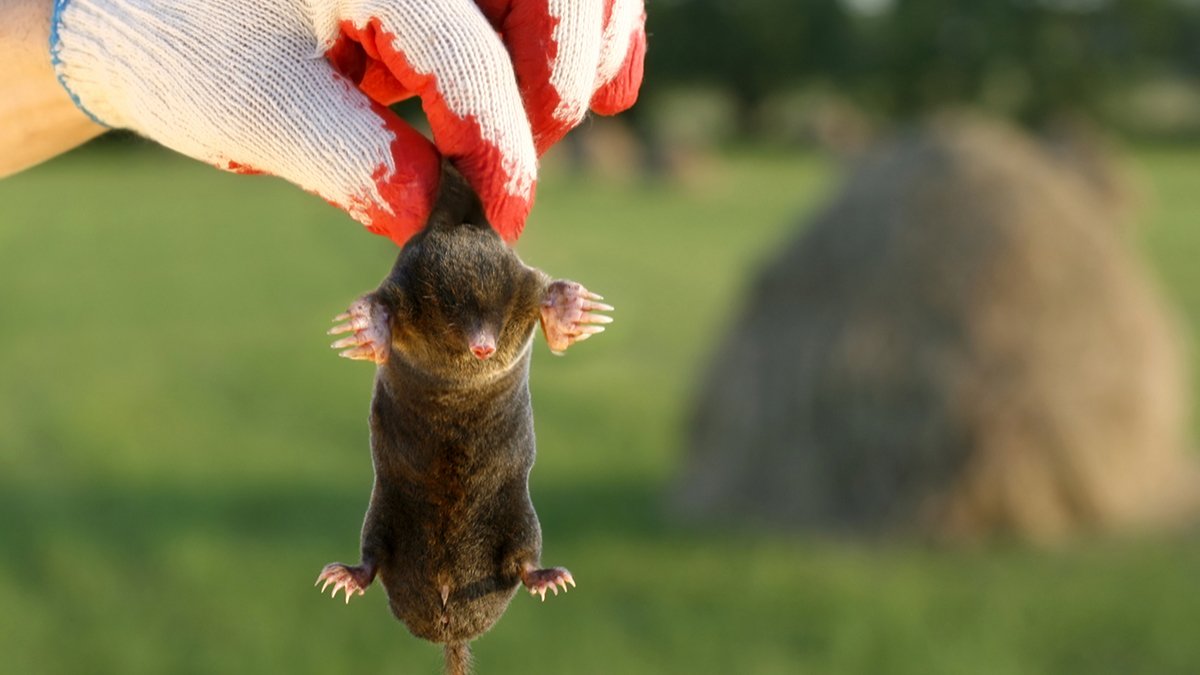
The appearance of moles or rodents (voles, rats, gadflies) in the greenhouse is not just an aesthetic problem, but a direct threat to the profitability of the farm. Pests find an ideal environment in closed ground conditions: loose, fertilized soil, stable temperature and plenty of food.
Threat Analysis: Biological Characteristics and Vectors of Entry
To effectively design a defense, it is necessary to understand not only the depth of the passages, but also the force the animal exerts on the barrier.
Classification of pests by technical parameters
| Parameter | Moles (Talpa europaea) | Rodents (Mice, Rats) | Blind men (Spalax microphthalmus) |
|---|---|---|---|
| Biological profile | Insectivore (predator). Seeks worms. | Omnivorous. Seeds, roots, fruits. | Herbivore (phytophagous). Feeds on roots. |
| Soil type | Prefers moist chernozem, loams. | Versatile. They like bedding. | Heavy soils, steppe zones of Ukraine. |
| Nesting depth | Up to 1.5 - 2.0 m (in winter). | 0.3 - 0.6 м. | Up to 3.5 m (main tunnels). |
| Working horizon | 10-40 cm (feeding passages). | 5-20 cm. | 20-80 cm (feeding zone). |
| Jaw/leg strength | Weak teeth, powerful paws (pushes the soil apart). | Powerful incisors (chew lead, aluminum). | Extremely powerful cutters (chews through M100 concrete). |
| Manhole diameter | 50-60 mm. | 20-50 mm. | 80-120 mm. |
Penetration Vectors (Technical Audit)
- Undermining: A deep passage beneath a foundation (most often blinders).
- Perimetral breakthrough: Through gaps between soil and greenhouse frame.
- Transit Route: Along drainage pipes or cable entries.
- Overground route: Through open transom windows (characteristic of rats).
Physical barrier design: Technical data
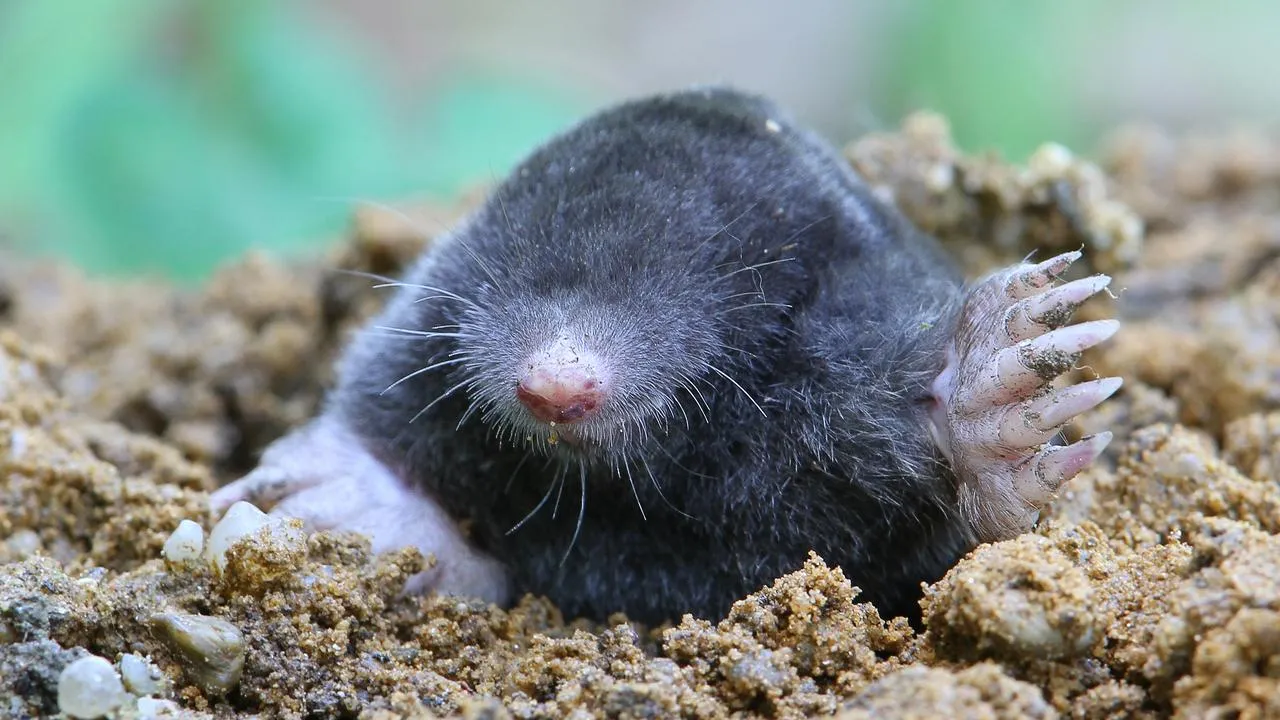
The choice of material in Ukraine must strictly comply with the conditions of operation in an aggressive environment (high humidity inside the greenhouse + acidity of soils).
Metal Mesh: Labeling, Compositions and DSTU
For the protection of greenhouses for a period of more than 15 years is used exclusively steel welded galvanized mesh, made by hot-dip galvanizing after welding.
Key parameters according to the standards:
- Type of wire: Low carbon steel according to GOST 3282-74.
- Zinc plating method:
- Galvanic (electrolytic): Zinc layer 10-20 g/m2. Visually shiny. Corrodes in soil in 12-18 months. Not recommended.
- Hot-Dip Galvanized: Zinc layer 60-130 g/m2. Visually matte, with undercuts at the weld nodes. Serves in soil for 15-25 years. Recommended Standard.
- Ukrainian regulations:
- DSTU EN 10223-4: Requirements for strength and geometry of cells.
- DSTU ISO 1461: Regulation on the thickness of the protective zinc layer.
Tolerance and dimension table (Technical data sheet)
| Parameter | Meaning for Anti-Mole | Value for Anti-Gnawing | DSTU tolerance |
|---|---|---|---|
| Cell size | 12x12 mm / 16x16 mm | 6x6 mm / 10x10 mm | +/- 0.5 mm |
| Wire diameter | 0.9 mm - 1.0 mm | 1.0 mm - 1.4 mm | +/- 0.05 mm |
| Zinc thickness | over 60 g/m2 | more than 80 g/m2 (Class C) | -10% from the nominal value |
| Breaking load | over 350 N/mm2 | over 450 N/mm2 | Minimum 95% samples |
Extended comparison table of barrier solutions
| Protection method | Material | Effectiveness against gadflies | Corrosion resistance in chernozem soil | Approximate budget (UAH/m2) |
|---|---|---|---|---|
| HDG welded mesh | Steel + Zinc | Tall | Very high (up to 20 years) | 180 - 350 |
| Galvanic mesh | Steel (thin zinc) | Average | Low (1-2 seasons) | 80 - 140 |
| Plastic geogrid | Polypropylene (PP) | Zero (gnawing) | Absolute | 40 - 90 |
| Concrete belt + Glass | M250 + Fiber | Tall | Absolute | 800+ |
| Flat slate | Chrysotile cement | Low (fragile) | Tall | 150 - 220 |
Polymeric materials: when are they applicable?
Plastic nets (e.g. with a density of 300-500 g/m2) are only allowed as a temporary measure (greenhouses for 1 season) or in regions where gadflies and rats are completely absent.
- Labeling: UV stabilization is mandatory (at least 3%).
- Cell size: Not more than 15x15 mm.
Material calculation and plant geometry
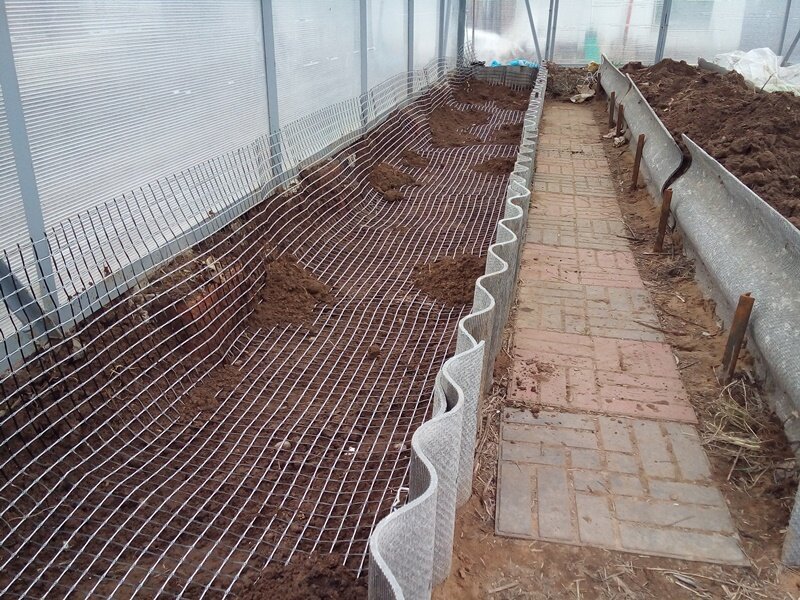
There are two fundamental engineering strategies for protection. The choice depends on the stage of greenhouse construction and the target pest species.
Strategy A: Horizontal solid barrier (Bottom)
Creation of a closed plane under the entire fertile layer. This is the only method that gives 100% guarantee against moles inside the greenhouse.
Depth of embedment calculation table (Design tolerances):
| Type of crops | Depth (cm) | Justification |
|---|---|---|
| Greens, lettuce, radishes | 20 - 25 | Minimal risk of damage to roots and mesh by the tool. |
| Vegetables (Tomato, Cucumber) | 35 - 45 | The necessary volume to develop a strong root system. |
| Berry (Raspberry) | 50 - 60 | Consideration of the depth of skeletal roots. |
Formula for calculating the material for horizontal paving:
S_total = (L + 0.4) * (W + 0.4) * 1.1 Where:
- L, W - Length and width of the greenhouse (in meters).
- 0.4 - Side overlap factor (20 cm on each side).
- 1.1 - Technological allowance for web overlap (10%).
Example (Greenhouse 4x10 m): S = (4.4) * (10.4) * 1.1 = 50.3 m2 of mesh.
Strategy B: Vertical defense screen (Perimeter)
It is used to protect already established greenhouses or in the control of gadflies.
Screen Technical Parameters:
- Depth (D): At least 80 - 100 cm. In central and northern Ukraine this is below the frost level, which blocks winter mole migrations.
- Ground part (H): 15 - 20 cm. Prevents rats and mice from penetrating the surface.
- Protective «Skirt» (L): The bottom edge of the net (last 20 cm) is folded outwards (away from the greenhouse) at a 90 degree angle. This creates a «pitfall trap» for the animal.
Formula for calculating the material for a vertical screen:
S_vert = (2 * (L + W)) * 1.35 Where:
- 1.35 - Total net height (1.0m depth + 0.15m above ground + 0.2m at bend).
Example (Greenhouse 3x6 m): S = (2 * (3 + 6)) * 1.35 = 18 * 1.35 = 24.3 м2.
Comparison of strategies (Engineer's Choice)
| Parameter | Horizontal «Bottom» | Vertical «Screen» |
|---|---|---|
| Effectiveness against moles | 100% | 85% (deep digging possible) |
| Blindfold protection | Medium (can chew) | High (at a depth of 1.2 m) |
| Cost of works | High (full excavation) | Medium (narrow trench) |
| Repairability | Low | Tall |
Step-by-step installation algorithm
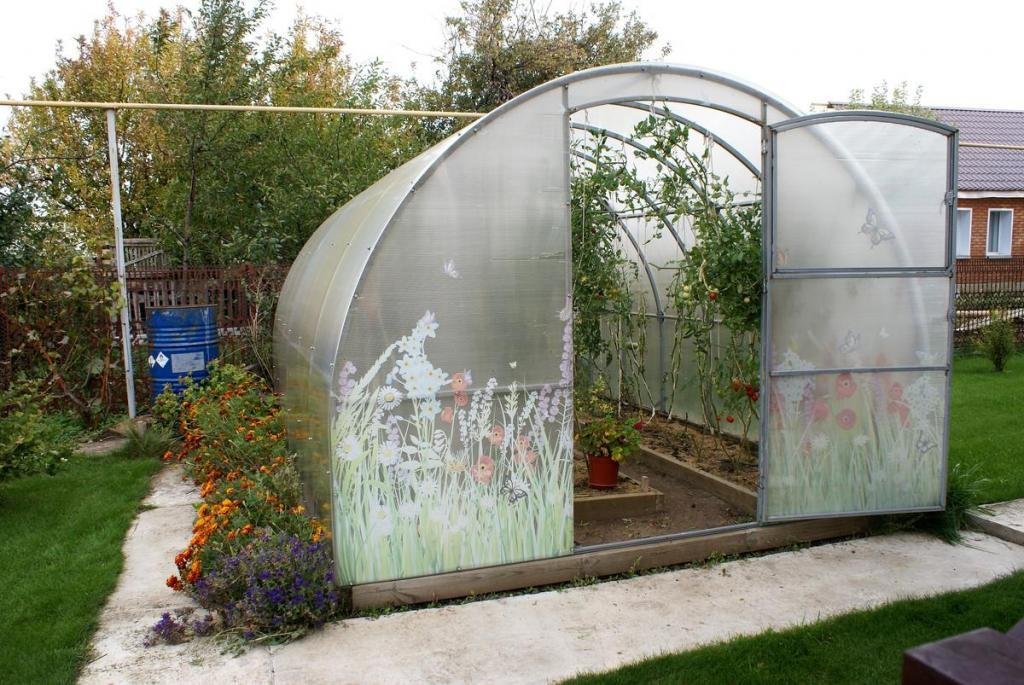
Correct installation determines the service life of the system. Even a small breach of technology (bad twist or small overlap) renders the barrier useless.
Step 1: Earthworks and soil volume calculation
Horizontal paving requires complete excavation.
- Volume calculation (V): For a 3x6 m greenhouse with a depth of 40 cm: 3 * 6 * 0.4 = 7.2 м3.
- Loosening coefficient (K_r): For chernozem ~1.25. The total volume of excavated earth will be about 9 m3.
- Tip: Stack the top fertile layer (0-20 cm) separately from the lower «mainland» layer for proper reclamation later.
Step 2: Preparation and profiling of the substrate
- Layout: The bottom of the excavation should have a slope of no more than 1-2 degrees to prevent water stagnation on the grid.
- Compaction: Use a hand tamping machine. The compaction ratio should be such that no deep footprints are left when walking.
- Drainage pad: Add 3-5 cm of river sand (0.5-2 mm fraction). This protects the zinc layer from mechanical abrasion against hard soil particles.
Step 3: Cutting and laying the mesh
- Orientation: Lay webs along the long side of the greenhouse to minimize the number of joints.
- Overlap Tolerances: According to engineering standards, the web overlap should be:
- For protection against moles: 100 mm.
- For protection against small rodents: 150 - 200 mm.
- Fixing to the ground: Use U-shaped staples made of galvanized wire (length 15-20 cm) every 1-1.5 meters to prevent the mesh from shifting during backfilling.
Step 4: Joint assembly and joint reinforcement
Moles have great physical strength and can pull the webs apart if they are just lying on top of each other.
- Connection method: Stitching with a «snake» or using knitting wire (soft, annealed, diameter 1.2 mm).
- Bundle spacing: Every 10-15 cm.
- Prohibition: Do not use plastic ties (clamps). They become brittle in the soil under the influence of temperature differences and acidity and burst after 3-4 years.
Step 5: Forming a «Closed Loop» (Critical Node)
Creating a «trough» shaped defense precludes bypassing the barrier from the side.
- Wall approach height: 15-20 cm above ground level.
- Fastening to the frame:
- To wood: Self-tapping screws with press washer (20 cm pitch).
- To concrete/jamb: Steel clamping strip (20x2 mm) on dowels.
- Tolerance: Gap between the clamping strip and the foundation - max. 2 mm.
Step 6: Backfill in layers
- First layer (protective layer): Fill the first 10 cm of soil by hand, without tamping or using machinery. This creates a damping layer.
- Subsequent layers: Wheelbarrows and shovels can be used. After 20 cm of backfilling, it is recommended to pour water abundantly to allow the soil to settle naturally and to avoid the formation of air voids under the mesh, which mice like to use.
Comparison of installation quality: Tolerances in Ukraine
| Controlled parameter | Norm (Expert level) | Marriage (Requires remodeling) |
|---|---|---|
| Overlap width | 150 mm | Less than 50 mm |
| Wire spacing | 120 mm | More than 300 mm or no ligature |
| Bottom deviation from the plane | +/- 30 mm per 6 meters | Visible pits and bumps |
| Mesh tension | No waves or bloating | Presence of «pockets» and voids |
Additional engineering units and tolerances
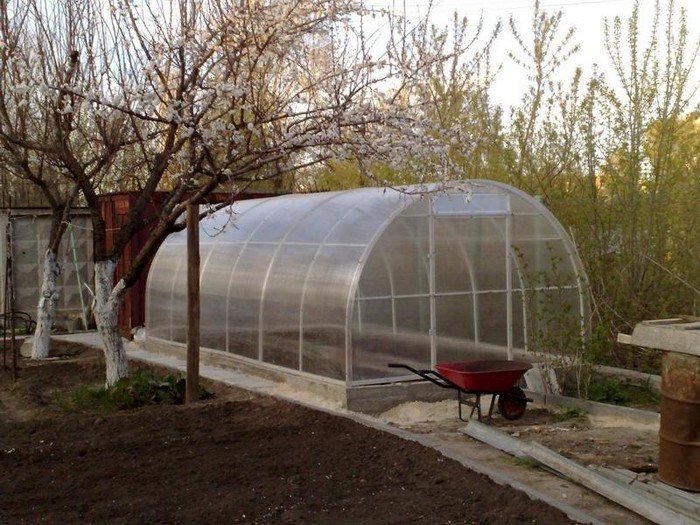
For capital greenhouses and farms, standard mesh may not be sufficient. The use of complex concrete and nodal solutions is regulated by building codes.
Foundations and pavement (according to DBN B.2.2-2:2005)
In Ukraine, the use of strip foundation is recommended for greenhouses with an area of more than 50 m2.
- Depth of embedment: For protection against gadfly - not less than 1.0 m. For protection against mole - 0.6 m.
- Tape width: 150 - 200 mm.
- Reinforcement: 4 bars of A400 rebar with a diameter of 10 mm.
Engineering trick: Recipe for protective concrete To create a physical barrier that is «beyond the teeth» of rodents, specific additives are used when mixing M250 concrete:
- Steel fiber: 40 - 60 kg per 1 m3 of concrete. Creates a micro-reinforcement that prevents gnawing of the manholes.
- Abrasive filler: Adding broken glass (fraction 5-10 mm) to the mortar in the amount of 10% from the weight of crushed stone. Rodents physically cannot work with cutters on such material.
Comparative table of foundation types
| Foundation type | Depth (m) | Degree of protection | Estimated service life |
|---|---|---|---|
| Shallowly buried (MZF) | 0.3 - 0.4 | Low (underdrawn) | 15 years |
| Full-depth belt | 1.0 - 1.2 | High (barrier to all) | 50 years |
| Plinth from FBS blocks | 0.6 | Medium (gaps in joints) | 30 years |
Sealing of utility inlets
Rodents often use technical openings as ready entrances. According to the norms of greenhouse operation, all inlets must be «blind».
Technical requirements for aisle assemblies:
- Steel sleeves: All pipes (HDPE, PVC) and cables must pass through a steel sleeve (VGP pipe according to GOST 3262-75) with a diameter 20-30 mm larger than the main pipe.
- Steel protection marking: Galvanized longitudinal welded pipe.
- Gap Sealing:
- Metal plug method: The space between the sleeve and the pipe is tightly packed with stainless metal shavings (putanka) to a depth of 50 mm on both sides.
- Finish sealing: The top of the packing is covered with M300 cement-sand mortar with the addition of liquid glass (silicate) for fast hardening.
Protection of drainage systems and ventilation
Basement vents and drainage outlets are the most vulnerable places.
- Drainage outlets: Installation of headers with check valves or nozzles made of stainless steel mesh labeled Mesh 20 (wire 0.5 mm, mesh 0.8 mm).
- Vents (ventilation): Closed by steel grilles (sheet thickness from 2 mm) with perforation diameter not exceeding 6 mm.
Recommendations on product selection in the Ukrainian market
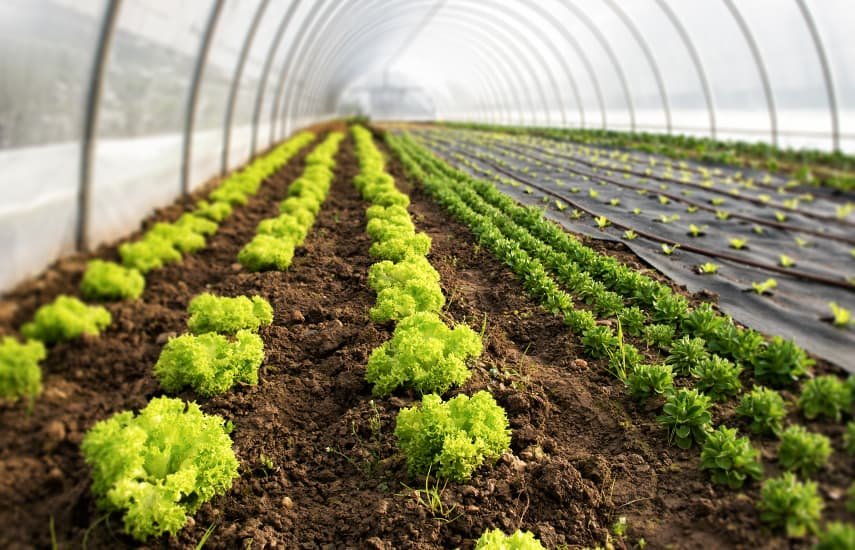
The choice of quality products on the Ukrainian market is 90% the success of the whole protection system. Mistakes in the choice of mesh or incorrect installation lead to the fact that after 2 years the protection has to be redone with full excavation.
Why is NovaTeplica the market leader in Ukraine?
We, NovaTeplica Company, are the leading manufacturer of greenhouses in Ukraine. We don't just sell structures - we offer complex turnkey engineering solutions.
- Individual design: We calculate the load and depth of protection individually for your soil type and region of Ukraine.
- Turnkey implementation: Our installation team takes care of all stages: from professional excavation with special equipment to sealing of utility connections. You don't need to look for contractors or get into the intricacies of wire tying - we deliver a fully pest-proof facility.
- In-house production: Our greenhouses are designed from the outset to integrate Anti-Mole systems.
Technical specification for mesh selection (Checklist)
| Technical parameter | Expert requirement | How to check for yourself |
|---|---|---|
| Roll weight (1x25m) | At least 14.5 - 16 kg (for 6x6 mesh, d=1.0) | Compare the actual weight. A light bale is a sign of underestimated wire diameter to 0.6-0.7 mm. |
| Welding quality | No black dots or scale in the nodes | Welding points must be completely covered with zinc. Black spots are pockets of corrosion, which will «rot» in a year. |
| Zinc density | Minimum 80 g/m2 (DSTU Class C) | Request a certificate from the wire manufacturer. Visually: the zinc should be matte, with characteristic «pops». |
| Certification | Conformity to DSTU EN 10223-4 | Availability of the original quality passport for the batch of goods. |
Comparison of market offers
- Budget version (China): Labeled «galvanized», actually - electro galvanized (10-15 g/m2 zinc). Wire 0.6 mm. Rodents chew through it in one season, and corrosion eats the metal in two.
- Professional variant (NovaTeplica): We use only hot-dip galvanized (HDG) mesh made of high quality Ukrainian GOST 3282-74 wire. This guarantees 20+ years of use in aggressive soil.
Professional purchasing tips
- Instrumental control: Always take a micrometer with you. If the wire is declared 1.2 mm and the micrometer shows 0.85 mm, this is a critical violation, such a net will not withstand the pressure of a gadfly.
- Cell geometry: Unroll the roll by 2-3 meters. The cells should be strictly parallel. Skewed geometry indicates a violation of welding technology and internal metal stresses, which will lead to tearing of the mesh under the pressure of heaving soil.
Answers to frequently asked questions (FAQ)
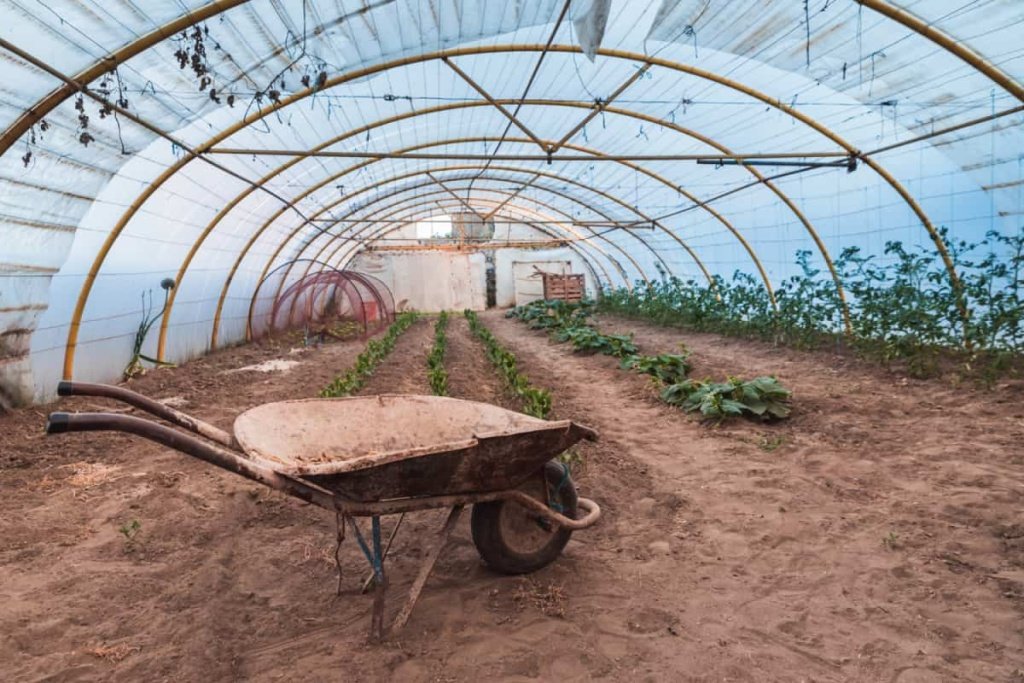
Question: Do ultrasonic repellents help? Expert answer: They are ineffective in the closed space of the greenhouse. Sound waves are quickly attenuated in dense earth and bypass obstacles (foundations, beds). In addition, rodents adapt to monotonous sound in 2-3 weeks.
Question: Can fiberglass mesh be used for facades? Expert answer: Absolutely not. It does not have sufficient rigidity, is easily chewed even by field mice and is destroyed in the alkaline environment of the soil.
Question: Is it necessary to protect the greenhouse from above? Expert answer: If rats are active in the region, they can enter through open air vents. A mosquito net made of stainless steel or aluminum should be installed on the outlets.
Investment in quality steel mesh at the stage of laying the greenhouse pays off in 1-2 seasons due to the preservation of crops and savings on pesticides. Remember: against moles the area of coverage is important, and against rodents - the minimum mesh size and the absence of gaps at the joints with the frame.






 English
  Русский
  Українська