



How to Calculate Greenhouse Water Use: A Complete Guide
Accurately calculating water consumption isn't just a matter of resource conservation. It's the foundation of a greenhouse business's profitability, the key to healthy plants, and the foundation for designing an effective irrigation system. Miscalculations at the design stage can have catastrophic consequences, from crop failure due to water shortages during peak periods to unnecessary investments in overly powerful equipment.
NovaTeplitsa has prepared a comprehensive guide based on agronomic and engineering practices. We will examine in detail all the factors affecting water consumption, review professional and simplified calculation methods, provide specific examples, and discuss Ukraine's regulatory framework.
Fundamental factors influencing water consumption
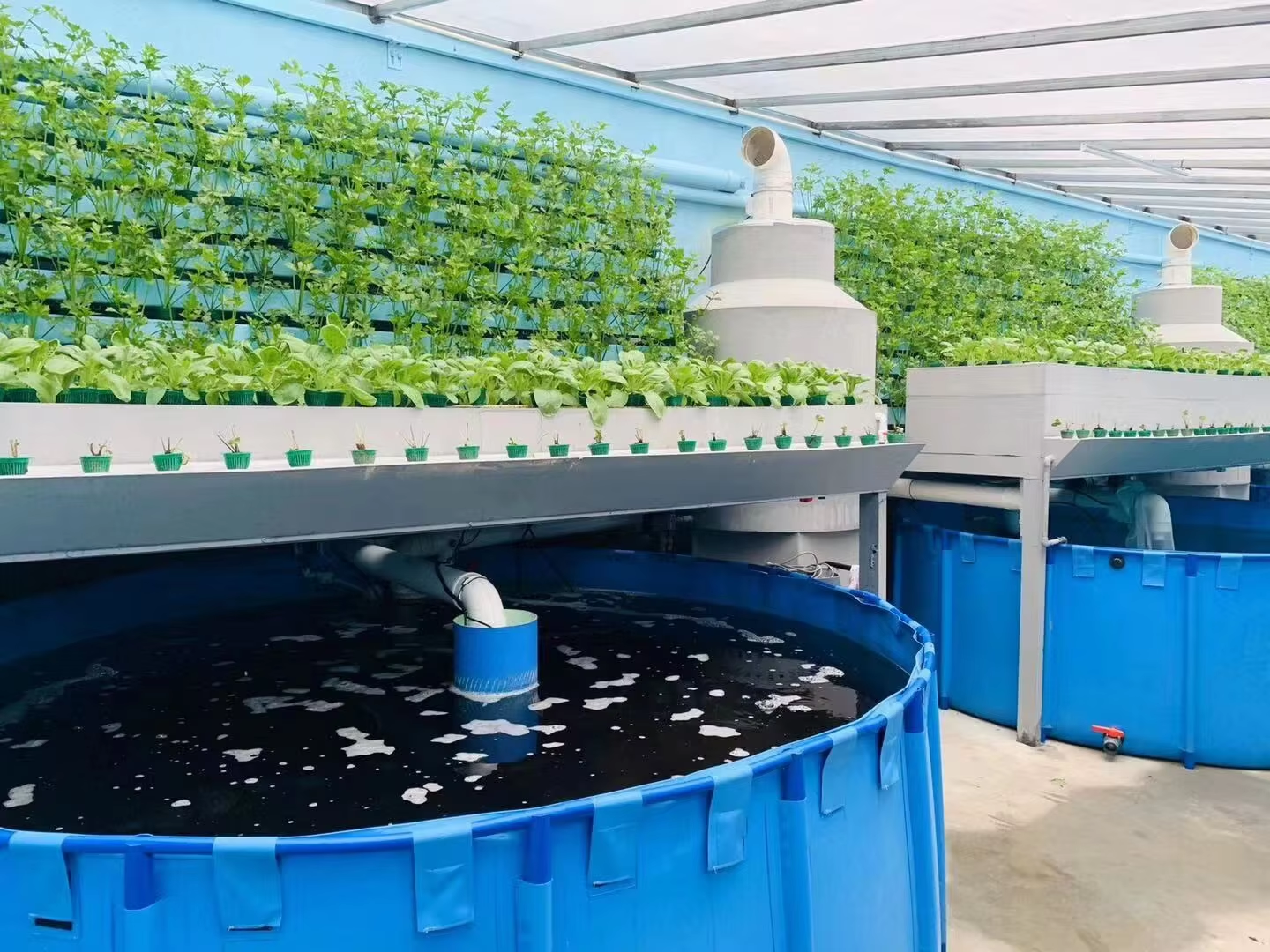
Calculating water consumption in a greenhouse is a multifaceted task. You can’t simply use an «average» figure. Water consumption is a dynamic variable that depends on four key groups of factors.
Climate and weather conditions
This is the most powerful driver of water consumption. Plants evaporate water to cool themselves, and this process (transpiration) is directly related to the energy they receive.
- Solar radiation (insolation): The main factor. The more sun (measured in W/m² or MJ/m²/day), the more active photosynthesis and transpiration are. Water consumption is directly proportional to the radiation level.
- Air temperature: High temperatures increase evaporation and transpiration.
- Air Humidity (Vapor Pressure Deficit — VPD): This is one of the key indicators in modern greenhouses. VPD is the difference between the amount of water vapor in the air Maybe keep it at the current temperature, and how much it really contains.
- Low VPD (high humidity): It is «difficult» for plants to evaporate water. This can lead to leaf overheating and problems with calcium uptake (tip rot).
- High VPD (low humidity): The air «draws» moisture out of the plants, causing intense transpiration and water stress.
- Wind speed: Affects naturally ventilated greenhouses by increasing air exchange and, consequently, evaporation.
Culture and its agricultural technology
- Crop type: Cucumber (has a larger leaf area) consumes significantly more water than, for example, lettuce or tomato.
- Development stage (Phenophase): Water consumption is minimal at the seedling stage and reaches its absolute peak during the period of mass fruiting and harvest.
- Leaf Area Index (LAI): This is the total leaf area per 1 m² of greenhouse floor space. For a mature tomato plant, the LAI can reach 3–4 m²/m², which means that the evaporative surface area is 3–4 times larger than the soil area.
- Planting density: More plants per m² means higher total consumption.
Type of greenhouse and its equipment
- Covering material: Film, polycarbonate or glass transmit light (especially the UV spectrum) and retain heat differently, affecting the microclimate.
- Ventilation: Forced (fans) or natural (transoms). Ventilation efficiency directly impacts temperature and VPD.
- Shading systems (Screens): Energy-saving and shading screens radically change the microclimate, reducing insolation and, consequently, water consumption.
Irrigation technology and substrate
- Irrigation system:
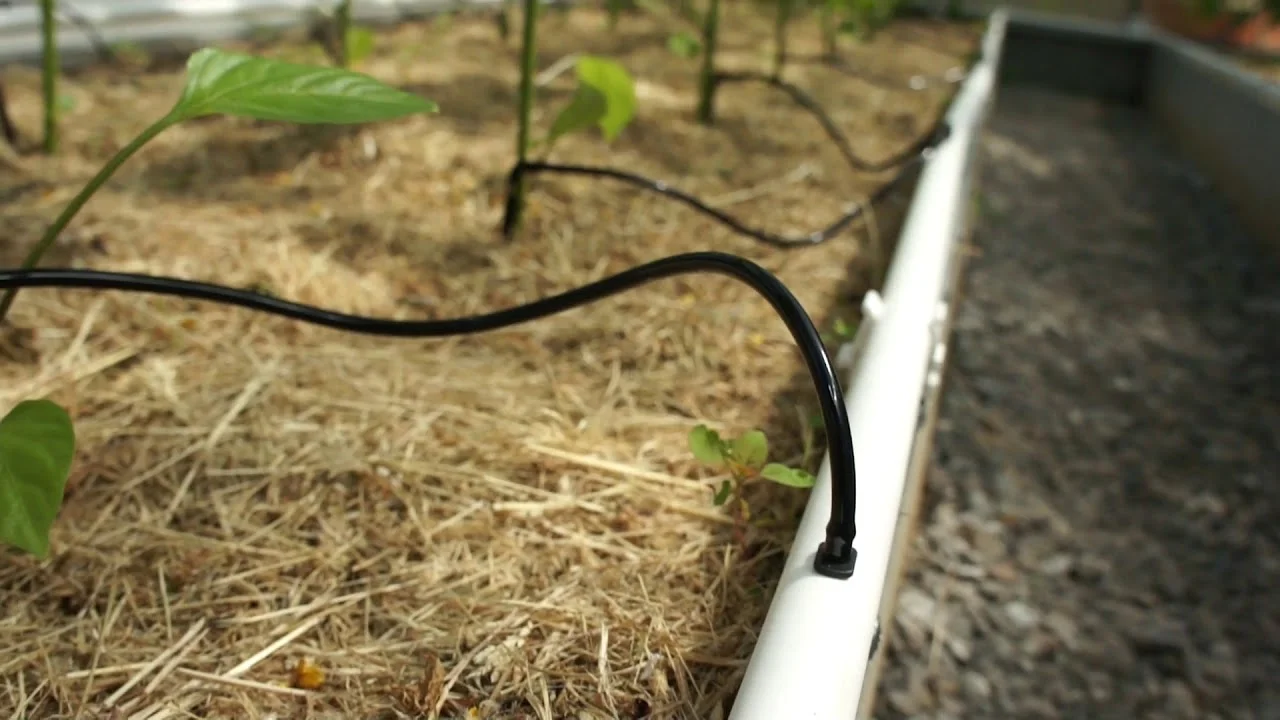
- Drip irrigation: The most common and effective (efficiency 90-95%). Allows water and nutrients to be delivered directly to the root zone.
- Hydroponics (low-volume technology): Uses inert substrates (mineral wool, coconut) or systems (NFT, DWC). Here, drainage is required.
- Substrate type:
- Soil: Has high buffering and water-holding capacity (WHC).
- Mineral wool / Coconut substrate: Have limited VUS and require frequent, fractional watering (up to 10-20 times a day) to maintain optimal humidity and EC.
Methods for calculating water consumption
There are several approaches to calculation, from highly accurate scientific ones to simplified practical ones.
Method 1: Based on Evapotranspiration (ET)—The «Gold Standard»
This method is the most accurate, as it is based on the physics of the process. Total water consumption (ET) is made up of:
- E (Evaporation): Evaporation from the surface of the substrate/soil.
- T (Transpiration): Evaporation through plant leaves (95-99% of total intake).
Professional agronomic calculations use reference evapotranspiration (ET₀), calculated using the complex Penman-Monteith formula, which takes into account radiation, temperature, humidity, and wind.
Next, the crop evapotranspiration (ETc) is calculated: ETc = ET₀ * Kc Where Kc — a crop coefficient that depends on the crop type and growth stage (for example, for tomatoes at their peak, it can range from 1.05 to 1.2).
Practical application in a greenhouse: The Penman-Monteith formula is complex. In practice, agronomists using climate computers rely on direct measurements of solar radiation.
- Rule of thumb: A plant uses approximately 0.6–0.8 liters of water for every MJ (megajoule) of total solar radiation received per 1 m².
- Example: On a sunny summer day in Ukraine, a greenhouse can receive 18 MJ/m² of radiation.
Consumption = 18 MJ/m² * 0.7 l/MJ = 12.6 l/m²This clean plant consumption.
Method 2: Simplified (by area and crop)
This method uses average, proven water consumption rates per square meter or hectare. It is less precise, but sufficient for preliminary design and for greenhouses without complex automation.
Estimated peak water consumption rates (Summer, Ukraine):
| Culture | Technology | Average peak consumption (l/m²/day) | Maximum (in case of heat) (l/m²/day) |
|---|---|---|---|
| Tomato | Low-volume (mineral wool/coconut) | 6.0–9.0 | 12.0 |
| Tomato | Ground greenhouse | 5.0–7.0 | 9.0 |
| Cucumber | Low-volume (mineral wool/coconut) | 7.0–10.0 | 14.0 |
| Cucumber | Ground greenhouse | 6.0–8.0 | 11.0 |
| Salad | Non-flow hydroponics (NFT) | 3.0–5.0 | 7.0 |
| Pepper | Low-volume (mineral wool/coconut) | 5.0–8.0 | 10.0 |
Note: In spring/autumn periods these values may be 2-3 times lower (2-4 l/m²/day).
Method 3: Calculation through drainage (for hydroponics)
It's not so much a method design, how much method daily management watering. Its purpose is to prevent excess salts (EC) from accumulating in the substrate.
Logic: We supply water more, than the plant can consume, and measure the excess (drainage).
V_consumption = V_supply - V_drainage
Target drainage percentage:
- Mineral wool: 25-35%
- Coconut substrate: 20-30%
This means that if we want the plant to consumed 6 l/m², we should submit to him: V_supply = V_consumption / (1 - %drainage) V_flow = 6 l / (1 - 0.30) = 6 / 0.7 = 8.57 l/m²
Thus, the irrigation system should be designed to supply 8.57 l/m², of which 6 l will go into the plant, and 2.57 l (30%) will go to drainage.
Example of complex calculation (System design)
Let's calculate the daily requirement and the required pump power for a farm greenhouse.
Initial data:
- Object: Greenhouse 1500 m² (0.15 ha).
- Location: Cherkasy Oblast, Ukraine.
- Culture: Tomato (indeterminate).
- Technology: Low-volume, coconut substrate.
- Irrigation system: Drip irrigation.
Step 1: Determining Peak Daily Intake
We design the system for the hottest, sunniest day in July (peak fruiting).
- We take the maximum rate from the table (Method 2) for tomato on coconut: 9.0 l/m² (this is the net consumption of the plant).
- We add a reserve for abnormal heat: +20% = 9.0 * 1.2 = 10.8 l/m².
Step 2: Accounting for drainage
For coconut we need drainage ~30% to wash out salts.
V_supply (total) = V_consumption / (1 - %drainage)V_flow = 10.8 l/m² / (1 - 0.30) = 10.8 / 0.7 = 15.43 l/m²- Round up to 15.5 l/m².
Step 3. Calculating the total daily volume
V_day = V_supply * AreaV_day = 15.5 l/m² * 1500 m² = 23,250 liters- Total: 23.25 m³ per day. This is the volume of water that must be available (storage tank, well).
Step 4. Calculating the required pump capacity (Q)
Irrigation in a greenhouse isn't 24 hours a day. It's done in cycles (for example, 15 5-minute cycles). The total pumping station runtime per day (the sum of all cycles) on a peak day could be, for example, 3-4 hours.
- Let's take for calculation 4 hours (240 minutes) of pump operation per day.
Q (m³/hour) = V_day / Operating timeQ = 23.25 m³ / 4 hours = 5.81 m³/hour- We add engineering reserve 15% (for losses in pipes, pump wear):
Q_required = 5.81 * 1.15 = 6.68 m³/hour
Conclusion: This greenhouse requires a pumping station with a capacity of at least 6.7 m³/hour (or ~112 l/min), capable of creating the required operating pressure (usually 1.5-2.5 atm for drip systems).
Technical aspects and equipment markings

Drip irrigation
- Drip emitters: Greenhouses use almost exclusively pressure-compensated (PC) drip emitters. They deliver a constant volume of water (for example, 2 L/h) at varying system pressures (within the range of 0.5–3.0 bar), which is critical for uniform irrigation.
- Marking: Key parameter – water flow (l/h).
2.0 l/h: Standard for most substrates (mineral wool, coconut).3.0 - 4.0 l/h: These are used less frequently, for soils or crops that require a lot of water.
- Distance between drippers:
- Tomato, Cucumber (on substrate): 30-40 cm.
- Pepper: 25-33 cm.
- Line calculation: If you have a 100-meter row with 2 l/h drippers every 30 cm (3.3 pcs/m), then:
Consumption per row = 100 m * 3.3 pcs/m * 2 l/h/pc = 660 l/h (0.66 m³/h)This knowledge is necessary for the correct selection of the diameter of the main pipes.
Pipes and sizes
- Drip tube (blind) with droppers: 16 mm or 20 mm.
- Distribution (secondary) lines: HDPE pipe 32 mm, 40 mm, 50 mm.
- Main line (from the pump): HDPE or PVC 50 mm, 63 mm, 75 mm, 90 mm (depending on the total flow rate).
Standards and tolerances in Ukraine
Water quality
There is no single «DSTU standard for irrigation water.» Agronomists follow the recommended parameters. The source water (from a well or body of water) BEFORE being mixed with fertilizers should ideally meet the following requirements:
| Parameter | Designation | Recommended limit (Ukraine) | Problems when exceeding |
|---|---|---|---|
| Electrical conductivity | EC | < 1.0 mS/cm (max. 1.5) | It is difficult to prepare a nutrient solution, there is a risk of salinization |
| Acidity | pH | 5.5–7.0 | Problems with fertilizer solubility, corrosion |
| General hardness | — | < 4.0 mmol/L | Clogging of IV drips (calcium, magnesium) |
| Bicarbonates | HCO₃⁻ | < 120 mg/l | «Alkalization» of the substrate, clogging of drip lines |
| Sodium | Na⁺ | < 50 mg/l | Toxic to plants, destroys soil structure |
| Chlorine | Cl⁻ | < 70 mg/l | Toxic to plants (especially cucumber, rose) |
| Iron (total) | Fe | < 0.5 mg/l (max 1.0) | Severe clogging of IV drips (glandular bacteria) |
Conclusion: Before designing a greenhouse, laboratory water analysis is essential. The choice of water treatment system (iron removal, softening, reverse osmosis) depends on it.
Disposal of drainage
This is one of the most pressing environmental issues. The Water Code of Ukraine and other regulations prohibit the discharge of drainage water (containing high concentrations of nitrates and phosphates) into open water bodies or onto the ground.
- Solution: Modern greenhouse complexes are required to design recirculation (closed loop) systems.
- Process: Drainage is collected, filtered, disinfected (usually with UV sterilizers or ozonation), and returned to the solution unit for reuse. This saves up to 20-30% of water and fertilizer and solves an environmental problem.
Expert advice and common mistakes
- Error: Designing «to the limit.» Never design a pump and piping system based exactly on the calculated peak demand. Always allow for a margin of 15–25%. During an unusually hot week, a system operating at 100% capacity will fail.
- Tip: Start with a water test. This is the foundation. A reverse osmosis system can be expensive, and you need to know that. to start of construction.
- Mistake: Skimping on automation. Watering «on a schedule» (with a timer) is a thing of the past. On a cloudy day, it will overwater the plants; on a sunny day, it won’t water them enough. The bare minimum in automation is a solar radiation-based irrigation controller. It triggers watering cycles only when the plant has «warmed up» (received its dose of sunlight).
- Tip: Consider storage. A well or borehole can rarely provide peak flow (e.g., 7 m³/hour). A storage tank (a reservoir or cistern) is needed that fills slowly from the source and empties quickly with an irrigation pump. Its capacity should cover at least 1-2 days of peak demand.
- Tip: Monitoring. The most accurate calculation is daily measurement. Install simple lysimeters (scales under 1-2 mats) in the greenhouse or simply measure the drainage volume from several rows. This will give you a realistic picture of consumption and allow you to adjust watering in a timely manner.