

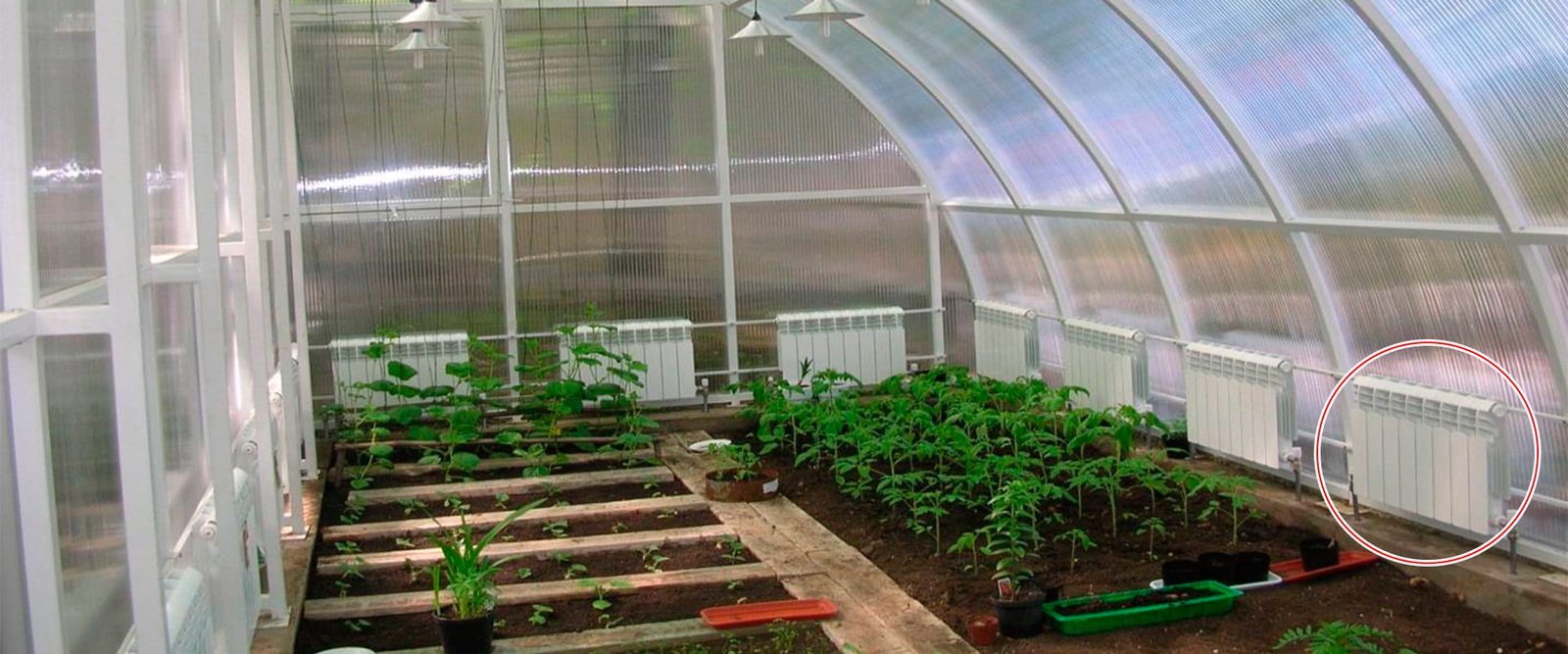
Do you know the situation when you enter a greenhouse in July and feel like you are in a hot sauna, and your plants look like they are fighting for survival, not for the harvest? Have you ever wondered why tomatoes drop their color when watered heavily and cucumber leaves hang limply by noon?
For many greenhouse owners, summer turns into a season of «firefighting», when all efforts are spent trying to save plants from the scorching sun. Scorched pollen, stoppage of growth and, as a consequence, loss of profit - these are the main pains faced by every greenhouse grower in Ukraine. However, a professional approach to indoor cultivation states that summer overheating is not a natural inevitability, but an engineering challenge.
The critical threshold of +32°C...+35°C can completely stop the photosynthesis process, turning the greenhouse into a trap. The expert's task is not just primitive «ventilation», but the creation of a complex, controlled system of heat dissipation in the greenhouse, capable of maintaining plant life and productivity even in abnormal heat.
The physics of superheating and the biological limit
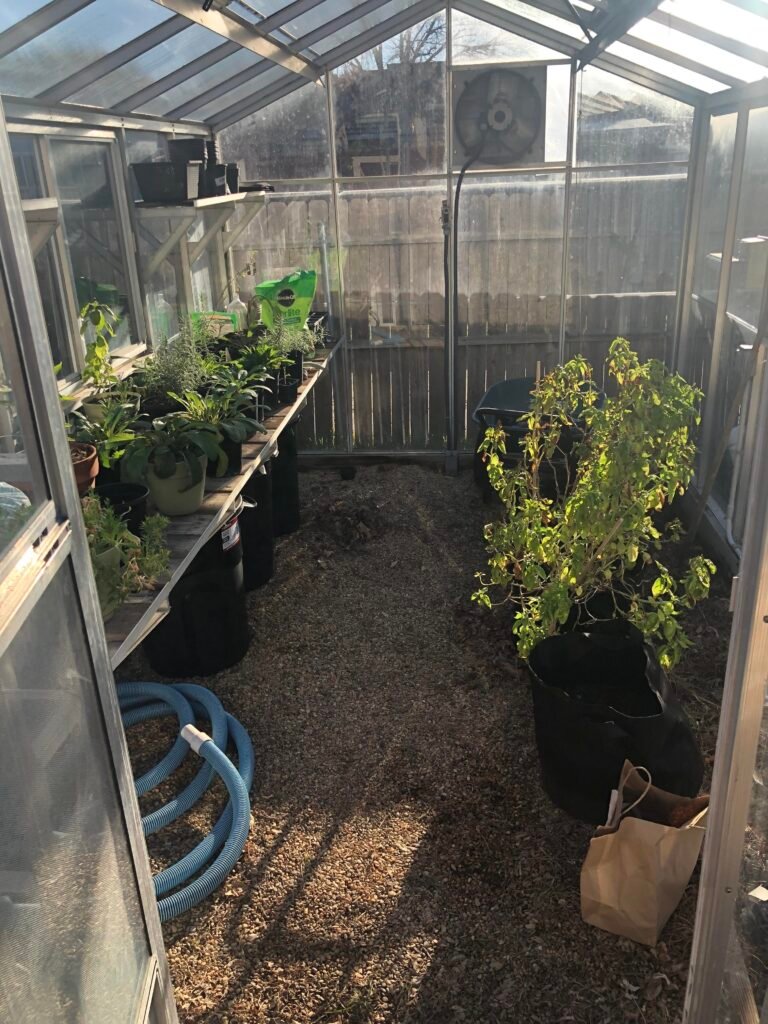
Knowing the air temperature is not enough for effective heat dissipation. It is important to understand the mechanisms of energy transfer. Solar radiation in Ukraine in June-July reaches peak values of 800-1000 W/m².
Heat Trap Mechanism«
A translucent covering (glass, polycarbonate) transmits short-wave radiation from the sun (0.3-2.5 microns). Plants and soil absorb this energy and heat up, starting to radiate energy back, but already in the long-wave IR range (5-50 microns). Most greenhouse covers are opaque to «far» infrared radiation, which creates the classic greenhouse effect.
Comparison of coating materials by thermophysical properties
| Coating material | Light transmission | Heat transfer coefficient (U), W/m²K | Resistance to overheating |
|---|---|---|---|
| Single film (150 µ) | 88-90% | ~7.0 | Low (heats up and cools down quickly) |
| Double film (supercharged) | 80-82% | ~3.5 | Medium (good inertia) |
| Cellular polycarbonate 4 mm | 82% | ~3.9 | High due to air chambers |
| Cellular polycarbonate 10 mm | 79% | ~3.0 | Maximum (slower heat transfer) |
| Single glass 4 mm | 90-92% | ~5.8 | Low (high thermal conductivity) |
The lower the heat transfer coefficient (U), the slower the greenhouse will warm up in the morning, giving you plenty of time to turn on cooling systems.
Biological factor: VPD (Vapor Pressure Deficit)
A key mistake for beginners is to focus only on the thermometer. Plants cool themselves through transpiration (evaporation of water by leaves).
- At +35°C and low humidity, the plant evaporates water too quickly, the roots do not have time to supply it - the leaf wilts.
- At a temperature of +35°C and high humidity (bath effect) evaporation is impossible - the plant «boils» from the inside.
Critical indicators for the agronomist:
- +25°C...+28°C: Gold standard. Photosynthesis rate at peak.
- +30°C: The plant enters survival mode. The stomata are partially closed to conserve moisture.
- +35°C: Tomato pollen becomes sterile within 2-4 hours of being in this mode. You lose a crop that should have ripened in 45 days.
- +40°C and above: Protein denaturation begins. Even if the plant survives, its productivity will drop by 50-70% for the next 2 weeks.
Passive methods: Shading and Shielding
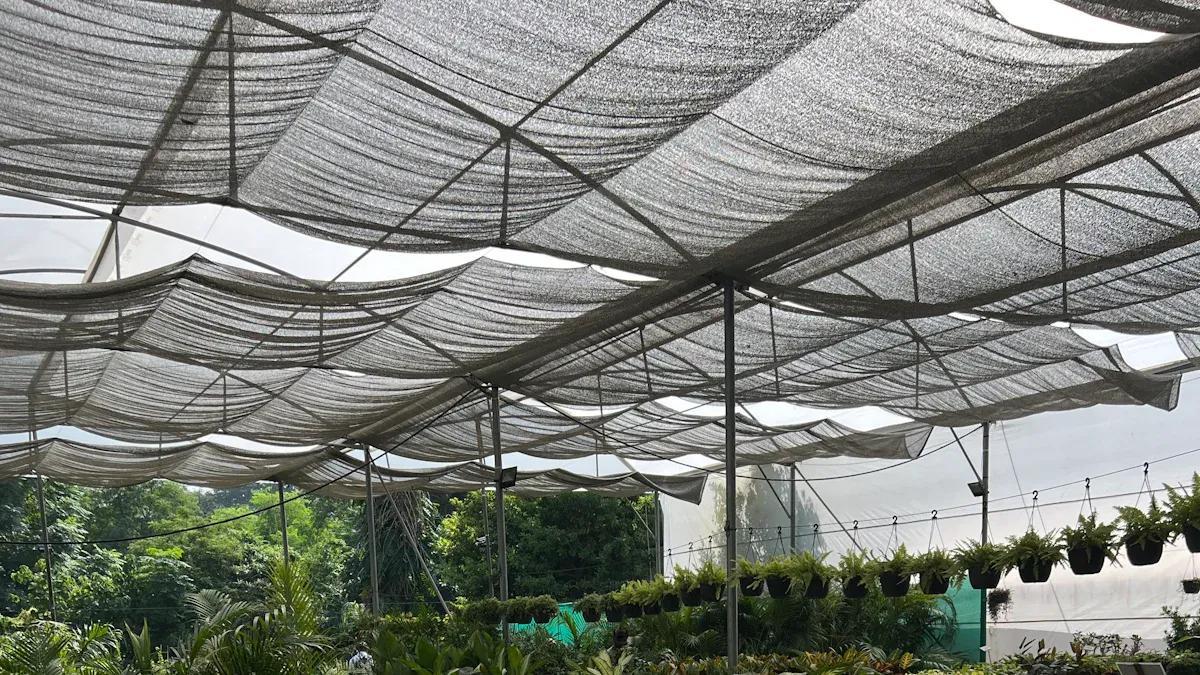
The cheapest watt of cooling is the one that doesn't get in. Blocking excess energy on the greenhouse approach reduces the load on ventilation systems by 30-50%.
Shading nets: Technical choice
In Ukraine the market is represented mainly by HDPE nets (high density polyethylene) with UV stabilization. A quality net should serve at least 3-5 seasons.
Comparison of the effect of mesh color on microclimate:
| Mesh color | Percentage of shadow | Effect | Recommendation for Ukraine |
|---|---|---|---|
| Green | 45-60% | Creates a mild microclimate, stimulates the growth of green mass. | A versatile choice for cucumbers and herbs. |
| Black | 60-85% | Absorbs light as much as possible. Can become very hot on its own. | For rest areas or storage greenhouses. |
| White/Silver | 45-50% | Reflects rays without heating up. Increases the proportion of diffused light. | Ideal for southern regions and light-loving tomatoes. |
| Red | 50-60% | Accelerates flowering and fruit ripening (specific spectrum). | For professional berry farms. |
Technical parameters for installation:
- Clearance: The mesh should be placed 10-15 cm away from the greenhouse cover. This creates an air gap through which the air heated by the mesh escapes.
- Mounting: Use special «Maple Leaf» clips or a zigzag profile. Regular wire can fray the net strands in strong winds.
- Brands in Ukraine: * Bradas (Poland): Density from 38 to 135 g/m². The “Comfort” series is optimal for private households.
- Juta (Czech Republic): High wear resistance, often used on an industrial scale.
- Agreen (Ukraine/Italy): Good value for money.
Aluminized screens (Aluminet)
It is a high-tech solution where the mesh threads are interwoven with aluminum foil.
- Principle: Reflects up to 70% of IR radiation outward.
- Dispersion: Turns direct rays into diffuse (diffused) light that penetrates deep into the bush, preventing burns to the upper leaves.
- Night Effect: In winter or on cold nights, Aluminet acts like a thermos, trapping up to 15% of heat inside the greenhouse.
Liquid Shading (Professional Whitening)
If the design of the greenhouse does not allow to fix the mesh (for example, large arch complexes), special mastics and paints are used.
Comparison: Chalk vs Professional Paint (Sudlac/Parasol)
| Parameter | Chalk solution (Economy) | Professional paint (Sudlac) |
|---|---|---|
| Rain resistance | Washed away by the first heavy downpour. | Lasts all season, washes off with a special solution. |
| Light transmission | Sharp drops, the light becomes «dirty». | Selectively blocks only the infrared spectrum. |
| Adhesion | Bad, clogs the gutters with a white buildup. | High, does not harm polycarbonate and glass. |
| Peculiarities | Cheapness. | Becomes transparent when it rains (lets light through on a cloudy day). |
Apply the paint using a garden sprayer with a “flat torch” nozzle. The consumption of professional paint is approximately 1 liter of concentrate per 50-100 m² of surface, depending on the desired degree of shade.
Ventilation: Calculation of the air exchange rate
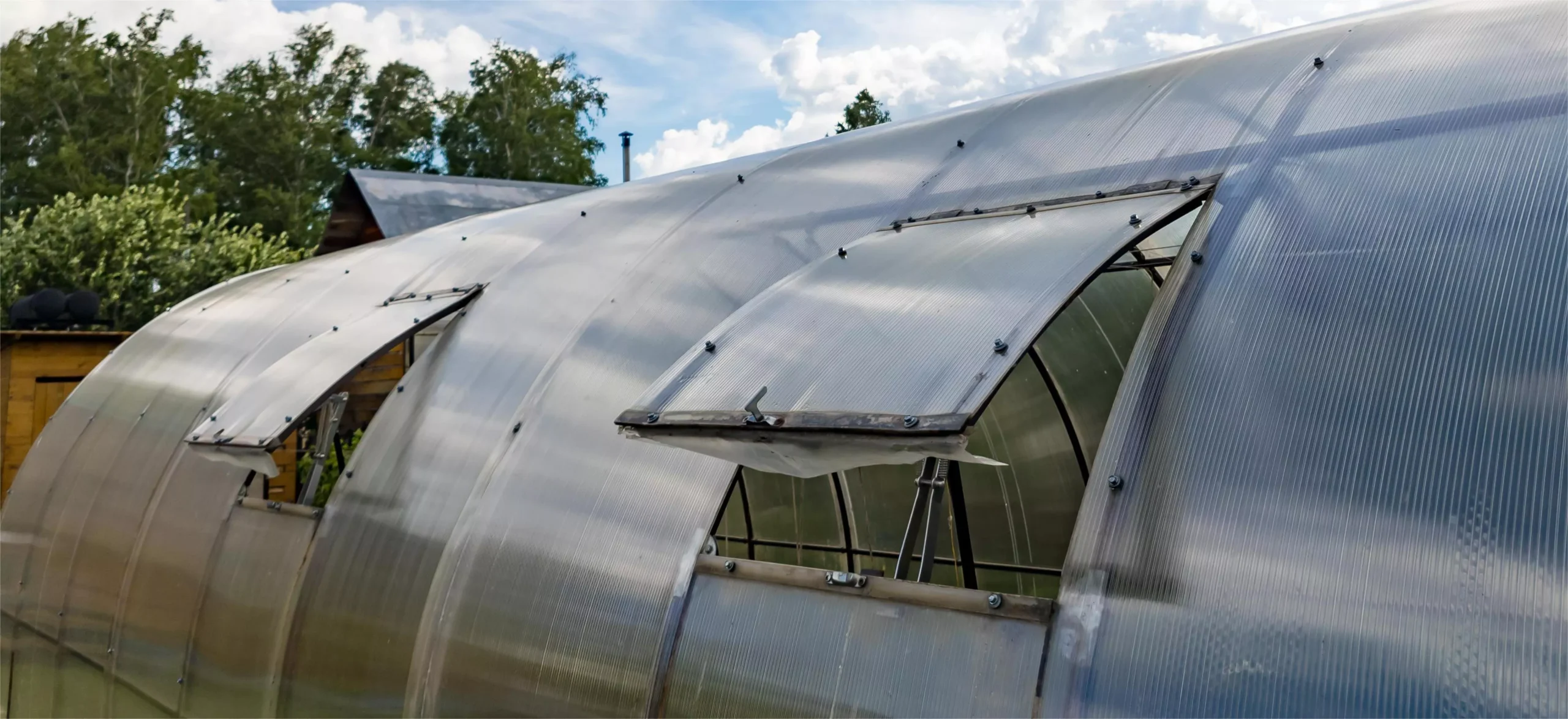
Ventilation is not just an «open door», it is part of heat dissipation in the greenhouse. It is the process of replacing hot indoor air with cooler outdoor air.
Natural ventilation (Passive)
It works by temperature and pressure differences (chimney effect) and wind power.
The golden rules of design:
- Total transom area: Should be 20-25% of the floor area.
- Location: Frames should be in both the upper part (ridge) and the lower part (side walls). Hot air escapes through the top, cool air is drawn in from below.
- Orientation: In Ukraine, north-west and west winds prevail. The location of the shutters should take into account the «wind rose» of the region to create a through flow.
Forced ventilation (Active)
Necessary when natural air movement is insufficient (doldrums, high density planting).
Comparison of fan types:
| Type | Advantages | Flaws | Application |
|---|---|---|---|
| Axial (Axial) | High performance, low price. | Low static pressure. | Air extraction through the ends. |
| Centrifugal (Radial) | Powerful pressure, work with long ducts. | High price, noise, complexity of installation. | Film blowing systems or localized zone cooling. |
| Acceleration (Circulation) | Equalize the temperature and humidity inside. | They don't take the heat outside, they only stir it up. | Suspended under the dome to stir the air. |
Technical Power Calculation (Advanced)
For professional operation in summer period (June-August) in Ukraine air exchange rate is used K = 60 (complete air change every minute).
Formula: Q = V × K × C Where:
Q- required total capacity (m³/hour).V- working volume of the greenhouse (m³).K- multiplicity factor (60).C- resistance coefficient (1.1 - 1.2 if mosquito nets that dampen the flow are installed).
Example for a 10x50 m farm greenhouse (4 m high):
- Scope
V= 10 * 50 * 3.5 (average height) = 1750 m³. - Calculation
Q= 1750 * 60 * 1.1 = 115,500 m³/h. - Equipment selection: It is optimal to install 3-4 industrial fans with a capacity of 30,000 - 35,000 m³/hour each.
Popular brands in Ukraine:
- VENTS: The OV series (axial) is a budget-friendly and reliable standard.
- Eurovent / Soler & Palau: More expensive and energy efficient European counterparts.
Placement strategies
- Longitudinal exhaust: Fans on one end, supply dampers on the other. The distance between them should not exceed 40-50 meters, otherwise the air will have time to overheat before it leaves.
- Transverse extraction: Fans in the side walls. Effective for very wide greenhouses.
Use frequency converters (inverters). They allow the fan speed to change smoothly depending on the temperature, which saves up to 30% of energy and prolongs the life of the bearings.
Evaporative cooling (Fogging)
Adiabatic cooling is the most efficient way to actively reduce temperature. When 1 liter of water evaporates, about 2.26 MJ of heat energy is absorbed. On a hot day, this can reduce the temperature inside the greenhouse by 5-12°C relative to the outside, provided the humidity is properly controlled.
System comparison: Low vs High pressure
| Parameter | Low pressure (2-8 bar) | High pressure (50-70 bar) |
|---|---|---|
| Drop size | 50-150 microns | 5-15 microns |
| Effect | Precipitates on the sheet («rain effect»). | Vaporizes instantly in the air («dry mist»). |
| Disease risk | High (rots, fungi due to wet leaf). | Minimal. |
| Pump | Regular garden or step-up. | High-pressure plunger pump. |
| Price | Low. | High (professional judgment). |
Technical components and labeling
The following components are recommended for a reliable system in Ukraine:
- Pumping stations: Plunger pumps from Annovi Reverberi (AR), Hawk or Interpump (Italy). They are designed for continuous operation in aggressive environments.
- Nozzles (Nozzles): Stainless steel or brass with ceramic insert only.
- Diameter marking: 0.15 mm or 0.20 mm is optimal for cooling.
- Anti-drip valve: It is imperative that water does not drip onto the plants after the pump is turned off.
- Pipeline: High pressure nylon tubing (rated for 100 bar) or stainless steel tubing.
Water treatment: A critical factor
In most regions of Ukraine water is «hard». Without preparation nozzles 0.15 mm will be clogged with calcium in 2 weeks.
- Solution: Installation of a softener or reverse osmosis system.
- Filtration: Mandatory mechanical cleaning (5-10 microns) upstream of the pump.
Calculation example and installation tips
For a 100 m² greenhouse:
- Approximately 15-20 nozzles with a flow rate of 0.05 - 0.09 l/min each are required.
- The total water flow rate will be ~1.5 to 2.0 liters per minute.
- Placement: The nozzles are mounted at a height of at least 2-2.5 meters from the ground. The flow should be directed to the air movement area (next to fans or supply valves).
Use a cyclic timer or humidity controller. Optimal mode during peak heat: 10 seconds of operation - 30 seconds of pause. This allows the water to evaporate completely without creating excess dampness that blocks plant transpiration.
Cool-Pad Method (Evaporation Panels)
The Fan-and-Pad system is the most powerful thermoregulation tool in industrial horticulture. It can reduce the temperature by 10-15°C even when the outside air is heated to +35°C.
Working principle and physics of the process
On one end of the greenhouse, cassettes made of corrugated cellulose impregnated with special antiseptics and polymers are installed. Water circulates continuously through the cassettes. At the opposite end, powerful fans extract air, creating a zone of reduced pressure (rarefaction) inside the greenhouse. The outside hot air is sucked in through the wet honeycomb of the panels, where the water evaporates instantly.
Important for Ukraine: This method is most effective in southern and central regions (Kherson, Odessa, Dnepropetrovsk oblasts), where air humidity in summer drops to 30-40%. At humidity above 70% the system efficiency drops sharply.
Comparison of cassette types (Panels)
Cassettes differ in corrugation angle and thickness. In Ukraine, the most common markings are 5090 And 7090.
| Characteristic | Type 5090. | Type 7090 |
|---|---|---|
| Corrugation height | 5 mm | 7 mm |
| Evaporation area | Very high | Tall |
| Air resistance | High (requires powerful fans) | Medium (optimal) |
| Risk of clogging | High | Medium |
| Application | Precision refrigeration, climate chambers. | Greenhouse Standard. |
Dimensions: Standard panel thicknesses are 100 mm or 150 mm. The 150 mm thick panels provide cooling efficiencies up to 85-90%.
Engineering calculation of panel area
The area of the panels is directly related to the performance of the exhaust fans.
Formula: S = Q / (V_pad * 3600) Where:
S- required panel area (m²).Q- total capacity of fans (m³/hour).V_pad- recommended air velocity through the panel (for 150 mm cassettes this is usually 1.5 m/s).
Example: If your fans are pumping 100,000 m³/hour: 100,000 / (1.5 * 3600) = 18.5 м². With a panel height of 1.5 meters, you need a «wall» about 12.3 meters long.
Operating requirements and brands
- Water Treatment: The water flow rate is about 6-10 liters per minute per linear meter of panel. The water should be circulated in a closed loop with filtration.
- Salt control: The concentration of salts in the tank increases due to evaporation. Regular «purging» (replacing part of the water) is necessary, otherwise the panels will crust over and stop working.
- Brands in Ukraine:
- Munters (Sweden/Germany): World leader (CELdek series). The most durable, but expensive.
- Huwell (Italy): Optimal quality for large farms.
- Chinese analogs: Affordable, but often have a shorter service life (quickly soak or crumble).
Always install panels on the windward side and fans on the leeward side. There should be at least 1-1.5 meters of free space between the panel and the plants, as the air directly at the panel may be too cold and moist, causing diseases.
Geothermal heat sink (Ground heat exchanger)
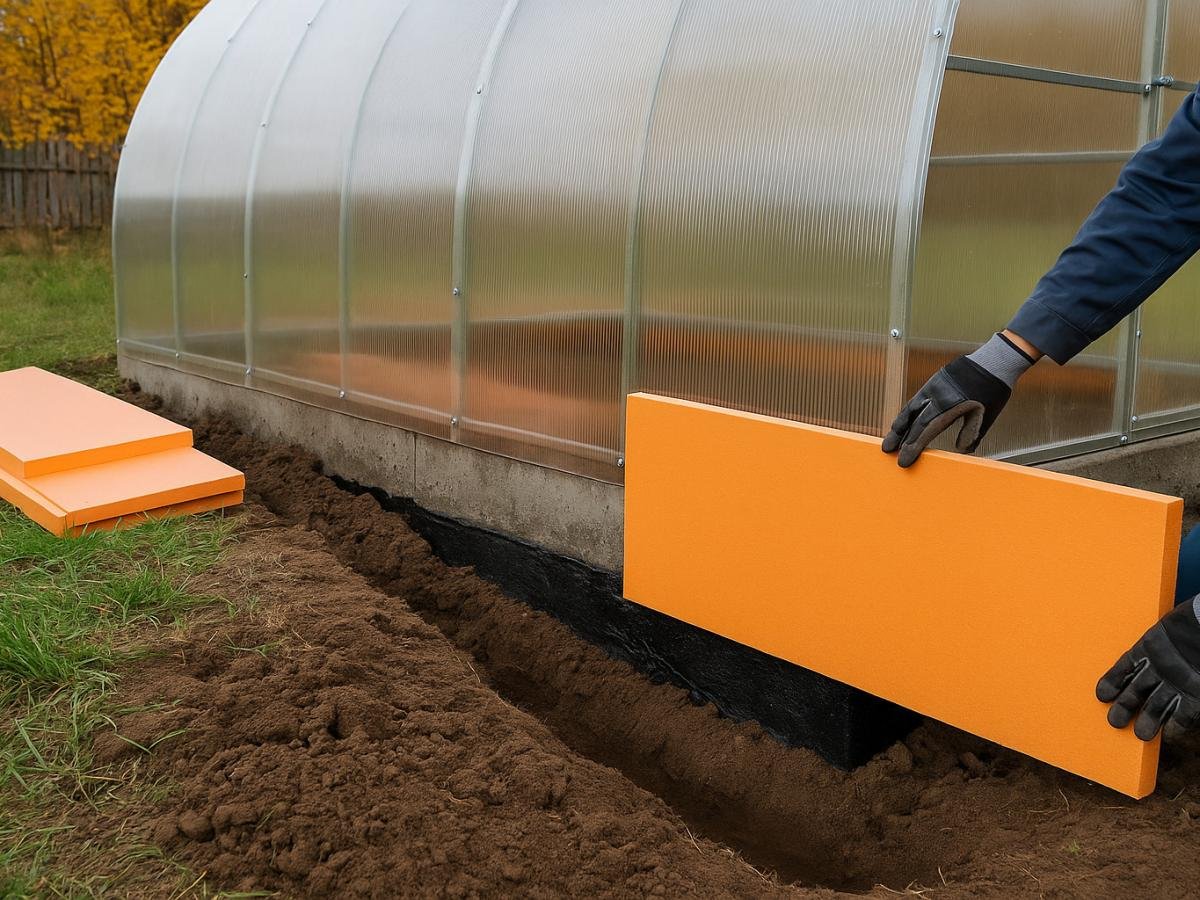
A ground heat exchanger in a greenhouse (GTO) is a system of pipes laid underground that utilizes the thermal inertia of the ground. It is a «passive air conditioner» in summer and a «preheater» in winter.
Process physics: Soil as a battery
At a depth of more than 1.5-2 meters, the ground temperature in Ukraine remains stable throughout the year: from +10°C to +14°C. In summer, when the air in the greenhouse warms up to +35°C, a temperature difference of 20-25 degrees allows excess heat to be effectively dissipated into the ground.
Heat dissipation efficiency depending on soil type:
| Soil type | Thermal conductivity (W/m-K) | Cooling efficiency |
|---|---|---|
| Wet clay / Chernozem | 1.5 - 2.0 | High (best choice for heat transfer) |
| Dry sand | 0.3 - 0.7 | Low (requires moistening the ground above the pipes) |
| loam | 1.0 - 1.5 | Average |
Technical parameters and calculations
The air must be in contact with the pipe walls for a sufficient period of time for the system to work effectively.
- Pipe Material: HDPE (low pressure polyethylene) or PP (polypropylene). It is recommended to use pipes with a smooth internal surface to minimize resistance and bacterial fouling.
- Diameter: Optimally 110-160 mm. A larger diameter reduces the flow velocity, improving heat transfer, but makes the system more expensive.
- Depth of tab: 1.5 - 2.5 meters. In Ukraine, the frost depth is 0.8-1.2 meters on average, so 2 meters is the «gold standard».
- Contour length: The calculation is based on the proportion: 1.5 - 2 linear meters of pipe per 1 m² of greenhouse area.
Example: A 50 m² greenhouse requires about 75-100 meters of pipe.
Condensation and disinfection problem
When hot humid air cools down, condensation inevitably falls in the pipes.
- Slope: Pipes should be laid with a slope of 1-2% (1-2 cm per meter length) towards the lowest point.
- Condensate Collector: A well is installed at the lowest point with a sump pump to pump out the water.
- Bactericidal treatment: Once a season, it is recommended to flush the pipes with hydrogen peroxide or chlorhexidine solution to avoid the appearance of damp smell and mold.
Comparison of the TRP with other methods
| Parameter | Geothermal (TRP) | Air conditioner (Split system) | Fog (High Pressure) |
|---|---|---|---|
| Implementation costs | Very high (earthworks) | Averages | Tall |
| Operating costs | Minimal (fan only) | Very high | Averages |
| Service life | 30-50 years old | Ages 5-7 | 10 years |
| Major plus | Works for heating in winter | Precise tempo control. | Quick effect |
Use pipes marked SN4 or SN8 (ring stiffness class), because at a depth of 2 meters, ground pressure can flatten a normal thin-walled sewer pipe.
Automation of heat dissipation in the greenhouse in summer
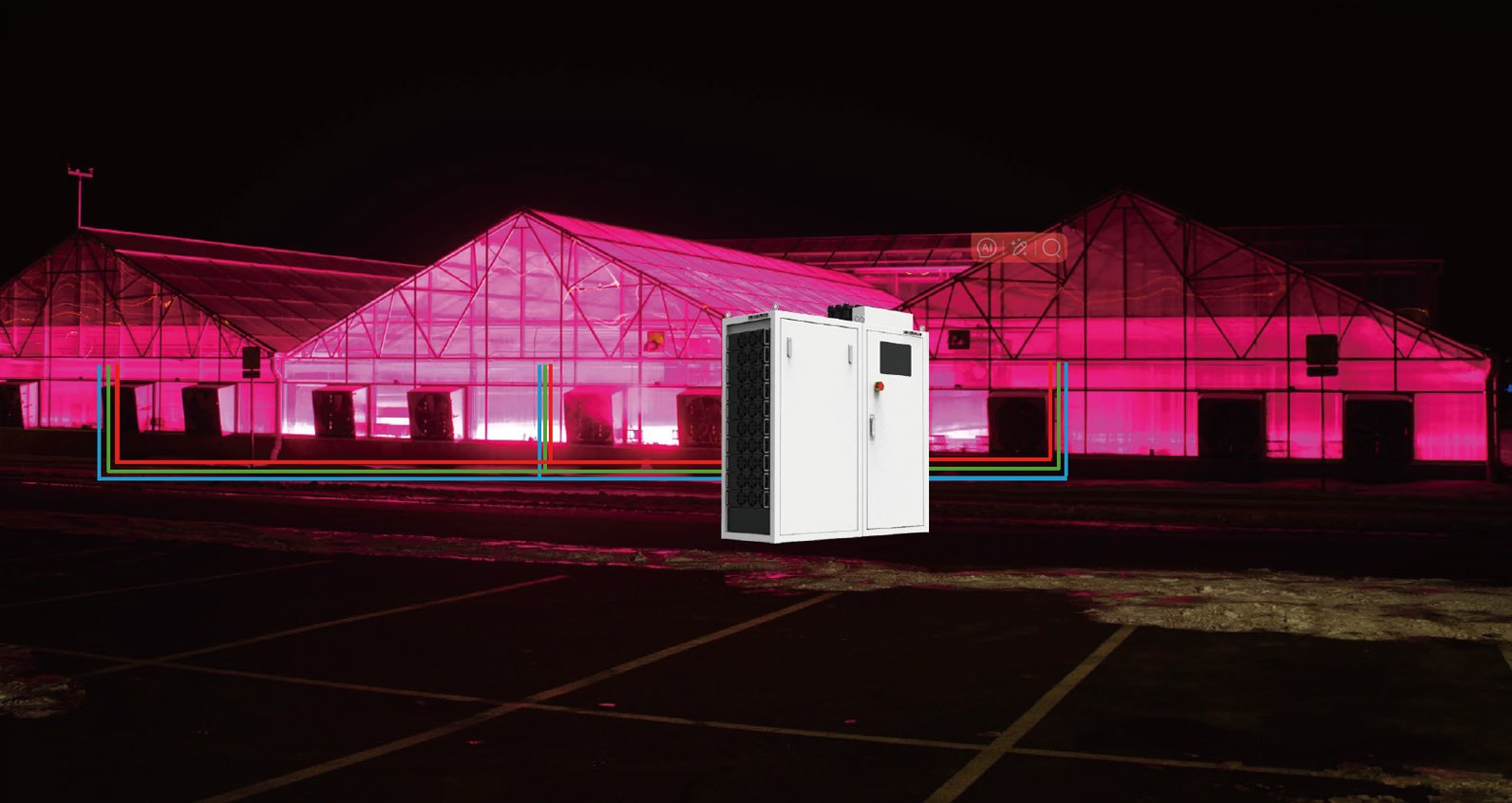
Professional heat dissipation in a greenhouse is not possible without automation. In summer, cloud cover and wind speed can change every 15 minutes. Manual control of fanlights or pumps inevitably leads to temperature swings that stress the plants.
Levels of automation
- Mechanical (Non-volatile):
- Hydraulic cylinders (Thermal actuators): Inside the cylinder is a technical oil or paraffin. When heated, the substance expands and pushes the rod out, opening a port.
- Advantages: Fully autonomous (no electricity needed).
- Marking in Ukraine: Univents, Megavent (Denmark) - withstand strong wind; Thermovent - budget segment.
- Important: Don't forget to remove them for the winter if the cylinder is not designed for frost.
- Electronic (Smart Home / DIY):
- Controllers: Popular in Ukraine solutions based on Sonoff (TH Origin/Elite models) or Tuya Smart.
- Functionality: Allow control of exhaust fans and mist pumps via smartphone.
- Cons: Requires stable Wi-Fi and cloud service. If the internet fails, the system may «hang» in the open or closed state.
- Industrial (Professional):
- Controllers: Programmable logic controllers (PLC). In Ukraine, the de facto standard are OVEN (PR series), Siemens Logo! or specialized Israeli/Dutch computers (Galcon type).
- Functionality: Supports PID control logic (smoothly opening the shutters or changing the fan speed depending on how fast the temperature rises).
Sensors: Measuring accuracy
For adequate heat dissipation, data should be taken in the «breathing zone» of the plants.
- Sensor Types:
- SHT3x / SHT4x (Sensirion): Industrial temperature and humidity sensors. High accuracy and condensation protection.
- AM2302 (DHT22): Budget option. Prone to «hang-up» at 100% humidity (after fog operation).
- Aspiration booth: The sensor should never be in direct sunlight. It should be placed in a white ventilated box with forced airflow from a small cooler. This is the only way you will get the real air temperature and not the temperature of heated plastic.
Comparison of climate control systems
| System type | Complexity | Opportunities | Budget | Reliability |
|---|---|---|---|---|
| Hydraulic cylinders | Zero | Just opening the transoms | Low | Tall |
| Sonoff / Tuya | Average | Schedule and sensor control, remote monitoring | Medium | Medium (depends on the network) |
| PLC (OVEN/PR) | Tall | Full control (fog, ventilation, TRP, irrigation), alarm scenarios | High | Very high |
Safety protocols (Fail-Safe)
A professional automation system should have scenarios in case of an emergency:
- Power outage: The shutters must open automatically (by the action of counterweights or springs when the electromagnetic lock is opened).
- Strong winds: The wind speed sensor (anemometer) should signal the closing of the fanlights so that they are not blown away, even if the temperature inside is high (in this case, the fog and active exhaust are activated).
Summary: Checklist for a greenhouse owner in Ukraine
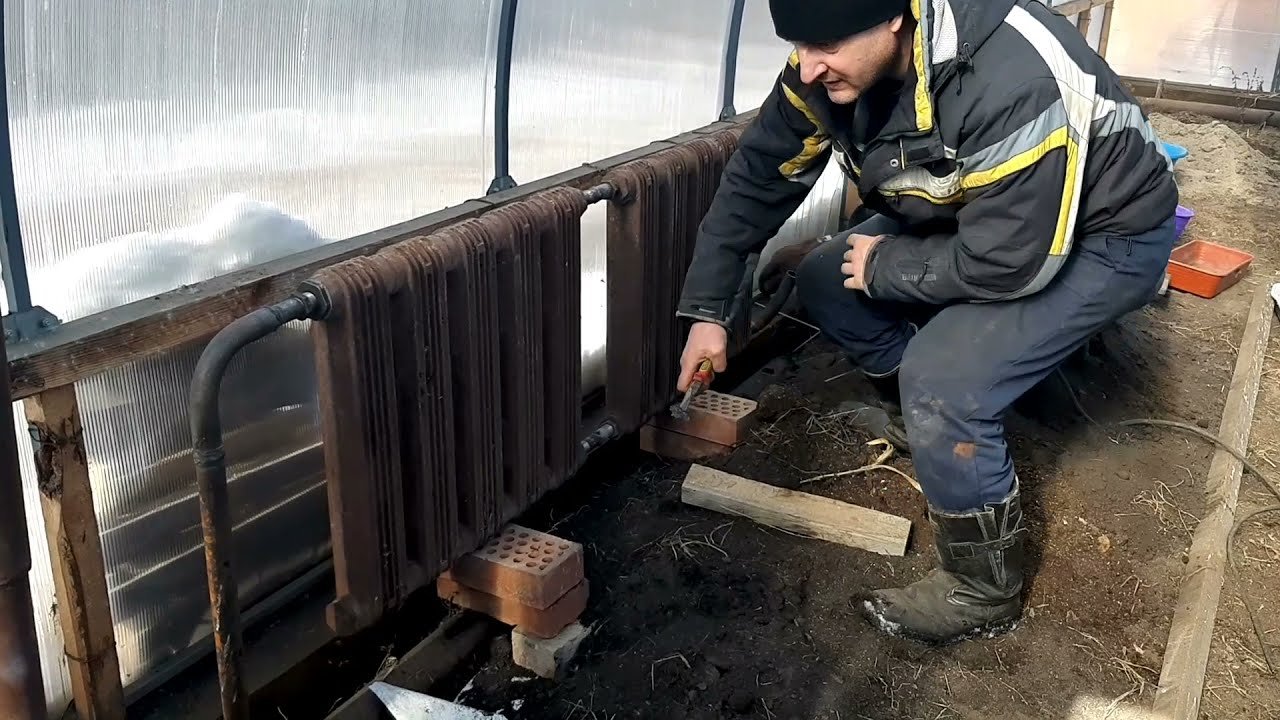
Organization of quality heat dissipation in the greenhouse is an investment that pays off in the first season due to the preservation of 100% yields and high quality fruits. Below is a detailed action plan to ensure an ideal microclimate.
Seasonal maintenance schedule (Regulations)
| Period | Technical challenge | Parameter check |
|---|---|---|
| April - May | Installation of the shading net. Checking the fanlight actuators. | Lubrication of hinges, checking the integrity of the net web. |
| June | Starting the fogging system. Flushing the nozzles. | Measure the system pressure (should be 50-70 bar for high pressure). |
| July | Control of salt buildup on the Cool-Pad. Cleaning of the fans. | Check the TDS of the water (recommended < 50 ppm). Clean dust from the blades. |
| August | Check sensor operation and calibrate automation. | Comparison of sensor readings with a reference thermometer. |
| September | Dismantling of screens, conservation of pumps (water drainage). | Treatment of TRP pipes with antiseptic. Removal of hydraulic cylinders. |
Technical specification for procurement
- Fans: Motor protection class at least IP54 (full protection against dust and splashing). Models with low noise level (up to 60 dB).
- Polycarbonate: Density of at least 0.8 kg/m² (for 4 mm) or 1.5 kg/m² (for 10 mm). Double UV protection layer (co-extrusion) is mandatory.
- Pumps: Plunger, with ceramic pistons (up to 10,000 hours).
Comparison of approaches to implementation
| Parameter | DIY | Professional installation |
|---|---|---|
| Risks | Errors in calculating the air ratio, clogged nozzles. | Equipment and microclimate warranty. |
| Implementation period | 1-2 months (sourcing of components). | 3-7 days turnkey. |
| Efficiency | 60-70% (due to inaccurate systems). | 100% design capacity. |
Professional solution from NovaTeplica«
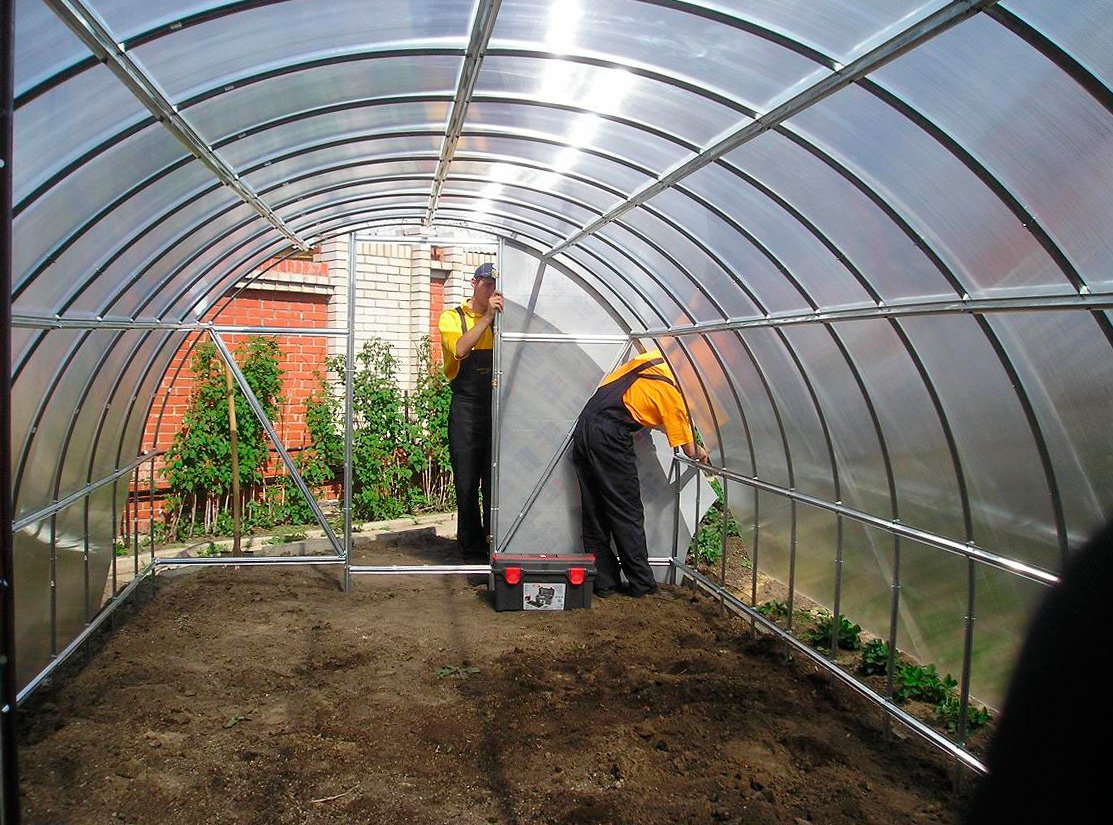
Choosing the right heat dissipation system for your greenhouse is a complex process that requires knowledge of aerodynamics, hydraulics and agronomy. An error in calculating fan capacity or incorrect placement of sensors can lead to crop failure at the height of the season.
Want to forget about the overheating problem once and for all?
The company «NovaTeplica» offers a full cycle of services for the design and construction of modern greenhouses in Ukraine. Our craftsmen have many years of experience in the realization of the most complex engineering systems:
- Installation of automated high-pressure fogging systems.
- Installation of Cool-Pad industrial systems with complete sealing of the circuit.
- Furnishing geothermal heat exchangers for year-round use.
- Customized selection and installation of smart climate controllers.
Order your greenhouse from NovaTeplica today and get the perfect professional growing tool that works for you 365 days a year.
Our craftsmen will take care of all calculations and installation, guaranteeing the durability of every detail and the stability of your crop even at +40°C!