



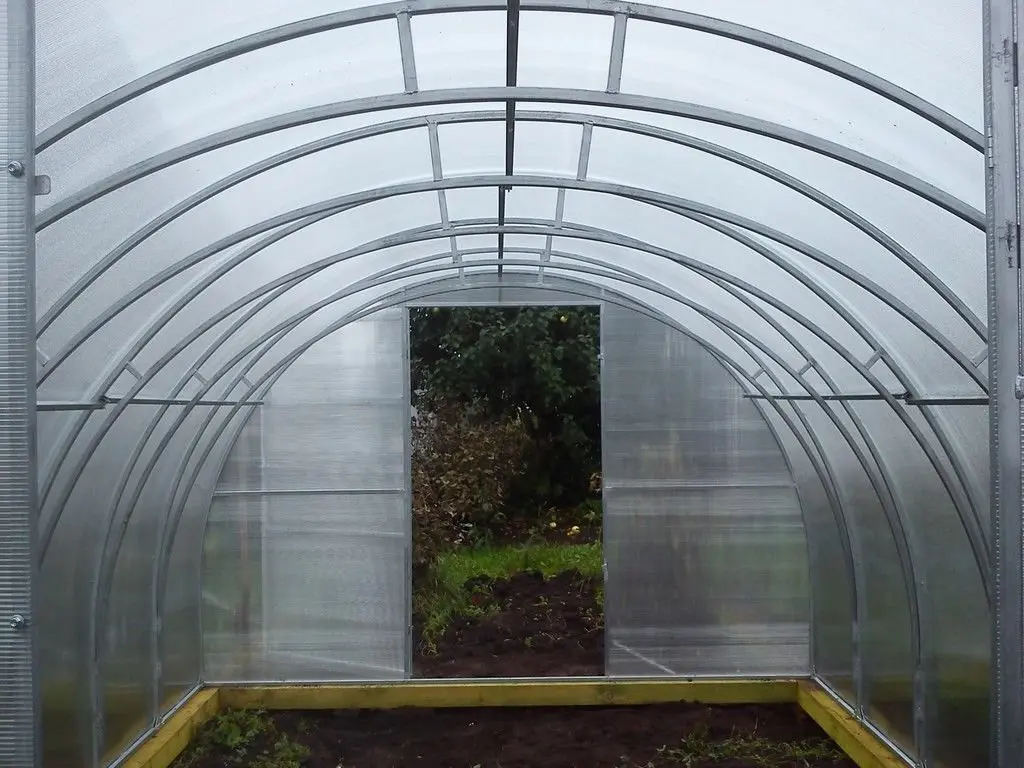
Which greenhouse is better, galvanized or painted?
Imagine a morning in early spring: you walk into your greenhouse, getting ready to plant seedlings, but instead of the clean shine of the frame, you see reddish streaks of rust at the joints and gray flakes of paint right on the black soil. Sound familiar? Unfortunately, for many Ukrainian gardeners, this has become an annual nightmare. You spend money, effort, and time expecting the structure to last for decades, only to end up with «dying» metal after just a couple of seasons.
Why does a greenhouse that looked perfect in the store start to «bloom» with rust right after winter? Is it worth paying extra for galvanization if your neighbor insists that «good paint lasts just as long»? And most importantly: how can you tell the difference between real protection and a decorative coating that will wash away with the very first condensation?
Choosing a frame isn’t just a matter of aesthetics. It’s a matter of the safety of your crop (after all, you don’t want your greenhouse tomatoes to absorb particles of flaking enamel, do you?) and the longevity of your investment. Are you buying a long-term solution that will last 15 years, or a problem you’ll have to repaint by hand every May, choking on chemical fumes under the polycarbonate?
In this article, we—the engineers at NovaTeplica—will set aside marketing slogans and focus on the hard facts: the physics of metals, the chemistry of corrosive environments, and actual figures from Ukrainian GOST standards (DSTU). We’ll help you make a choice you won’t regret, even after 10 years of use.
The Harsh Greenhouse Environment: Why Do Standard Protective Measures Fail?
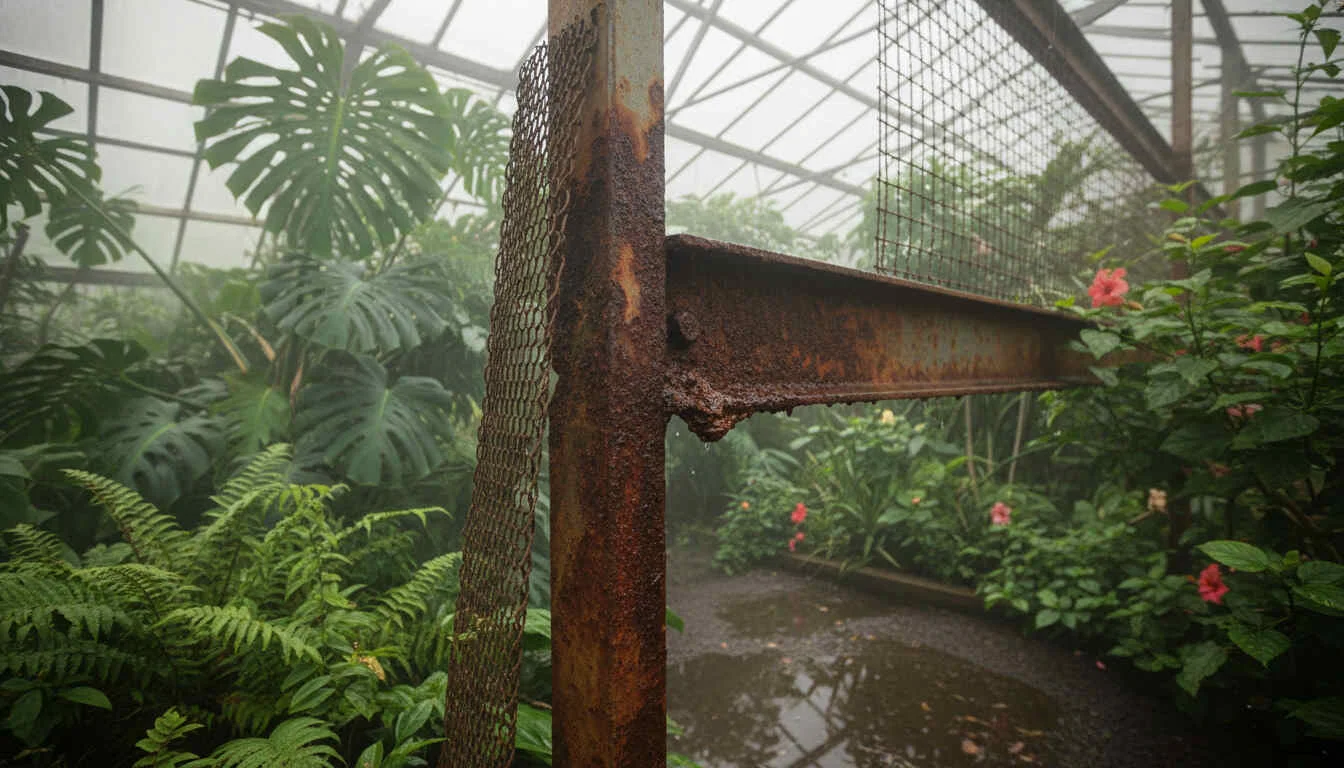
Greenhouse operations are industrial environments classified as corrosion activity category C4 (high) or even C5 (very high) according to the international standard ISO 12944. Conventional coatings designed for category C2 (residential areas) become unusable here within the first season.
Climatic and Chemical Factors of Exposure
To understand the complexity of the problem, let’s consider the physicochemical parameters of the medium:
Temperature and Humidity Conditions
- Dew point: Due to high humidity (80 to 100 percent) and the temperature difference between the inside and outside, the metal frame is almost always covered with a layer of condensation. The surface wetting time (TOW) is up to 8,000 hours per year—this amounts to nearly continuous exposure to electrolyte.
- Thermal expansion: The linear expansion of steel when subjected to a temperature difference of 70 degrees Celsius causes microcracks in inelastic coatings (such as inexpensive powder coatings), which allows moisture to penetrate the metal.
Chemical Corrosion
- Nitrogen and potash fertilizers: When they evaporate, they form a slightly acidic or slightly alkaline environment that accelerates electrochemical corrosion.
- Sulfur dioxide (SO₂): The use of sulfur tablets for disinfection leads to the formation of sulfurous acid upon contact with condensate. Reaction: SO₂ + H₂O reacts to form H₂SO₃. This compound aggressively attacks even standard zinc coatings, turning them into a loose «white coating» (zinc hydroxide) that washes off easily, exposing the steel.
A Comparative Analysis of Security Methods
The table provides data for various types of protection when used in a greenhouse environment (Category C4).
| Characteristic | Cold-dip galvanizing (paint) | Powder Coating | Hot-dip galvanizing (immersion) | Zinc-lamellar coating |
|---|---|---|---|---|
| Layer thickness | 40–60 micrometers | 60–80 µm | 80–120 µm | 10–15 µm |
| Protection Mechanism | Barrier | Barrier | Electrochemical + Barrier | Electrochemical + Barrier |
| Resistance to sulfur dioxide (SO₂) | Low | Average | Tall | Very high |
| Adhesion (bonding) | 2 points | 1–2 points | Molecular Bond | Tall |
| Service life in a greenhouse | 1–2 years | 2–4 years | 15–25 years old | 10–15 years |
| The Main Risk | Chips, peeling | Under-film corrosion | Joint Brittleness | High cost |
The «metal infection» effect»
When only a barrier-type coating (paint) is used, any mechanical damage (such as a scratch during installation) becomes an active corrosion site. The oxidation process spreads beneath the paint layer, causing it to peel off over large areas.
Hot-dip galvanizing works differently: zinc acts as a «sacrificial» anode. If the coating is damaged, a chemical reaction occurs in which the zinc corrodes, preserving the structural integrity of the steel profile. However, with constant exposure to sulfur, even zinc requires additional protection in the form of a polymer coating (the «Duplex» system).
Galvanized Steel Framing: Technologies and Hidden Nuances
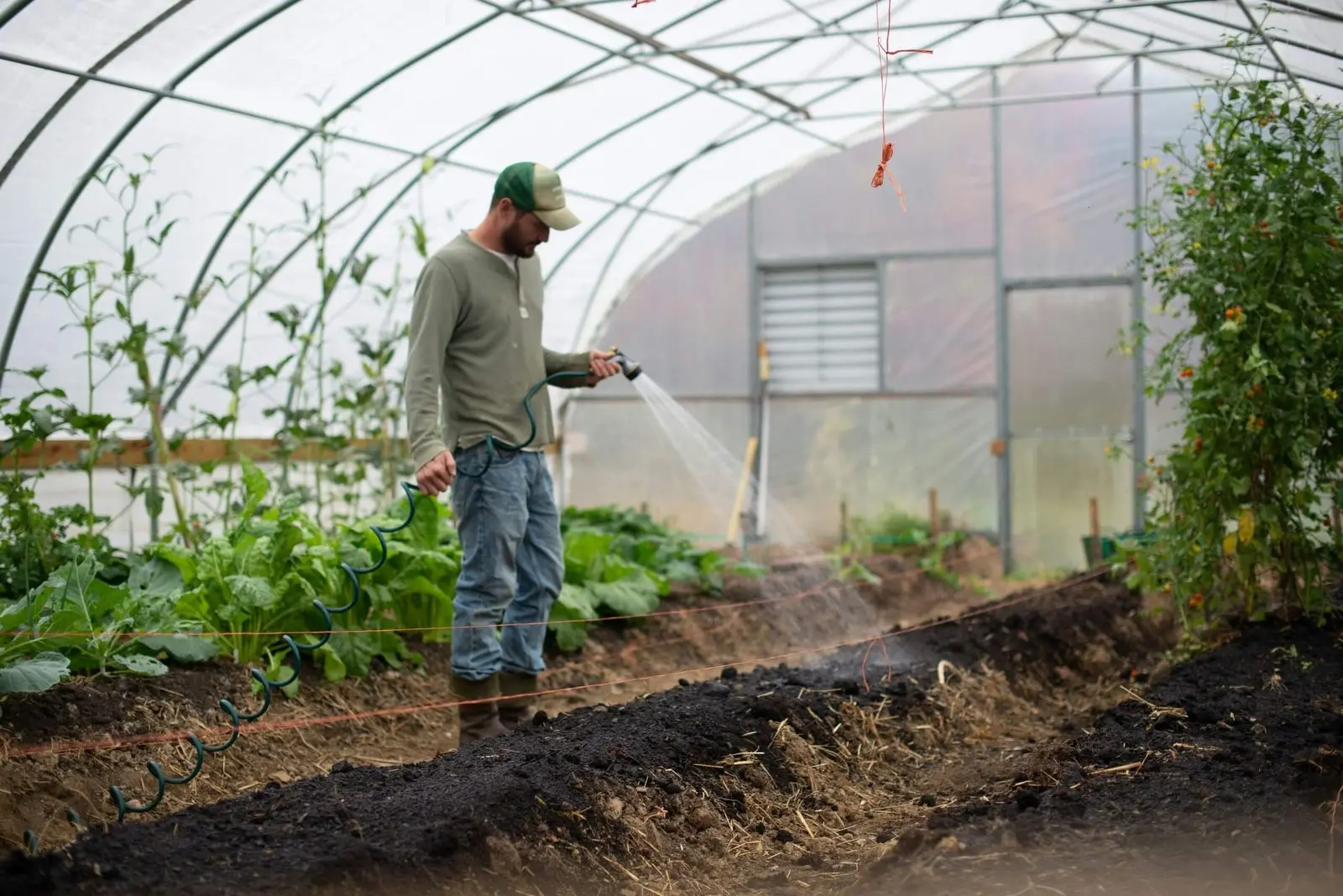
The choice of galvanizing method determines whether a greenhouse will last 5 years or 25 years. Under conditions of constant condensation and chemical treatments (corrosion category C4 according to ISO 12944), the thickness and application method of the zinc coating become critical factors.
A Comparative Analysis of Coating Application Methods
| Galvanizing Method | Layer thickness (microns) | Density of zinc (g/m²) | Service life in a greenhouse | Security Features |
|---|---|---|---|---|
| Hot-dip galvanizing (tank) | 70–120 µm | 500–850 g/m² | 25+ years | Complete coverage inside and out, molecular bonding. |
| The Senjimira Method (Strips) | 10–20 µm | 140–275 g/m² | Ages 7–12 | A mass-market standard. Seam protection is a weak point. |
| Electrolytic method | 5–12 µm | 40–80 g/m² | 1–3 years | Ornamental appearance. Rapid depletion of the layer throughout. |
| Cold-dip galvanizing | 40–60 micrometers | It depends on the composition | 3–5 years | Requires perfect surface preparation; there is a risk of delamination. |
An In-Depth Analysis of Technologies
Hot-dip galvanizing
The steel structure is immersed in molten zinc after all welding work is completed.
- The main advantage: Zinc flows into the pipes and seals the ends. This forms an intermetallic layer—an alloy of iron and zinc—that cannot be mechanically removed.
- Note: Due to the high temperature (450 degrees), thin-walled pipes may warp, so this method requires the use of steel that is at least 2 mm thick.
Galvanized strip (Strips / Sendzimir process)
Most greenhouses on the market are made of tubing that is welded from pre-galvanized sheet metal.
- The problem with the weld: During welding, zinc evaporates in the weld zone (zinc has a boiling point of 907 degrees, while steel has a melting point of 1,500). Without special treatment (metalizing the weld), such a pipe begins to rust along the weld line as early as 12 months later.
- Recommendation: When making a purchase, ask for confirmation that “the zinc coating on the seam has been restored.”.
Standards and Marking (DSTU EN 10346:2014)
In Ukraine, the quality of galvanization is regulated by the weight of zinc per square meter (total weight on both sides).
- Class Z140 (10 microns per side): Minimum acceptable level. Suitable for dry storage facilities, but it deteriorates within 4–5 years in a greenhouse due to high humidity.
- Z275 Grade (20 microns per side): The optimal industry standard. With a corrosion rate in a greenhouse of about 2 microns per year, this frame will provide protection for about 10 years before the first pitting corrosion appears.
The corrosion rate of zinc in a greenhouse is 10 to 20 times higher than in a typical residential neighborhood due to vapors from nitrogen fertilizers and sulfur.
A Hidden Risk: Electroplating Disguised as “Factory Galvanizing”
Inexpensive greenhouses often have a shiny, almost mirror-like appearance. This is a galvanized coating. Its thickness rarely exceeds 8 microns. Under greenhouse conditions, this coating turns into “white rust” (zinc hydroxide) within a single growing season, after which the steel begins to deteriorate.
How can you tell the difference? Hot-dip zinc always has a matte, gray color and a distinctive “pattern” (crystallization patterns), whereas electroplated zinc is perfectly smooth and shiny.
Painted Frame: Polymers Against Corrosion
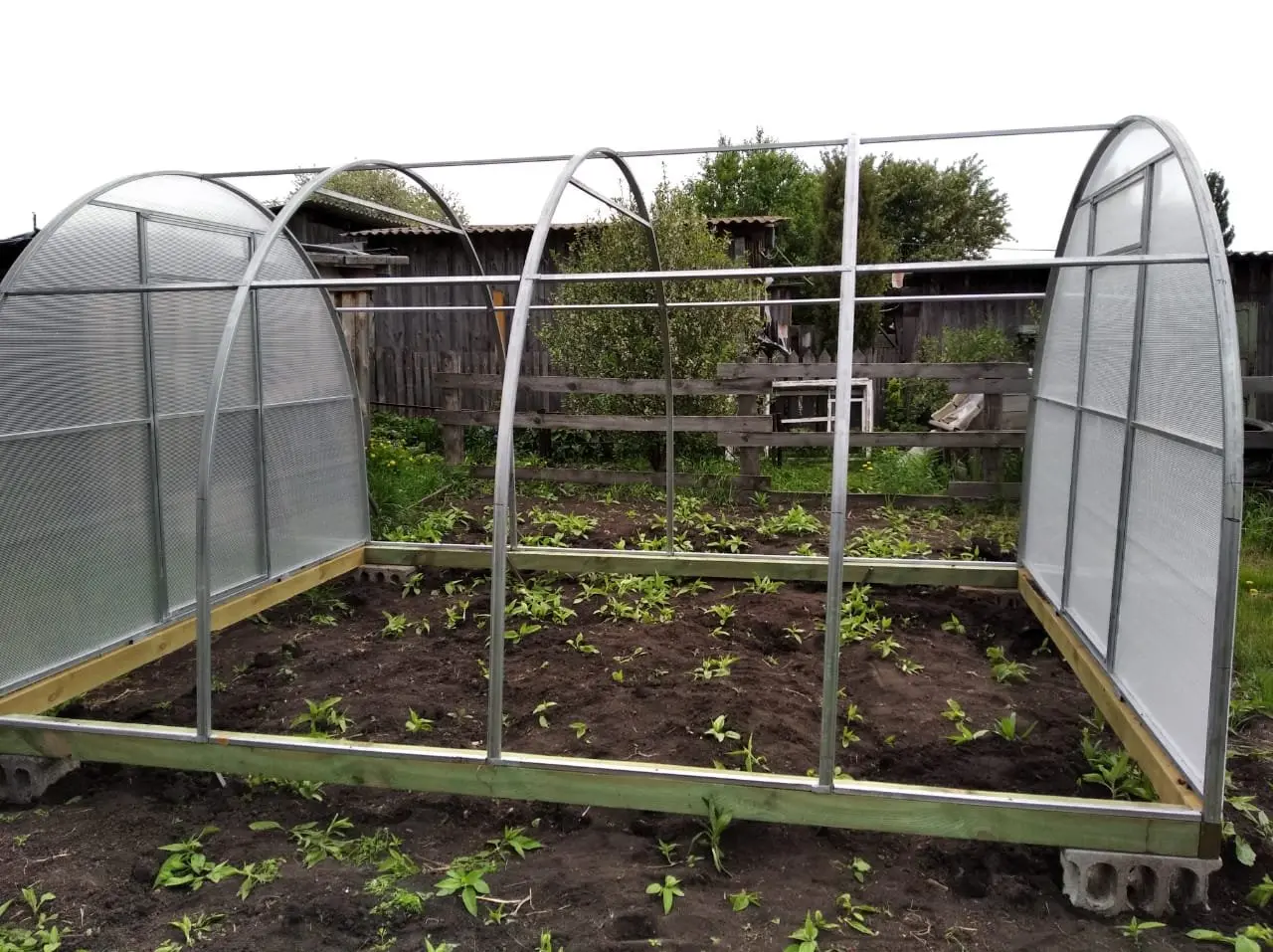
In greenhouse conditions (Category C4 according to ISO 12944), the paint acts as a protective barrier. Its effectiveness depends on the chemical composition of the polymer and the quality of the steel surface preparation.
Comparative Characteristics of Coating Types
| Type of coating | Adhesion (score) | Chemical Resistance | Service Life (years) | Repairability |
|---|---|---|---|---|
| Liquid Enamel (PF-115) | 3 – 4 | Low | 0.5–1 year | High (with a brush) |
| Polyester powder | 1 – 2 | Average | 3–5 years | Low (difficult to match the color) |
| Epoxy-polyester powder | 1 | Tall | 5–8 years | Requires special equipment |
| Duplex System (Zinc + Powder) | 0 – 1 | Very high | 15–25 years old | Average |
Note: Adhesion 0 is the best rating (the paint does not peel), and 5 indicates complete peeling.
Why does powder coating often «let you down»?
Powder coating is considered the standard, but in greenhouse farming, it has two critical weaknesses:
Hidden corrosion beneath a film layer
If the metal has not been sandblasted or chemically phosphated before painting, microparticles of scale or grease will remain under the paint layer.
Result: Under conditions of 100 percent humidity, under-film corrosion begins. From the outside, the greenhouse looks intact, but inside, the metal turns to dust. The paint begins to peel off in whole «layers.».
The «sharp edge» problem»
When spraying powder onto a square tube, the paint layer is always 2–3 times thinner at the sharp corners (edges) than on the flat surfaces.
Result: Corrosion always starts at the corners of the profile and quickly spreads throughout the entire structure.
Chemical Resistance of Polymers
A greenhouse isn't just about moisture—it's also about harsh chemicals.
- Polyester paints: They are highly resistant to sunlight (they do not fade), but they are damaged by alkaline fertilizers.
- Epoxy additives: These make the coating hard and resistant to sulfur-based fungicides and pesticides, but they can «fade» (lose their luster) in the sun. Recommendation: For professional greenhouses, it is best to use architectural-grade powder coatings with a high epoxy resin content.
The «Duplex» System—The Highest Standard in Security
This is a process in which powder coating is applied over a hot-dip galvanized surface.
- Synergistic effect: Zinc protects the steel from corrosion, while the powder coating protects the zinc itself from oxidation and exposure to sulfur.
- Result: The service life is extended to 25–30 years. This is the only solution for regions with high concentrations of fertilizer in the air and a maritime climate.
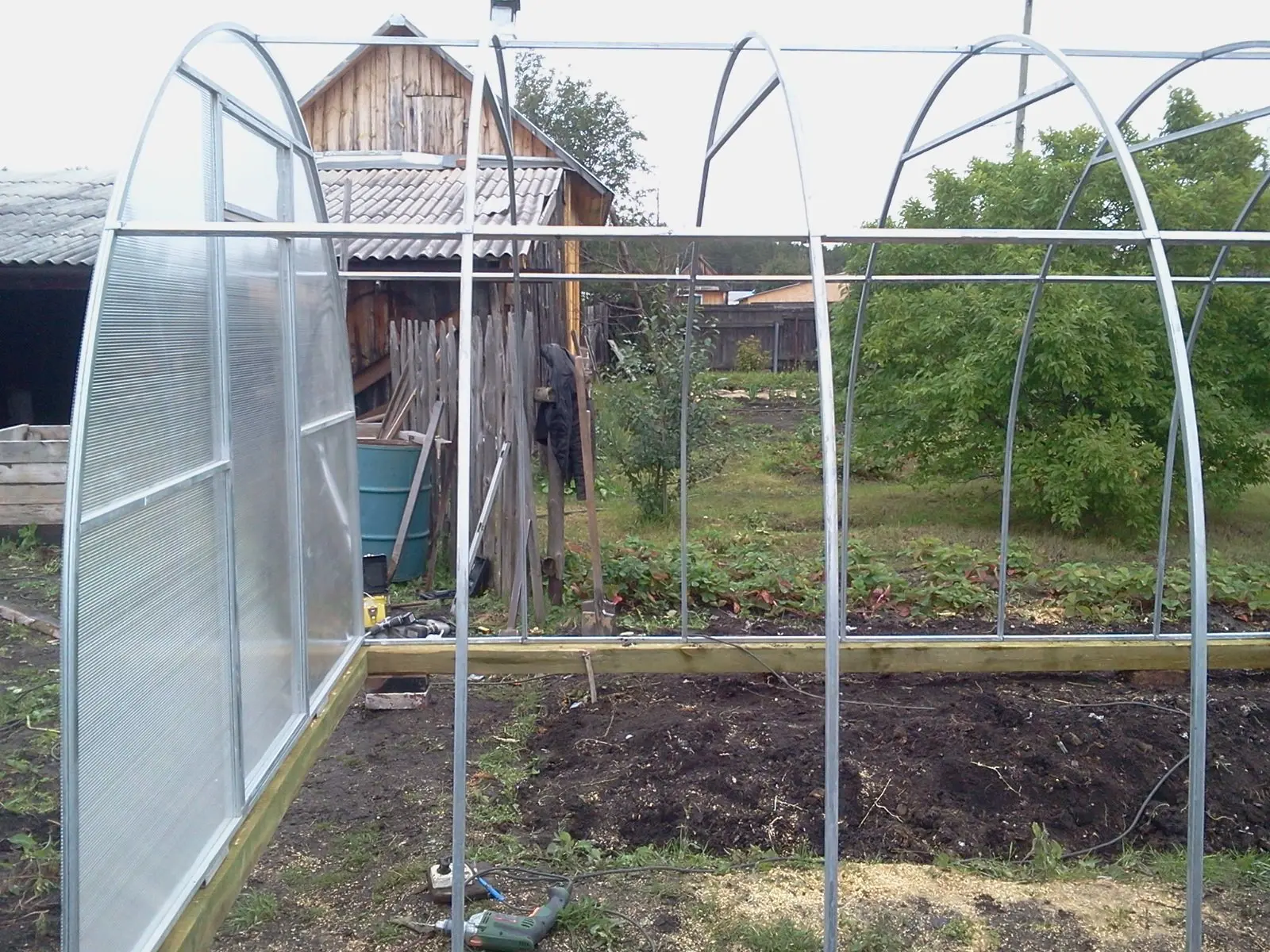
Comparison Chart: Galvanizing vs. Painting
| Criterion | Galvanized (Hot-dip/Factory-galvanized) | Powder Coating |
|---|---|---|
| Service life | 15–25 years old | 5–10 years (with proper care) |
| Corrosion Resistance | High (protection from the outside and inside) | Medium (external protection only) |
| Scratch resistance | Very high (zinc regenerates itself) | Low (chips lead to rust) |
| Service | Does not require | Annual Inspection and Touch-Up Painting |
| Price (starting) | The 20–35% is more expensive | Cheaper |
Calculating Return on Investment (ROI)
Let's calculate the costs using a 3-by-6-meter greenhouse as an example.
- Painted greenhouse: Price — 12,000 UAH. Rust begins to appear after 3 years. It requires sanding and repainting (materials + labor)—about 1,500 UAH every 2 years. After 10 years, the frame requires major repairs or replacement.
- Galvanized greenhouse: Price—16,000 UAH. Maintenance costs over 15 years—0 UAH.
Conclusion: By the 5th or 6th year of use, a galvanized greenhouse becomes cheaper than a painted one because it has no operating costs.
“The biggest mistake a buyer can make is to believe that the paint will last ‘forever.’ Greenhouses have high concentrations of carbon dioxide and moisture—the perfect conditions for corrosion. At NovaTeplica, we recommend galvanized profiles with a wall thickness of at least 1.2–1.5 mm. Pay attention to the weld—if it hasn’t been treated with cold-applied zinc after welding, it’s a potential spot for rust to break through.”
So, what should I choose?
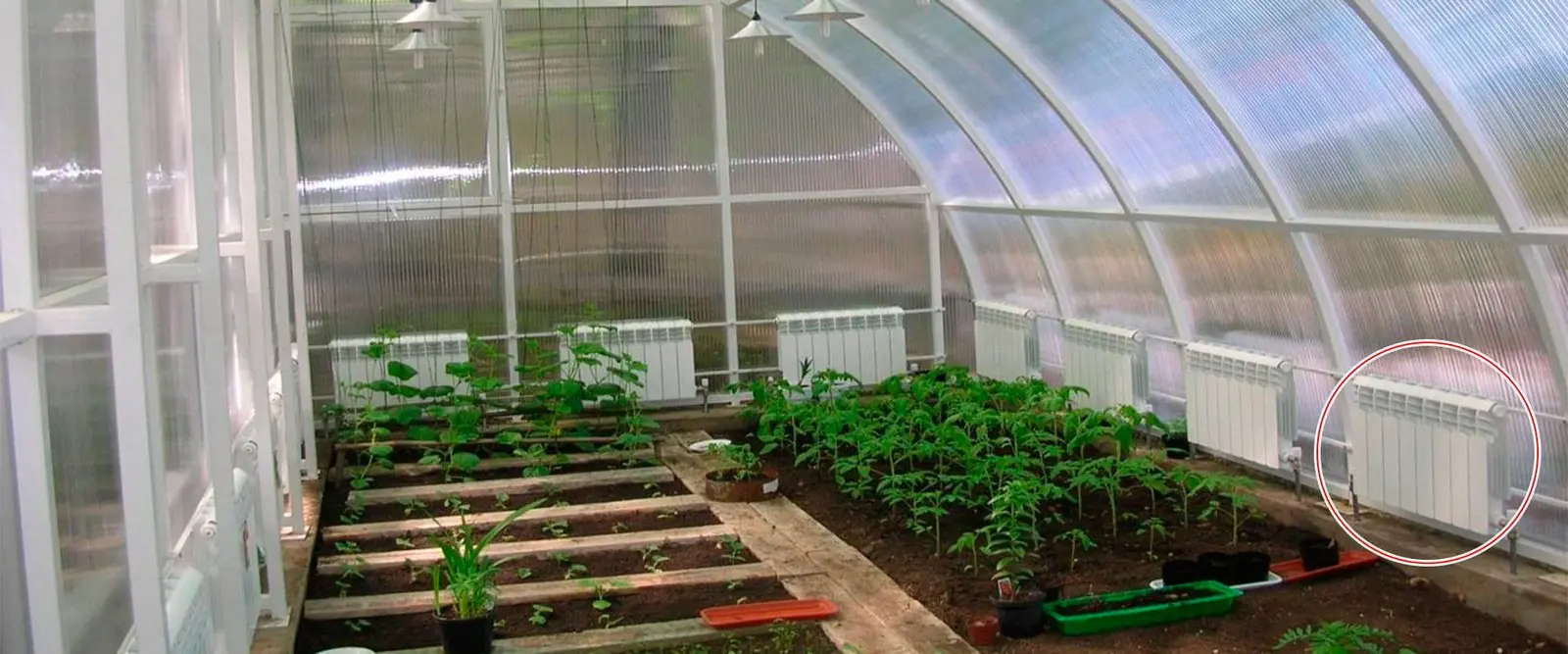
If you plan to use the greenhouse as a temporary structure for 2–3 years or if your budget is extremely limited, a painted frame (which must be powder-coated) is a viable option.
However, if you’re looking for a «set it and forget it» solution, want to grow an eco-friendly crop without paint particles in the soil, and value your time—a galvanized greenhouse is the only right choice.